
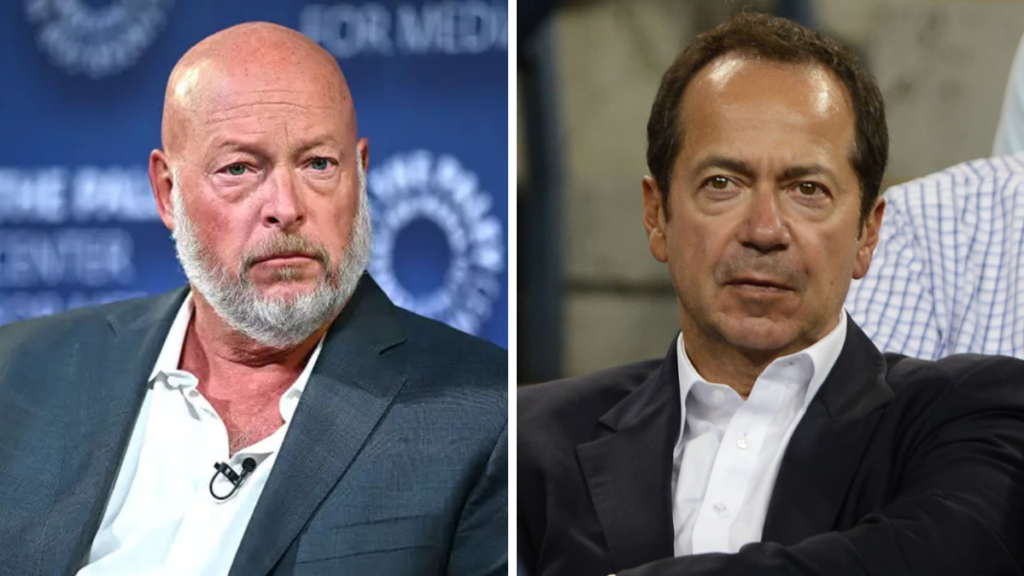

Bob Chapek and John Paulson are two prominent names associated with different areas of American business. Chapek is best known for his leadership at The Walt Disney Company, one of the world’s most recognisable entertainment brands. Paulson, on the other hand, is a billionaire investor whose reputation grew through major financial market bets and the development of his investment firm. Although their professional backgrounds are very different, both illustrate how strategic decisions can influence corporate performance, personal wealth, and public reputation.
Interest in Bob Chapek and John Paulson reflects a broader curiosity about successful executives, wealthy investors, and the forces that shape modern business. Chapek’s career offers insight into corporate management, entertainment economics, and the challenges of leading a global organisation. Paulson’s story highlights investment strategy, risk management, and the opportunities and uncertainties associated with financial markets. Examining their professional journeys side by side provides a useful way to understand two distinct routes to financial success.
It is important, however, to distinguish their achievements rather than assume they share a business partnership or a direct professional connection. Their public profiles developed in separate industries, and their careers are best understood through their individual decisions, responsibilities, and results. This article explores their backgrounds, professional milestones, leadership approaches, financial reputations, and lasting influence on the business world.
Who Is Bob Chapek?
Bob Chapek is an American business executive who became widely known for serving as chief executive officer of The Walt Disney Company. Before reaching Disney’s highest executive position, he spent decades working within the company, gaining experience in entertainment distribution, consumer products, and theme park operations. His career demonstrates how internal experience and organisational knowledge can create a path to senior leadership in a multinational corporation.
Chapek joined Disney in 1993 after working in brand management and marketing. During his years at the company, he held several positions that exposed him to different revenue streams and business challenges. He became chairman of Walt Disney Parks and Resorts in 2015 and subsequently chairman of Disney’s Parks, Experiences and Products division. These roles placed him in charge of businesses that included theme parks, resorts, consumer products, and related experiences.
His leadership became particularly significant during the COVID-19 pandemic, when travel restrictions, temporary park closures, and changing consumer habits disrupted Disney’s operations. The crisis required difficult decisions involving staffing, operating costs, digital entertainment, and the reopening of physical attractions. Chapek became Disney’s chief executive in February 2020, just as the pandemic began to reshape the global economy.
His tenure also coincided with major changes in the entertainment industry. Streaming services were competing aggressively for subscribers, traditional television faced structural pressure, and audiences increasingly expected entertainment to be available across multiple platforms. Chapek inherited a complicated business environment in which protecting Disney’s established brands while adapting to digital competition became a central management challenge.
Who Is John Paulson?
John Paulson is an American billionaire investor and the founder of Paulson & Co., an investment management firm established in 1994. He became internationally recognised for his role in betting against the United States housing market before the 2008 financial crisis. That investment strategy generated enormous returns for his funds and established him as one of the most closely watched figures in the hedge fund industry.
Paulson studied finance and business, developing an interest in financial markets before establishing his own firm. His investment career involved analysing companies, securities, market valuations, and economic trends to identify opportunities that other investors might overlook. Rather than managing an entertainment corporation, he concentrated on deploying capital through investment strategies designed to benefit from changes in asset prices and market conditions.
His most famous success came from investments connected to subprime mortgage securities before the housing market collapsed. At the time, many financial institutions and investors underestimated the risks associated with risky home loans and mortgage-backed products. Paulson’s team identified weaknesses in those assets and positioned its funds to benefit from a decline in their value.
The scale of the profits made his career a defining example of how research, conviction, timing, and risk-taking can produce extraordinary financial results. However, the same industry also demonstrates that past success does not guarantee future performance. Hedge funds face changing market conditions, investor withdrawals, regulatory requirements, and the possibility that an investment thesis may fail.
Paulson’s public reputation is therefore tied to both his historic financial success and the broader debate about speculation, market efficiency, and the distribution of wealth. His career offers a different perspective on business achievement from the corporate leadership path followed by Chapek.
Bob Chapek’s Career at The Walt Disney Company
Chapek’s professional journey is closely linked to Disney’s evolution from a traditional entertainment company into a diversified global business. His responsibilities expanded as Disney developed new attractions, strengthened its consumer products operations, and explored ways to connect its intellectual property with audiences around the world. This broad experience helped prepare him for the demands of executive leadership.
One of the most important stages of his career came through his work with Disney’s parks and experiences division. Theme parks require substantial investment, detailed operational planning, effective customer service, and long-term brand management. Chapek’s experience in this area gave him an understanding of how Disney could turn its intellectual property into physical experiences that generated significant revenue.
His appointment as CEO in 2020 was a major milestone, but the timing presented exceptional difficulties. The pandemic interrupted travel and tourism, while the company’s film releases and theatrical distribution plans faced unprecedented disruption. Disney had to balance immediate financial pressures with investments in streaming and the long-term value of its entertainment brands.
Chapek’s leadership was also associated with difficult decisions about Disney’s organisational structure and content distribution. As the company invested heavily in Disney+, management faced questions about subscriber growth, streaming profitability, film distribution, and the balance between creative leadership and financial accountability. These issues demonstrated how even an experienced executive could face competing priorities in a rapidly changing industry.
In November 2022, Disney announced that Bob Iger would return as chief executive, replacing Chapek. The transition ended Chapek’s relatively short tenure in the role. His departure became an important chapter in Disney’s corporate history, illustrating the pressure that boards of directors face when evaluating leadership during periods of uncertainty.
John Paulson’s Rise in the Investment Industry
John Paulson followed a different professional path, building his reputation through financial research and investment decisions rather than managing a large consumer-facing company. His firm, Paulson & Co., operated in an industry where investment performance, capital preservation, and client confidence are essential to long-term success.
The defining moment of his career occurred before the 2008 global financial crisis. Paulson and his investment team recognised that the US housing market contained substantial risks, particularly in mortgage lending to borrowers with weaker credit profiles. They developed positions that could benefit if the value of certain mortgage-related securities declined.
These investments required a willingness to challenge the prevailing market outlook. At the time, housing prices had risen significantly in many parts of the United States, and financial products linked to mortgages were widely held by banks and investors. Paulson’s approach reflected a belief that the underlying risks were not adequately represented in the prices of those assets.
When the housing market deteriorated, the strategy produced exceptional profits for his funds. The result established his name among the most prominent hedge fund managers of the period and attracted considerable attention from investors, journalists, and financial professionals.
However, the experience should not be reduced to a simple story of predicting a crisis. Successful investment decisions typically involve research, financial modelling, position sizing, and the ability to withstand periods when a strategy appears to be wrong. Investors who take positions against prevailing market expectations can suffer significant losses if their assumptions prove inaccurate or if the anticipated market movement takes longer than expected.
Paulson’s subsequent career also illustrates the difficulty of maintaining outstanding investment performance. Markets evolve, opportunities become crowded, and strategies that work under one set of economic conditions may not work under another. His legacy therefore includes both the extraordinary housing-market trade and the wider lessons it offers about financial risk.
Comparing Bob Chapek and John Paulson
The careers of Bob Chapek and John Paulson provide two contrasting examples of success in American business. Chapek’s work focused on operating a large organisation, coordinating teams, overseeing commercial strategy, and protecting the reputation of an established global brand. Paulson’s work centred on identifying investment opportunities and managing financial positions on behalf of investors.
Their professional responsibilities differed considerably, but both operated in environments where decisions could have substantial consequences. Chapek faced pressure from Disney’s board, employees, shareholders, creative teams, and customers. Paulson had to navigate financial markets, investor expectations, portfolio risks, and the limitations of his investment strategies.
The following table summarises the main differences between their careers.
| Business factor | Bob Chapek | John Paulson |
|---|---|---|
| Primary industry | Entertainment and media | Investment management |
| Best-known organisation | The Walt Disney Company | Paulson & Co. |
| Main professional role | Corporate executive | Hedge fund manager and investor |
| Career focus | Operations, strategy, and business growth | Financial research, capital allocation, and investment returns |
| Major public milestone | Becoming Disney CEO in 2020 | Profiting from investments against the US housing market before the 2008 crisis |
| Key professional challenge | Managing a global entertainment business during disruption | Identifying opportunities while controlling investment risk |
| Main measure of performance | Corporate results and organisational leadership | Investment performance and management of investor capital |
These differences explain why comparisons between the two should focus on their professional approaches rather than assuming that they achieved success in the same way. Corporate leadership depends on a combination of strategic planning, operational execution, communication, and organisational culture. Investment management depends heavily on financial analysis, portfolio construction, market judgement, and risk control.
The comparison also reveals that wealth and influence can arise from very different economic activities. A senior executive may receive compensation through salary, bonuses, and equity awards, while an investment manager may earn income through management fees and performance-related compensation. The details vary by individual and firm, and public information does not always provide a complete picture of private financial arrangements.
Bob Chapek and John Paulson: Wealth and Financial Success
Discussions of Bob Chapek and John Paulson frequently lead to questions about net worth. Their financial profiles, however, should be assessed carefully because they developed through different career structures and sources of income.
Chapek’s compensation was connected to his executive responsibilities at Disney. Large publicly traded companies often compensate senior executives through a combination of base salary, annual incentives, long-term stock awards, and other benefits. The total value of such packages can change significantly depending on company performance, stock prices, vesting schedules, and contractual arrangements.
A compensation package does not automatically represent an executive’s net worth. Net worth is calculated by subtracting liabilities from assets, and it may include investments, property, retirement accounts, and other holdings. Without complete and current information about those assets and liabilities, precise estimates should be treated cautiously.
Paulson’s financial reputation, by contrast, is strongly associated with investment profits and his ownership interest in an investment management business. His success before the financial crisis generated substantial reported earnings and helped establish his status as a wealthy investor. Nevertheless, hedge fund returns, assets under management, and personal net worth are separate financial measures.
Assets managed by an investment firm belong to its clients and other investors rather than automatically belonging to the firm’s founder. Similarly, a fund’s historical profits do not necessarily represent the manager’s current annual income or present-day wealth. Market movements, business expenses, taxes, and subsequent investment results can all affect the final picture.
For readers researching Bob Chapek and John Paulson, the most reliable approach is to distinguish verified compensation disclosures and reputable wealth estimates from speculative figures. This is particularly important when comparing a former corporate CEO with a hedge fund manager whose financial arrangements may be more private.
Leadership Styles and Business Decision-Making
Chapek’s leadership can be examined through the challenges of managing a complex organisation with multiple business divisions. Disney operates in entertainment, broadcasting, streaming, tourism, licensing, and consumer products. Decisions affecting one division can influence the performance of several others, making coordination and communication particularly important.
The pandemic tested this model. Disney had to respond to closed attractions, interrupted production schedules, changes in consumer behaviour, and uncertainty about the pace of economic recovery. A chief executive in such circumstances must balance immediate financial survival with investments intended to protect the company’s future.
Chapek’s tenure also highlighted the importance of communication between senior management and creative professionals. Entertainment companies rely on intellectual property and creative talent, so business restructuring and distribution decisions can affect relationships that are central to the company’s success. Financial discipline matters, but it must be balanced with an understanding of the creative process and audience expectations.
Paulson’s professional approach is better understood through the principles of investment analysis. Investors must assess whether market prices accurately reflect underlying risks, evaluate competing economic scenarios, and determine how much capital to commit to a particular position. Strong conviction can create opportunities, but excessive confidence can also magnify losses.
A central lesson from his career is that independent thinking can be valuable when supported by evidence. Markets do not always price risk accurately, and widely accepted assumptions can prove mistaken. At the same time, an unconventional strategy needs sound risk management because even a correct long-term thesis can lose money if timing, financing, or market conditions turn against it.
Although their working methods differed, both careers demonstrate the importance of decision-making under uncertainty. Executives and investors rarely possess complete information. Their results depend partly on how effectively they interpret available evidence, respond to unexpected events, and adjust their strategies as circumstances change.
Public Reputation and Professional Legacy
Chapek’s public reputation is closely connected to his time leading Disney during a period of intense disruption. His appointment represented the culmination of a long career within the organisation, but the circumstances surrounding his tenure made his leadership especially challenging to evaluate.
Corporate leadership is rarely judged by one decision alone. It involves performance over time, the external environment, relationships with stakeholders, and the long-term consequences of strategic choices. Chapek’s experience illustrates how quickly expectations can shift when a company faces financial pressure and structural changes in its industry.
Paulson’s reputation developed through a different type of public milestone. His housing-market investments before the financial crisis became a frequently discussed example of successful contrarian investing. His story remains relevant to conversations about mortgage lending, financial products, speculative behaviour, and the risks that can accumulate during periods of economic optimism.
His success also raises broader questions about how financial markets distribute rewards and how investors identify risks that others overlook. Some observers view major investment profits as evidence of research and market insight, while others focus on the social and economic consequences of financial crises. These perspectives can coexist when examining the wider context of investment performance.
The careers of Bob Chapek and John Paulson therefore offer lessons that extend beyond individual financial outcomes. One demonstrates the complexity of leading a multinational entertainment company, while the other illustrates the potential and uncertainty of managing investment capital. Both provide useful case studies in professional judgement, public accountability, and the challenges of sustaining success.
What Their Careers Reveal About Modern Business
Modern business rewards different combinations of knowledge and skill. Large corporations need executives who understand people, products, markets, and operational systems. Investment firms need professionals who can interpret financial information, identify mispriced assets, and manage exposure to changing economic conditions.
Chapek’s career demonstrates the value of experience across business divisions. His progression through Disney’s operations gave him knowledge of how the organisation generated revenue and served its customers. However, reaching the highest executive position also brought responsibility for decisions that extended well beyond his previous areas of expertise.
Paulson’s career illustrates the value of analysing the assumptions underlying market prices. His housing-market strategy showed how an investor could benefit from recognising risks that were not fully reflected in financial securities. It also serves as a reminder that exceptional results in one market environment do not eliminate the uncertainty of future investments.
For business students, entrepreneurs, and professionals, these careers suggest that there is no single formula for achievement. Technical expertise, careful analysis, strong communication, and an ability to adapt are important across many fields, but the way those qualities are applied depends on the work itself.
The broader significance of Bob Chapek and John Paulson lies in the contrast between their careers. Their stories show how corporate management and investment strategy can create influence in different ways, while also revealing the limitations of reputation, wealth estimates, and past performance as measures of long-term success.
Frequently Asked Questions
Who is Bob Chapek?
Bob Chapek is an American business executive best known for serving as chief executive officer of The Walt Disney Company from February 2020 until November 2022. Before becoming CEO, he held senior positions across Disney’s consumer products, distribution, and parks businesses.
Who is John Paulson?
John Paulson is an American investor and founder of Paulson & Co., a hedge fund management firm established in 1994. He became internationally famous for investments that profited from the decline of the US housing market before the 2008 financial crisis.
Are Bob Chapek and John Paulson business partners?
There is no widely established public evidence that the two have a significant business partnership. Their best-known professional activities belong to different fields: Chapek worked in entertainment management, while Paulson built his reputation in investment management.
How did Bob Chapek build his career?
Chapek developed his career through executive positions at Disney after joining the company in 1993. His experience across distribution, consumer products, and theme parks helped him progress to the chief executive position, which he held during a particularly difficult period for the entertainment industry.
Why is John Paulson famous in the financial world?
Paulson is best known for identifying weaknesses in the US housing market before the financial crisis and making investments that benefited when mortgage-related assets declined in value. The scale of those profits made him one of the most prominent hedge fund managers of that period.
Who is wealthier, Bob Chapek or John Paulson?
John Paulson has been widely reported as a billionaire, while Chapek’s financial profile is more closely associated with executive compensation and personal investments. A precise comparison requires reliable, up-to-date information about both men’s assets and liabilities, so speculative net worth estimates should not be treated as definitive.
What can business professionals learn from their careers?
Chapek’s career highlights the importance of operational knowledge, organisational leadership, and adapting to industry disruption. Paulson’s experience demonstrates the value of independent financial analysis, risk assessment, and disciplined investment decisions. Both careers show that success depends on making difficult choices under uncertain conditions.
Conclusion
Bob Chapek and John Paulson represent two distinct paths to professional influence and financial success. Chapek’s rise through Disney illustrates the responsibilities and pressures of corporate leadership, particularly when a global company faces unexpected disruption. Paulson’s investment career demonstrates how research, market judgement, and risk-taking can generate extraordinary returns, while also highlighting the uncertainty inherent in financial markets.
Their experiences are valuable because they reveal both the opportunities and limitations associated with high-level business decisions. Corporate executives must balance profitability with people, products, and long-term strategy, while investors must evaluate risk and allocate capital in constantly changing conditions.
Ultimately, understanding these two careers requires more than comparing wealth or public recognition. Their professional journeys offer broader lessons about judgement, adaptability, accountability, and the different ways individuals can shape the business world.
Read also Maria Asuncion Aramburuzabala and Susan Wojcicki: Business Leadership, Wealth, and Lasting Influence