
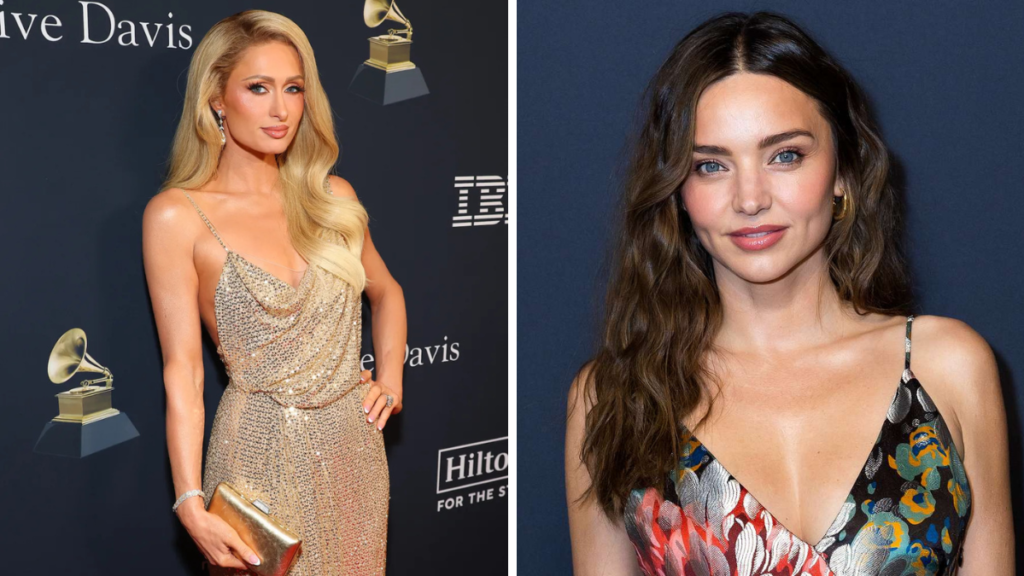

Paris Hilton and Miranda Kerr are two internationally recognised personalities who have built successful careers in fashion, entertainment, beauty, and business. Although they are known for different professional achievements, both women have become influential figures in popular culture. Hilton rose to fame as a reality television star, entrepreneur, and member of one of America’s most recognisable hotel families, while Kerr established herself as an internationally successful model and beauty entrepreneur.
Their names often appear together in discussions about celebrity fashion, luxury lifestyles, influential women, and the evolution of modern fame. Both have experienced the demands of public attention while developing professional identities that extend far beyond their original careers. Their journeys also demonstrate how celebrities can transform public recognition into lasting commercial opportunities.
Interest in Paris Hilton and Miranda Kerr reflects a wider fascination with the lives of women who have successfully combined glamour, entrepreneurship, family life, and personal branding. While they have followed different paths, their careers reveal several interesting similarities, particularly their ability to adapt to changing audiences and build businesses around their individual identities.
Understanding their backgrounds, achievements, and influence provides a clearer picture of why both remain relevant in conversations about celebrity culture and contemporary business.
Who Are Paris Hilton and Miranda Kerr?
Paris Hilton was born on 17 February 1981 in New York City. She is the great-granddaughter of Conrad Hilton, the founder of Hilton Hotels, and grew up in a prominent family associated with luxury hospitality. However, her own public identity developed through entertainment, modelling, reality television, music, and business rather than simply through her family background.
Hilton became a household name during the early 2000s, particularly through the reality television series The Simple Life, which she starred in alongside Nicole Richie. Her distinctive voice, fashion choices, and memorable public persona made her a defining celebrity of that era. Over time, she expanded into fragrances, fashion accessories, media production, and other commercial ventures.
Miranda Kerr was born on 20 April 1983 in Sydney, Australia, and grew up in the small town of Gunnedah in New South Wales. Her journey into international fashion began when she won a modelling competition as a teenager. She subsequently developed a professional career that took her from Australian modelling assignments to major fashion campaigns and international runways.
Kerr became particularly famous for her work with Victoria’s Secret, joining its group of contracted models known as Victoria’s Secret Angels in 2007. Her natural beauty, approachable public image, and commercial modelling success helped establish her as one of the best-known Australian models of her generation.
Although their early careers were different, both women learned to operate in industries where public image, commercial relationships, and media attention can significantly influence professional success.
Paris Hilton’s Journey From Reality Television to Business
Paris Hilton’s rise to fame coincided with the expansion of reality television and celebrity-focused entertainment in the early 2000s. At a time when traditional film and music stars dominated much of popular culture, Hilton demonstrated that a recognisable personality could become a major commercial asset without following a conventional acting or singing career.
The Simple Life introduced viewers to Hilton and Nicole Richie as they experienced everyday jobs and rural living. The contrast between their glamorous backgrounds and the situations they encountered created much of the show’s appeal. Hilton’s catchphrases, distinctive style, and confident on-screen presence quickly became part of the wider cultural conversation.
Her influence extended into fashion, where she helped popularise low-rise jeans, rhinestone accessories, small handbags, velour tracksuits, and playful partywear. These trends became strongly associated with early-2000s celebrity fashion and have since returned through the revival of Y2K aesthetics.
However, Hilton’s career did not remain confined to television. She developed a substantial fragrance business, launched fashion and accessory collections, performed as a DJ, and explored media production. Her fragrance line, in particular, became an important part of her commercial portfolio.
In later years, she also embraced digital media and entrepreneurial projects that allowed her to reach audiences beyond traditional television. Her ability to reinvent herself has helped challenge the idea that reality television personalities have limited professional longevity.
Hilton’s career illustrates how a carefully developed personal brand can evolve. The public initially knew her largely for her celebrity lifestyle, but her later work increasingly highlighted her commercial experience, creative ambitions, and willingness to discuss difficult personal experiences.
Miranda Kerr’s Rise in the International Modelling Industry
Miranda Kerr’s professional journey followed a more traditional fashion-industry route. After gaining early recognition in Australia, she pursued opportunities in international modelling markets, eventually working with prominent fashion brands and appearing in major magazines.
Her career accelerated as she gained visibility through commercial campaigns and runway appearances. Joining Victoria’s Secret in 2007 marked an important milestone, placing her among a group of models who enjoyed considerable international recognition. Her appearances in the brand’s fashion shows introduced her to audiences far beyond the traditional fashion world.
Kerr’s success was supported by her versatility. She could appear in high-fashion editorials while also representing commercial beauty and skincare brands. This combination made her attractive to companies seeking a model who could communicate both luxury and accessibility.
Her modelling achievements also helped establish her as a public personality in her own right. Interviews, magazine covers, brand partnerships, and appearances at fashion events strengthened her reputation beyond the runway.
Rather than relying exclusively on modelling, Kerr eventually moved into entrepreneurship. She founded KORA Organics, a skincare brand launched in 2009 that emphasises naturally derived ingredients and a wellness-oriented approach to beauty.
This transition reflects a broader pattern among successful models who use their industry experience to identify opportunities in skincare, cosmetics, fashion, and lifestyle products. Kerr’s familiarity with beauty campaigns gave her insight into the expectations of consumers and the importance of communicating a consistent brand identity.
Her professional story demonstrates that modelling can provide a foundation for long-term business development when combined with a clear commercial vision.
How Their Careers Compare
Although Paris Hilton and Miranda Kerr work in different areas of entertainment and fashion, their careers share several important characteristics. Both gained recognition at a relatively young age, developed international visibility, and used their public profiles to create business opportunities.
Hilton’s original platform was entertainment and celebrity culture, while Kerr’s was fashion modelling. These starting points shaped the way audiences first understood them. Hilton became associated with nightlife, television, and trendsetting fashion, whereas Kerr became known for runway appearances, beauty campaigns, and commercial modelling.
Over time, both broadened their professional activities. Hilton expanded into fragrances, music, media, and lifestyle branding, while Kerr developed a skincare company alongside her modelling career.
| Category | Paris Hilton | Miranda Kerr |
|---|---|---|
| Date of birth | 17 February 1981 | 20 April 1983 |
| Birthplace | New York City, United States | Sydney, Australia |
| Main career breakthrough | Reality television and celebrity culture | International fashion modelling |
| Major professional association | The Simple Life | Victoria’s Secret |
| Business interests | Fragrances, fashion, media, entertainment, and lifestyle products | KORA Organics skincare and modelling partnerships |
| Public image | Glamorous, outspoken, playful, and entrepreneurial | Elegant, wellness-focused, and fashion-oriented |
| Family life | Married to Carter Reum; mother of two children | Married to Evan Spiegel; mother of three children |
| Wider influence | Reality television, Y2K fashion, and celebrity branding | Modelling, beauty, skincare, and wellness |
The comparison shows that their achievements cannot be measured using precisely the same standards. Hilton’s influence is closely connected to entertainment, marketing, and celebrity entrepreneurship, while Kerr’s success is rooted in fashion, beauty, and product development.
Nevertheless, both have demonstrated that a successful public image can become a foundation for ventures that remain relevant after the original source of fame changes.
Their Influence on Celebrity Fashion
Fashion is one of the most visible areas where the careers of these two women can be compared. Their styles reflect different approaches to celebrity dressing, but both have contributed to the way audiences interpret glamour and personal presentation.
Paris Hilton became closely associated with the early-2000s party aesthetic. Her wardrobe frequently included sparkling dresses, coordinated accessories, playful colours, and statement pieces designed to attract attention. These looks reflected a period when celebrity appearances were becoming a major source of fashion inspiration.
Her influence has experienced a renewed appreciation as younger audiences rediscover Y2K fashion. Low-rise silhouettes, glittering accessories, pink outfits, and nostalgic partywear have returned to social media and contemporary collections. Hilton’s archive of early celebrity looks provides a recognisable reference point for this revival.
Miranda Kerr’s style has generally leaned towards understated elegance. Her modelling background encouraged an understanding of tailoring, proportions, and the relationship between clothing and presentation. She has appeared in everything from glamorous evening gowns to minimalist everyday outfits, often favouring a polished and sophisticated appearance.
Kerr’s fashion identity also connects naturally with her beauty and wellness interests. Her public appearances frequently combine carefully selected clothing with a fresh makeup look and restrained accessories.
Together, their styles illustrate two enduring approaches to celebrity fashion. Hilton represents expressive, playful glamour, while Kerr is associated with refined elegance. Neither approach is inherently superior; each reflects a different personality and audience.
Their continuing visibility also demonstrates how fashion influence can extend beyond a single trend. A recognisable style creates a visual identity that audiences can identify, imitate, and reinterpret years later.
Beauty, Skincare, and Entrepreneurial Success
The beauty industry offers another useful way to understand the professional development of Paris Hilton and Miranda Kerr. Both women have used their public profiles to develop commercial products, although their businesses differ in emphasis and positioning.
Hilton’s fragrance business became one of her most recognisable ventures. Celebrity fragrances allow public figures to translate their identities into products that consumers can purchase and use. In Hilton’s case, the combination of recognisable branding, accessible luxury, and international retail distribution helped establish a long-running commercial presence.
Her broader business activities have included fashion, accessories, entertainment, and media projects. The common element is the use of her name and public persona to create recognisable products and experiences.
Kerr’s KORA Organics takes a more specialised approach. The brand focuses on skincare and communicates an emphasis on naturally derived ingredients, product quality, and wellness. Its identity is closely connected to Kerr’s public interest in skincare and healthy living.
This positioning distinguishes the business from a conventional celebrity merchandise line. Skincare customers often want information about ingredients, product performance, routines, and suitability for their needs. As a result, a beauty entrepreneur must communicate product benefits while maintaining consumer trust.
Neither celebrity’s reputation alone guarantees commercial success. Businesses in these markets must compete on factors such as quality, distribution, pricing, customer experience, and repeat purchases.
Their experiences nevertheless highlight an important principle of celebrity entrepreneurship: public recognition can create an initial audience, but a sustainable business requires products and services that give customers a reason to return.
Personal Lives, Marriage, and Motherhood
Beyond their careers, both women have attracted attention for their relationships and family lives. Although celebrity coverage often concentrates on glamorous appearances, their experiences also reflect the challenges of maintaining privacy while living under constant public scrutiny.
Paris Hilton married entrepreneur Carter Reum in November 2021. Their wedding received extensive media coverage, reflecting the public’s long-standing interest in Hilton’s personal life. The couple later welcomed two children, Phoenix and London, through surrogacy.
Hilton has spoken publicly about motherhood and the importance of family in her life. Becoming a parent has added a new dimension to her public identity, allowing audiences to see a more personal side of someone previously associated primarily with nightlife, fashion, and entertainment.
Miranda Kerr married Evan Spiegel, the co-founder and chief executive of Snap Inc., in May 2017. She had previously been married to actor Orlando Bloom, with whom she shares a son, Flynn. Kerr and Spiegel have two sons together, Hart and Myles.
Her family life has often been presented alongside her interest in wellness, balance, and a more private lifestyle. Although she remains a recognisable public figure, she generally maintains boundaries around the personal details she shares with audiences.
The experiences of both women demonstrate that family life can coexist with demanding professional commitments, but the balance is rarely simple. Business responsibilities, public appearances, travel, and parenting require time and careful organisation.
Their approaches also reflect a broader change in celebrity culture. Public figures increasingly decide which aspects of their personal lives to share, using interviews and social media to communicate directly while protecting certain family experiences from constant exposure.
Social Media and the Evolution of Their Public Images
Social media has transformed the relationship between celebrities and their audiences. Instead of depending entirely on magazines, television interviews, or entertainment reporters, public figures can now communicate directly with followers through photographs, videos, livestreams, and personal updates.
Paris Hilton has embraced this change particularly effectively. Her online presence combines fashion, family life, entertainment, humour, and business promotion. The style that made her recognisable during the reality television era has also translated well into short-form digital content.
Her ability to revisit earlier trends while presenting new projects has helped her connect with longtime fans and younger audiences who discovered her through social media. This continuity is valuable because it allows her public identity to evolve without completely abandoning the elements that made it distinctive.
Miranda Kerr also uses digital platforms to communicate with audiences interested in fashion, beauty, skincare, and wellness. Her content can support her business activities while offering glimpses into her professional commitments and selected aspects of her personal life.
Social media also allows both women to communicate their own messages rather than relying exclusively on outside interpretations. This can be particularly important when discussing business launches, personal milestones, or changes in public identity.
However, a strong digital presence brings challenges. Constant visibility can create unrealistic expectations, expose public figures to criticism, and blur the boundaries between professional branding and private life.
Their careers demonstrate that successful celebrity communication involves more than frequent posting. Consistency, recognisable values, audience engagement, and a clear understanding of personal boundaries all contribute to a sustainable public image.
Public Quotes and Their Broader Significance
Both women have discussed themes that help explain their professional journeys, including personal growth, confidence, and the importance of developing an identity beyond public expectations.
Hilton has frequently spoken about the difference between her public persona and her private experiences. In discussing her life and career, she has challenged the assumption that the playful, glamorous character audiences saw on television represented every aspect of her personality.
One particularly important source for understanding her perspective is her documentary, This Is Paris, released in 2020. The film explores aspects of her personal history that were largely absent from her early public image. Rather than treating celebrity as a complete account of someone’s life, the documentary encourages viewers to consider the difference between a public character and the person behind it.
Kerr’s public discussions of beauty and wellness similarly connect her professional image with her approach to business. Her work with KORA Organics reflects the principle that skincare should be considered in terms of ingredients, routines, and individual needs rather than appearance alone.
These themes are more useful than inventing memorable quotations or attributing generic statements to either woman. Their interviews, documentaries, and business communications provide a better foundation for understanding how they present themselves.
The broader lesson is that celebrity identities are often more complicated than their most familiar images. Hilton’s experience illustrates how a media persona can overshadow personal depth, while Kerr’s career shows how a model can develop a business identity that goes beyond physical appearance.
Both examples encourage a more thoughtful understanding of fame, entrepreneurship, and the role of personal experience in shaping public careers.
Why Paris Hilton and Miranda Kerr Continue to Attract Attention
The continuing interest in Paris Hilton and Miranda Kerr reflects their ability to remain visible while adapting to changes in popular culture. Their original career breakthroughs occurred in different industries, yet both have continued to develop new professional opportunities.
Hilton remains relevant through her entertainment work, business projects, fashion influence, and renewed attention to early-2000s celebrity culture. Her career is also part of a larger discussion about how reality television changed the way fame was created and commercialised.
Kerr’s continuing recognition comes from her modelling achievements, beauty entrepreneurship, and association with international fashion. Her transition into skincare gives her a professional identity that is not dependent solely on runway work or magazine appearances.
Their influence also reaches audiences with different interests. Fans of nostalgic fashion may be drawn to Hilton’s iconic looks, while beauty enthusiasts may follow Kerr’s skincare business and modelling career.
At the same time, both women have become examples of the ways public figures can diversify their work. Modern celebrity businesses increasingly include product development, digital media, licensing, and direct communication with consumers.
Their relevance does not mean that every business venture or public appearance receives universal approval. Rather, it reflects the ability to maintain recognition while adapting to a changing media environment.
For readers interested in celebrity culture, their stories provide useful examples of how fame, personal branding, commercial strategy, and professional reinvention can interact over several decades.
The Lasting Legacy of Two Different Celebrity Journeys
Paris Hilton and Miranda Kerr represent different routes to international recognition. Hilton became famous through a combination of family background, reality television, fashion, and entertainment, while Kerr built her reputation through modelling and developed a business presence in skincare and beauty.
Their careers show that there is no single formula for maintaining relevance. Some public figures succeed by remaining closely connected to entertainment, while others develop businesses that offer a more specialised professional focus.
Hilton’s legacy includes her contribution to early reality television, the commercialisation of celebrity culture, and the revival of Y2K fashion. Her evolution into an entrepreneur also demonstrates how a public image can become the starting point for a diverse business portfolio.
Kerr’s achievements highlight the international opportunities available through modelling and the potential to transform industry experience into a consumer-focused company. Her skincare business reflects the importance of identifying a clear market position and communicating it consistently.
Both women have also navigated major changes in their personal lives while remaining professionally active. Their experiences underline the importance of flexibility, privacy, and the ability to redefine success over time.
Ultimately, the story of these two celebrities is not simply about glamour or wealth. It is about professional development, public perception, entrepreneurship, and the ways people can grow beyond the roles that first made them famous.
Frequently Asked Questions
Are Paris Hilton and Miranda Kerr friends?
There is no widely established public record confirming a particularly close friendship between them. They share connections to fashion, beauty, and celebrity culture, but appearing in the same entertainment discussions does not necessarily indicate a personal relationship.
How did Paris Hilton become famous?
Paris Hilton became widely famous during the early 2000s through reality television, especially The Simple Life, which she starred in with Nicole Richie. Her distinctive personality, fashion choices, and media appearances helped establish her as a major figure in celebrity culture.
What is Miranda Kerr best known for?
Miranda Kerr is best known for her international modelling career and her work with Victoria’s Secret. She is also the founder of KORA Organics, a skincare brand that emphasises naturally derived ingredients and wellness.
Do Paris Hilton and Miranda Kerr have businesses?
Yes. Paris Hilton has developed commercial ventures involving fragrances, fashion, entertainment, and media. Miranda Kerr founded KORA Organics and has continued to work in modelling and beauty-related activities. Their businesses reflect different approaches to celebrity entrepreneurship.
Who are Paris Hilton and Miranda Kerr married to?
Paris Hilton married entrepreneur Carter Reum in November 2021. Miranda Kerr married Evan Spiegel, the co-founder and chief executive of Snap Inc., in May 2017.
Do Paris Hilton and Miranda Kerr have children?
Yes. Paris Hilton and Carter Reum have two children, Phoenix and London. Miranda Kerr has three sons: Flynn, whom she shares with former husband Orlando Bloom, and Hart and Myles, whom she shares with Evan Spiegel.
What is the main difference between their careers?
The central difference is their original route to fame. Hilton became prominent through reality television and celebrity entertainment, while Kerr achieved international recognition through fashion modelling. Both later expanded into business, but Hilton’s activities span entertainment and lifestyle branding, whereas Kerr is particularly associated with skincare and beauty.
Why are Paris Hilton and Miranda Kerr popular in fashion discussions?
Both women have recognisable personal styles and extensive experience in fashion-related industries. Hilton is associated with early-2000s partywear and the Y2K revival, while Kerr is known for elegant modelling, commercial fashion campaigns, and a polished beauty aesthetic.
Conclusion
Paris Hilton and Miranda Kerr have built successful public identities through different professional journeys, yet their careers share important lessons about adaptability, entrepreneurship, and lasting cultural influence. Hilton transformed reality television fame into opportunities across fragrances, entertainment, fashion, and media, while Kerr used her modelling success to establish a business presence in skincare and beauty.
Their influence extends beyond their appearances at glamorous events. Both have adapted to changing audiences, developed commercial interests, and navigated the challenges of balancing professional responsibilities with family life. Their stories also reveal how celebrity identity can evolve as public figures gain experience and explore new ambitions.
For anyone interested in celebrity culture, fashion history, and modern entrepreneurship, these two women offer compelling examples of how recognition can become a platform for long-term professional development. Although their paths remain distinct, their ability to maintain public relevance demonstrates that lasting success often depends on reinvention, clear personal branding, and the willingness to grow beyond an original claim to fame.
Read also Hans Vestberg and Jeff Greene: Leadership, Business Success, and Their Professional Stories