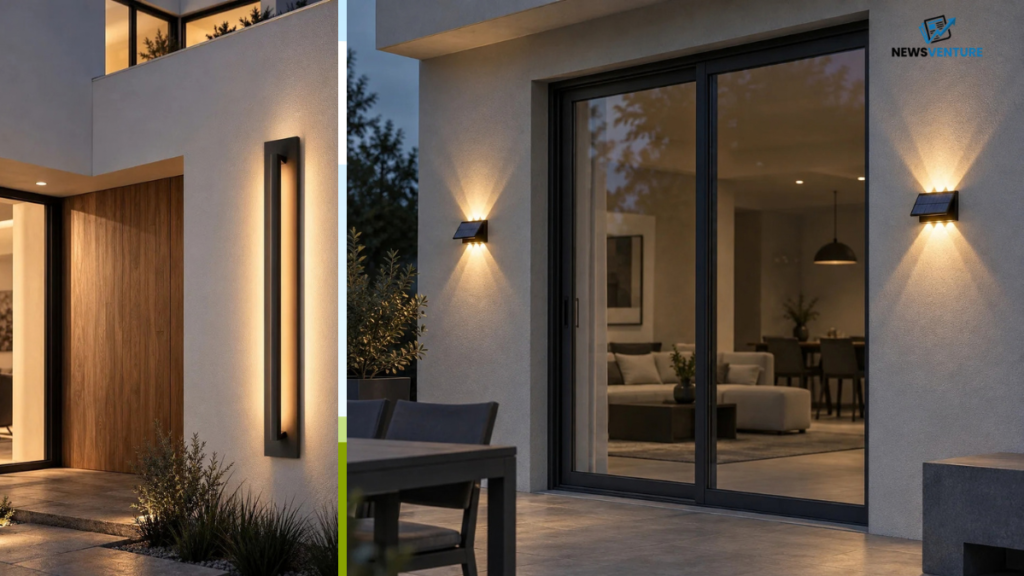

Waterproof outdoor wall lights with sensor are an excellent way to combine practical illumination, convenience, security, and exterior style. These lights are designed to withstand outdoor conditions while automatically turning on when movement is detected. Whether you want to brighten a front entrance, illuminate a garage, improve visibility around a garden, or add extra security to a side passage, sensor-equipped outdoor wall lighting can provide a useful solution without requiring the light to remain switched on continuously.
Modern outdoor lighting has developed far beyond traditional wall-mounted lamps. Today’s fixtures can include LED technology, PIR motion detection, dusk-to-dawn sensors, solar charging, adjustable sensitivity, multiple lighting modes, and durable weather-resistant housings. Because of this variety, choosing the right fixture requires more than selecting the most attractive design. Factors such as the IP rating, brightness, detection range, power source, installation location, and construction material can significantly affect long-term performance.
The best approach is to select a light according to the specific outdoor environment in which it will be installed. A small covered porch may require different specifications from an exposed driveway or garden wall. Understanding the most important features can help homeowners make a more informed choice and avoid purchasing a fixture that looks impressive but does not perform well in its intended location.
What Are Waterproof Outdoor Wall Lights With Sensor?
Waterproof outdoor wall lights with sensor are exterior lighting fixtures designed to resist moisture while using a sensor to automatically control illumination. The sensor detects movement or changing environmental conditions and activates the light according to its programmed settings. Most residential motion-sensor lights use passive infrared technology, commonly known as PIR, to detect movement from people and animals.
The waterproof aspect is particularly important because outdoor fixtures are exposed to rain, humidity, dust, temperature fluctuations, and sunlight. An appropriate IP rating indicates the level of protection provided by the enclosure against solid particles and water. For locations exposed directly to rainfall, homeowners should pay close attention to the water-resistance rating rather than relying only on a product description that calls a fixture “weatherproof.”
Sensor functionality adds convenience because the light can remain off when illumination is unnecessary. When someone approaches the detection zone, the light can automatically switch on. This is particularly useful around doors, garages, pathways, gates, and other locations where people frequently move after dark.
Why Choose Sensor-Based Outdoor Wall Lighting?
One of the main benefits of sensor-based lighting is convenience. Walking toward a dark entrance while carrying shopping bags or trying to locate keys can be frustrating when a conventional light requires manual operation. A motion sensor can illuminate the area automatically, making everyday movement around the property easier.
Automatic activation can also reduce unnecessary operating time. A traditional outdoor light may accidentally remain switched on for hours, whereas a motion-activated LED fixture can illuminate the area only when activity is detected. This can be particularly useful for homeowners who want practical lighting without leaving exterior fixtures running throughout the night.
Sensor lighting can also improve visibility around potentially hazardous areas. Steps, uneven pathways, garage entrances, and narrow side passages can become difficult to navigate after sunset. Properly positioned illumination can make these areas easier to see and use.
Understanding IP Ratings for Outdoor Wall Lights
The IP rating is one of the most important specifications to examine when buying an exterior wall light. IP stands for Ingress Protection, and the rating indicates how effectively an enclosure protects its internal components from solid objects and moisture.
The first digit represents protection against solid particles such as dust. The second digit represents protection against water. A higher number generally indicates a higher level of protection within that category.
For example, IP44 provides protection against splashing water, while IP65 provides dust-tight protection and resistance to water jets. This makes higher-rated fixtures particularly useful for exterior locations that are directly exposed to weather.
| IP Rating | General Water Protection | Typical Outdoor Application |
|---|---|---|
| IP44 | Protection against splashing water | Covered porches and sheltered entrances |
| IP54 | Protection against limited dust and splashing | Partially protected exterior walls |
| IP65 | Dust-tight and protected against water jets | Exposed walls, entrances and garages |
| IP66 | Protection against stronger water jets | Highly exposed exterior locations |
| IP67 | Protection against temporary immersion | Specialized outdoor applications |
The correct rating should always be checked against the manufacturer’s installation instructions. A high IP rating is valuable, but proper installation remains essential because gaps, damaged seals, incorrectly fitted covers, or poorly protected cable connections can compromise an otherwise weather-resistant fixture.
How Motion Sensors Work
Most residential sensor wall lights use PIR technology. PIR sensors detect changes in infrared radiation associated with moving objects, particularly people and animals. When the sensor detects movement within its coverage area, it sends a signal that activates the light.
The performance of a motion sensor depends on several factors. These include detection range, detection angle, mounting height, sensor orientation, sensitivity, and the movement of objects within the surrounding environment.
Sensor placement is therefore just as important as the sensor specification itself. A light installed too high, too low, or facing an unsuitable direction may not detect people effectively. Following the manufacturer’s recommended mounting position can help achieve more reliable results.
Motion Detection Range and Detection Angle
The advertised detection range tells you approximately how far the sensor can detect movement under suitable conditions. Some residential lights cover only a few metres, while others can detect movement considerably farther away.
Detection angle is another important specification. A wide-angle sensor can cover a broader area, making it useful for driveways, garden paths, and larger entrances. A narrower detection zone may be appropriate beside a small doorway where broad coverage is unnecessary.
It is important to remember that advertised performance can vary according to installation height, environmental conditions, the direction in which a person approaches the sensor, and the characteristics of the moving object. Rather than selecting a fixture based on maximum range alone, consider whether the sensor covers the actual area where movement is expected.
Adjustable Motion Sensor Settings
Many modern outdoor wall lights include adjustable controls that allow users to customize how the sensor operates. Depending on the model, controls may include sensitivity, illumination duration, and ambient-light thresholds.
Sensitivity adjustment can help prevent unnecessary activation. For example, if a light repeatedly turns on because of movement on a nearby road or activity outside the desired detection area, lowering the sensitivity may help.
The duration setting determines how long the light remains illuminated after detecting movement. A short duration can be useful for pathways and entrances, while a longer setting may be more convenient around garages or areas where people need sustained illumination.
Some models also include a light-level or dusk sensor. This prevents the motion function from activating the light during daylight when illumination is not required.
Solar vs Mains-Powered Outdoor Wall Lights
The power source is another major consideration when choosing exterior sensor lighting. Solar-powered and mains-powered fixtures each have different advantages.
Solar wall lights use photovoltaic panels to collect energy during daylight hours. The energy is stored in an internal battery and used to power the light after sunset. Since no permanent electrical connection is normally required for the fixture itself, solar models can be convenient for garden walls, sheds, fences, gates, and other locations where wiring would be difficult.
Mains-powered lights receive electricity from the property’s electrical supply. They can provide consistent operation without depending on daily sunlight, making them particularly useful when dependable lighting is required throughout the year.
| Feature | Solar Sensor Wall Light | Mains-Powered Sensor Wall Light |
|---|---|---|
| Wiring | Usually minimal | Requires electrical connection |
| Daylight dependency | Yes | No |
| Installation flexibility | Generally high | Depends on wiring access |
| Consistency | Can vary with sunlight | Generally consistent |
| Battery | Usually included | Usually not required |
| Suitable for remote walls | Often convenient | May require additional wiring |
| Long-term maintenance | Battery may eventually need replacement | Electrical components need maintenance |
The best choice depends on the installation location. Solar lighting can be extremely convenient where adequate sunlight is available, while mains-powered lighting can be preferable for high-use or security-critical locations.
Solar Lighting Performance and Placement
Solar sensor lights work best when the solar panel receives sufficient direct or strong daylight. Shading from trees, roofs, walls, or neighboring buildings can reduce the amount of energy collected during the day.
Panel positioning therefore deserves careful consideration. Even a high-capacity battery cannot compensate indefinitely for inadequate charging conditions. Dust and dirt on the panel can also reduce its ability to capture sunlight.
Before installing a solar wall light, consider how much direct sunlight reaches the intended location throughout the day. Seasonal changes can also affect performance, particularly in locations where winter daylight hours are shorter.
LED Technology for Outdoor Wall Lights
LED lighting has become a popular choice for exterior wall fixtures because it can provide substantial illumination with relatively low energy consumption. LEDs are also available in a wide range of colour temperatures and designs.
Warm white light can create a welcoming atmosphere around a front entrance, patio, or garden. Neutral white can provide a balanced appearance suitable for general outdoor illumination, while cooler white light may be preferred where a brighter, more functional appearance is desired.
The choice should also take the surrounding environment into account. Extremely bright or cool lighting may create unnecessary glare, while insufficient illumination can leave important areas poorly visible.
How Many Lumens Do Outdoor Wall Lights Need?
Lumens indicate the amount of visible light produced by a fixture. Unlike watts, which primarily describe electrical power consumption, lumens provide a more useful indication of brightness when comparing modern LED lights.
The ideal lumen output depends on the application. Decorative lighting around a small patio may require less illumination than a driveway or garage entrance. A front door may benefit from moderate brightness that makes locks, steps, and house numbers easy to see without producing excessive glare.
For security-oriented applications, broader coverage and appropriate brightness are generally more useful than simply selecting the highest-lumen fixture available. Extremely bright light can create glare and harsh shadows, which may actually make certain areas harder to see.
Choosing the Right Colour Temperature
Colour temperature influences how the outdoor environment looks after dark. It is commonly measured in Kelvin.
Warm white lighting creates a softer and more inviting appearance. It is often suitable for residential entrances, patios, balconies, and decorative garden applications.
Neutral white provides a more balanced appearance and can work well for general outdoor use. Cooler white lighting produces a sharper appearance and may be useful around garages, workshops, and areas where visibility is a priority.
There is no universally correct colour temperature. The choice should complement the home’s exterior and the purpose of the lighting.
Materials Used in Outdoor Wall Lights
Outdoor fixtures need materials capable of handling changing weather conditions. Common construction materials include aluminium, stainless steel, treated metals, durable plastics, and weather-resistant composites.
Aluminium is popular because it can provide a relatively lightweight and durable housing. Stainless steel can offer a modern appearance and good resistance to corrosion when the appropriate grade and finish are used.
Plastic housings can also perform well when they are specifically designed for outdoor use. UV resistance is worth considering because constant exposure to sunlight can cause some materials to fade or deteriorate over time.
For properties in coastal environments, corrosion resistance deserves particular attention because salty air can be more demanding on outdoor fixtures than ordinary urban conditions.
Best Places to Install Sensor Wall Lights
The versatility of sensor wall lights makes them suitable for many areas around a property.
Front Entrance
A wall light near the main entrance can illuminate the doorway whenever someone approaches. This makes it easier to find keys, identify visitors, navigate steps, and enter the property safely after dark.
Garage and Driveway
Garage entrances can benefit from brighter motion-activated lighting because vehicles and people often approach the area at night. A wider detection angle can be useful where the driveway extends across a larger area.
Side Passage
Side passages can become particularly dark because they are often enclosed between walls or buildings. A sensor light can provide illumination only when someone enters the passage, avoiding the need for continuous lighting.
Garden and Patio
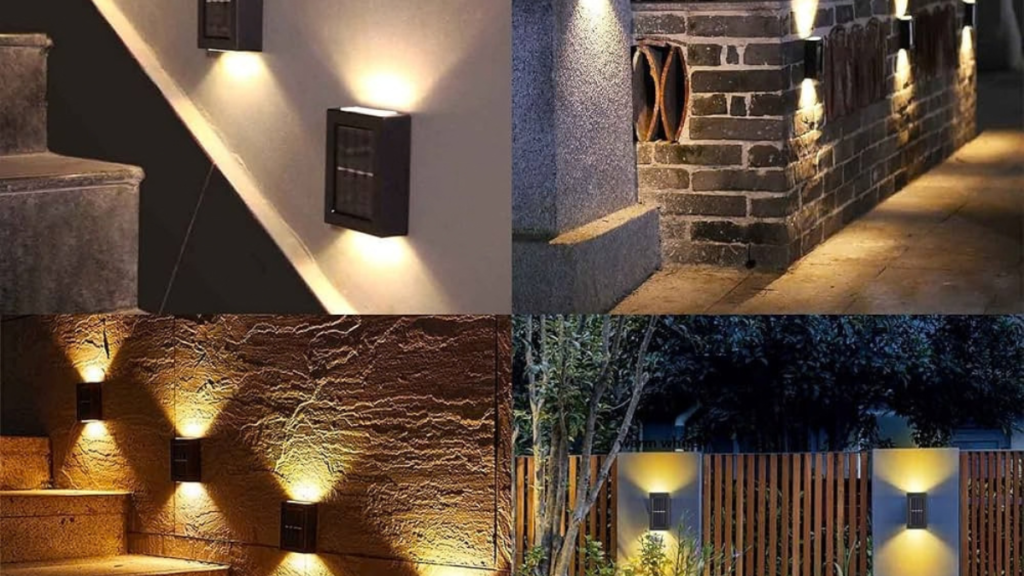
Sensor lights can provide practical illumination around garden walls, patios, sheds, and outdoor seating areas. Solar models can be particularly convenient in locations where electrical wiring is difficult.
Gates and Boundary Walls
A sensor fixture near a gate can illuminate visitors as they approach the property. When installed correctly, it can also improve visibility around entrances and pathways.
Decorative Designs for Different Exterior Styles
Outdoor lighting should perform a practical function while also complementing the architecture of the property. Modern homes often suit minimalist rectangular fixtures, slim black designs, cylindrical lamps, and geometric wall lights.
Traditional properties may work better with lantern-style fixtures, decorative frames, bronze-inspired finishes, or classic silhouettes. Contemporary lighting can also create attractive up-and-down illumination effects that highlight exterior walls.
Black and dark finishes are particularly versatile, while silver, white, bronze, and other finishes can be selected to complement doors, windows, railings, and other exterior details.
Motion Sensor vs Dusk-to-Dawn Sensor
Motion detection and dusk-to-dawn operation are different features. A motion sensor activates the light when movement occurs. A dusk-to-dawn sensor responds primarily to changes in ambient light levels.
Some fixtures combine both functions. The light remains inactive during daylight and then activates when movement is detected after dark. This can provide a practical balance between convenience and energy efficiency.
For a front entrance, combined motion and light-level sensing can be particularly useful because the fixture does not need to activate every time movement occurs during daylight.
Reducing False Activations
False activations can occur when a motion sensor detects movement that is not relevant to the intended lighting area. Passing vehicles, pets, tree branches, and other moving objects can sometimes trigger a sensor.
Positioning the sensor carefully can reduce these problems. Avoid pointing it directly toward a busy road if vehicles frequently pass within the detection area.
Adjustable sensitivity can also be helpful. Reducing the detection range can prevent the fixture from responding to distant movement while still detecting people approaching the door.
Following the manufacturer’s recommended installation height and angle is equally important because PIR sensors can respond differently depending on how a person moves through the detection zone.
Installation Considerations
Installation requirements depend on whether the fixture is solar or mains-powered. Solar lights generally require mounting the fixture securely and positioning the panel appropriately.
Mains-powered outdoor lights require additional attention because electrical connections must be appropriately protected from moisture and environmental exposure. New wiring or electrical modifications should be handled according to applicable local requirements and, where necessary, by a qualified electrician.
Before installation, check the mounting surface, bracket dimensions, cable entry points, sensor direction, and recommended mounting height.
A fixture with excellent specifications cannot perform properly if it is mounted incorrectly or exposed to conditions beyond its intended design.
How Outdoor Sensor Lighting Can Improve Security
Motion-activated exterior lighting can improve visibility around a property. When a person approaches an entrance or another monitored area, the sudden illumination can make movement easier to observe.
Lighting is best considered one part of a broader security strategy. It can complement locks, cameras, alarms, gates, and other security measures, but it does not replace them.
For security-focused installations, consider the entire area that needs illumination. A small wall lamp directly beside a door may not adequately illuminate a driveway or long side passage.
Energy Efficiency and Operating Costs
Sensor-controlled LED lighting can help reduce unnecessary operating time because the fixture does not need to remain illuminated continuously.
Solar models can reduce dependence on mains electricity during normal operation, although their performance depends on available sunlight and battery condition.
Mains-powered LED fixtures can also be highly efficient, particularly when combined with motion and dusk-to-dawn controls. Instead of calculating efficiency from wattage alone, consider the relationship between power consumption, brightness, operating time, and the size of the area being illuminated.
Maintenance Tips for Outdoor Wall Lights
Outdoor fixtures require occasional maintenance even when they have a high weather-resistance rating. Dust, insects, leaves, and other debris can accumulate around the housing or sensor.
Solar models require additional attention because dirt on the photovoltaic panel can reduce charging efficiency. Wiping the panel periodically with a suitable soft cloth can help maintain its ability to receive sunlight.
Check the fixture periodically for visible cracks, loose mounting hardware, damaged seals, corrosion, or exposed cables. Any damaged weatherproofing should be addressed promptly.
If the sensor begins activating unpredictably, check whether the surrounding environment has changed. New plants, moving branches, parked vehicles, or other objects may have entered the detection zone.
What to Look for Before Buying
Before purchasing a sensor wall light, compare its technical specifications carefully rather than relying solely on appearance.
Important specifications include:
- IP rating
- Motion detection technology
- Detection range
- Detection angle
- Lumens
- Colour temperature
- Power source
- Battery capacity for solar models
- Solar panel specifications
- Sensor sensitivity adjustment
- Lighting duration adjustment
- Dusk-to-dawn functionality
- Housing material
- Installation method
- Warranty
- Replacement parts availability
A detailed product specification sheet makes it easier to determine whether a particular light is genuinely suitable for the intended location.
Common Buying Mistakes to Avoid
One common mistake is choosing a fixture without checking the IP rating. A product advertised as an outdoor light is not necessarily suitable for direct exposure to heavy rain.
Another mistake is focusing entirely on brightness. A very bright fixture can create glare, while the wrong beam pattern may leave important areas in shadow.
Solar buyers sometimes overlook sunlight availability. A beautifully designed solar light may perform poorly if the panel is installed in permanent shade.
Sensor placement is another frequently overlooked factor. Even a high-quality PIR sensor can provide disappointing results if it is aimed toward the wrong area.
Finally, buyers should consider long-term maintenance. Battery replacement, cleaning, corrosion resistance, spare parts, and warranty support can all affect the overall value of an outdoor fixture.
Frequently Asked Questions
Are waterproof outdoor wall lights with sensor suitable for heavy rain?
Fixtures with an appropriate IP rating can be suitable for exposed outdoor locations. IP65 or higher is often considered for areas that experience direct exposure to rain, although the manufacturer’s specific installation instructions should always be followed.
What IP rating is best for an outdoor wall light?
The appropriate rating depends on the installation location. IP44 may work for a sheltered porch, while IP65 is a common choice for more exposed exterior walls. Locations with particularly demanding weather conditions may require even greater protection.
Are solar outdoor sensor lights reliable?
Solar sensor lights can be reliable when installed where the solar panel receives adequate daylight. Performance can vary with shade, weather, panel cleanliness, battery condition, and seasonal changes in sunlight.
How far can a motion sensor detect movement?
Detection distance varies by product. Some compact residential fixtures cover a relatively small area, while larger models can detect movement across considerably greater distances. The manufacturer’s stated range should be considered together with the recommended mounting height and detection angle.
Are LED outdoor wall lights energy efficient?
LED lights generally provide substantial illumination using relatively little electrical power compared with older lighting technologies. Combining LEDs with motion and dusk-to-dawn sensors can further reduce unnecessary operating time.
Can sensor wall lights improve home security?
Motion-activated lighting can improve visibility around doors, driveways, pathways, and other exterior areas. It can complement other security measures, although lighting alone should not be treated as a complete security system.
Final Thoughts on Waterproof Outdoor Wall Lights With Sensor
Waterproof outdoor wall lights with sensor can provide a practical combination of automatic illumination, weather resistance, energy-conscious operation, and attractive exterior design. They can make entrances easier to navigate, improve visibility around garages and pathways, and add useful illumination to gardens, patios, gates, and side passages.
The most important step is matching the fixture to the environment. Check the IP rating for weather exposure, examine the sensor’s range and angle, consider the required brightness, and decide whether solar or mains power makes more sense for the installation.
A good outdoor wall light should also complement the property’s appearance. With the wide range of modern LED designs available, homeowners can choose fixtures that provide useful illumination without compromising exterior style. By considering durability, sensor performance, installation requirements, energy use, and maintenance together, it becomes much easier to select an outdoor lighting solution that remains useful and attractive over the long term.
You may read also Lilo and Stitch Cake Ideas: Cute, Creative Designs for a Magical Birthday