
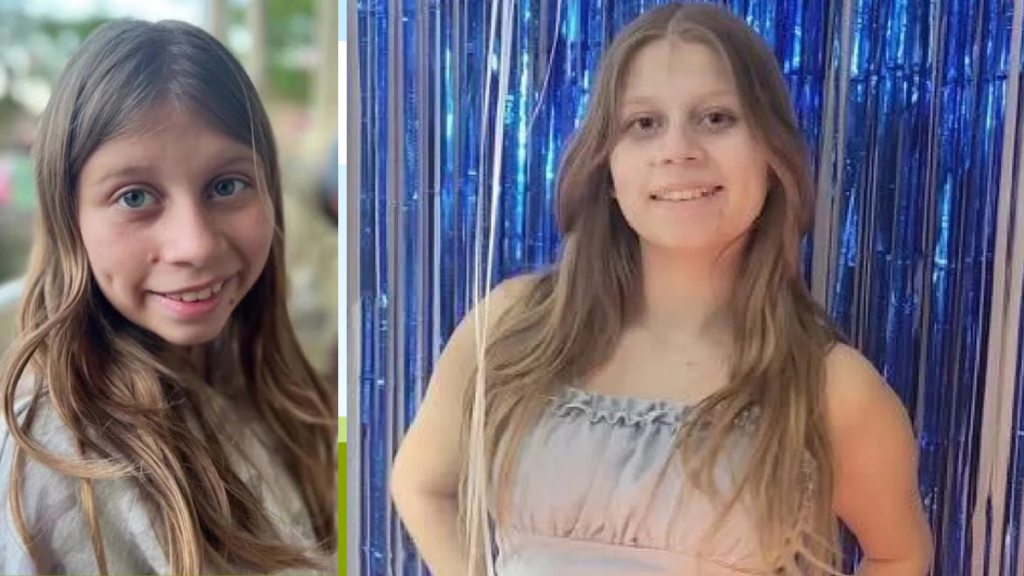

Madeline Soto was a 13-year-old girl from Kissimmee, Florida, whose disappearance in February 2024 led to a major search and a deeply disturbing criminal investigation. She was reported missing on February 26 after she did not arrive at Hunter’s Creek Middle School. Her disappearance quickly became a homicide investigation when authorities determined that she had not been dropped off at school as initially reported.
The case attracted national attention because investigators uncovered evidence connecting Stephan Sterns, the boyfriend of Madeline’s mother, to her disappearance and to years of sexual abuse. Madeline’s body was found on March 1, 2024, in a wooded area of Osceola County. In July 2025, Sterns pleaded no contest to first-degree murder and guilty to 20 sex-crime charges, ending the criminal proceedings with a life sentence without parole.
Who Was Madeline Soto?
Madeline Soto was a young teenager living in the Kissimmee area of Central Florida. She attended Hunter’s Creek Middle School and was 13 years old when she disappeared. Her case quickly became one of the most closely followed missing-child investigations in the region because of the circumstances surrounding her disappearance and the subsequent discovery of her body.
Early reports described her as a student whose family and community were desperately searching for answers. School officials and local authorities expressed their grief after learning that she had died. Orange County Public Schools Superintendent Maria Vazquez described her as a “precious student” while acknowledging the profound effect the tragedy had on classmates and staff.
The public discussion surrounding the case has often focused heavily on the criminal investigation, but it is important to remember that the story began with a child whose life was cut short. Beyond court documents and police evidence, Madeline was a daughter, student, family member, and member of her local community.
The Disappearance in February 2024
Madeline was reported missing on the morning of February 26, 2024. Investigators initially worked from information that she was supposed to have been taken toward school. When she failed to appear for class, however, concerns escalated quickly. Her mother learned that she had not attended school and contacted authorities.
The first hours of a missing-child investigation are critical, and law enforcement officers began searching the Kissimmee area. Investigators eventually identified inconsistencies in the account of how Madeline was supposedly taken to school. Surveillance footage became an important part of reconstructing the morning and understanding what had happened.
According to authorities, surveillance footage showed Sterns disposing of Madeline’s backpack and school-issued laptop in a dumpster before returning to the apartment complex. Investigators later said footage showed Madeline inside his vehicle and concluded that she had not been dropped off at school.
The investigation therefore shifted from a missing-person search toward a suspected homicide. Sheriff John Mina told reporters that investigators were “confident” Madeline was dead before her body had been located. That announcement marked a devastating turning point for her family and the community.
The Discovery of Her Body
On March 1, 2024, search teams located Madeline’s body in a wooded area near Hickory Tree Road in Osceola County. Authorities notified her family before publicly confirming the discovery.
The location was significant because investigators had been examining Sterns’ movements in the area. Earlier surveillance and vehicle information helped detectives establish a timeline of his activities after Madeline disappeared. The discovery transformed an urgent search into a formal homicide investigation.
The Orange County Sheriff’s Office and Kissimmee Police Department had worked alongside other agencies during the search. Once the body was recovered, Kissimmee police became the lead agency handling the homicide investigation.
The case also demonstrated how quickly a missing-child investigation can develop as new evidence emerges. What initially appeared to be a missing student case became a complex investigation involving surveillance footage, digital evidence, forensic examination, witness interviews, and criminal charges.
The Investigation Into Stephan Sterns
Stephan Sterns was the boyfriend of Madeline’s mother and was living in the same household. He initially told investigators that he had taken Madeline toward school. As detectives reviewed evidence, however, authorities said his account did not match what surveillance footage showed.
Sterns was arrested on February 28, two days after Madeline was reported missing. Investigators said they discovered sexually explicit material involving the child on electronic devices and subsequently developed evidence alleging long-term abuse. The investigation eventually produced dozens of sex-crime charges.
Digital evidence became particularly important in the prosecution. Investigators recovered material from Sterns’ phone and Google Drive despite his claim that his phone had been accidentally reset. In 2025, a judge ruled that prosecutors could use evidence from the cellphone and Google Drive in the sexual-battery prosecution.
The evidence was not limited to one device or one moment. Investigators examined digital records, surveillance footage, vehicle movements, and other information to build a broader timeline. This evidence ultimately became central to the criminal cases against Sterns.
Sexual Abuse Charges and the Broader Case
The investigation uncovered allegations that the abuse had occurred over an extended period. In March 2024, prosecutors added 60 sex-related charges against Sterns, including allegations involving sexual battery, lewd or lascivious molestation, and possession of material depicting sexual performance by a child.
These charges were separate from the murder prosecution, although the investigations were closely connected. The alleged sexual abuse provided investigators with important evidence about Sterns’ relationship with Madeline and the circumstances surrounding her death.
The scale of the charges also explained why the case became legally complicated. Prosecutors had to prepare separate criminal proceedings involving both the alleged sexual abuse and first-degree murder. Evidence from digital devices was expected to play a major role in the sex-crime proceedings.
The case was therefore not simply about determining what happened on one morning. Investigators and prosecutors were examining a much longer pattern of alleged criminal behavior, while the homicide prosecution focused on Madeline’s death.
The Murder Charge
In April 2024, Sterns was indicted on a first-degree murder charge connected with Madeline’s death. He initially pleaded not guilty and remained in custody while prosecutors prepared their case.
Prosecutors later announced that they intended to seek the death penalty. That decision significantly raised the stakes of the murder prosecution and meant that Sterns potentially faced the most severe punishment available under Florida law.
For much of the case, the expectation was that prosecutors would eventually present evidence to a jury. Trial dates were established, postponed, and reorganized as the legal proceedings continued. By early 2025, separate trial periods had been scheduled for the sex-crime and homicide cases.
That changed dramatically in July 2025.
The Plea Agreement and Life Sentence
On July 21, 2025, just before the scheduled start of the sexual-battery trial, Sterns changed his pleas. He pleaded guilty to 20 sex-crime charges and no contest to first-degree murder. The agreement removed the possibility of the death penalty.
The judge accepted the pleas and sentenced Sterns to life in prison without the possibility of parole. He also received life sentences for the sex offenses, resulting in multiple concurrent life sentences.
A no-contest plea is legally different from a guilty plea, although it can carry the same sentencing consequences. In this case, the court imposed a life sentence for the murder after accepting the no-contest plea. The guilty pleas to the sex offenses also resulted in life imprisonment.
The plea agreement brought an end to what could otherwise have been lengthy and emotionally difficult trials. Prosecutors explained that resolving the case through the agreement avoided forcing the family to repeatedly relive the evidence in court.
What Sterns Said in Court
During the July 2025 sentencing hearing, Sterns addressed the court after the judge announced the sentence. His statement included an apology and an expression of regret over the pain caused by the case.
According to reporting from the hearing, Sterns said, “It is not fair Madeline is not here,” and spoke about wishing he could trade places with her.
Madeline’s father, Tyler Wallace, also addressed the court. His victim-impact statement reflected the anger and grief felt by her family. He described Sterns’ conduct in strongly condemnatory terms and said, “It doesn’t heal with time.”
The statements illustrated the emotional weight of the sentencing. While the legal case reached its conclusion, the family’s loss could not be resolved by a court ruling. The sentence established a permanent legal consequence for Sterns, but it could not undo what happened to Madeline.
The Role of Digital Evidence
One of the most important elements of the case was the use of digital evidence. Investigators found incriminating material connected to Sterns on electronic devices, and prosecutors later argued that this material supported the sex-crime charges.
Digital investigations can be particularly important in modern criminal cases because smartphones, cloud accounts, photographs, messages, location information, and other electronic records can help establish relationships and timelines. In this case, prosecutors were allowed to use cellphone and Google Drive evidence after a judge rejected efforts to keep that evidence out of court.
The evidence also helped investigators challenge Sterns’ initial account of events. The investigation did not depend on a single piece of information. Instead, detectives assembled multiple sources of evidence that collectively shaped the prosecution’s case.
This is an important part of understanding the case. High-profile investigations can sometimes become dominated by individual headlines, but criminal prosecutions are ultimately built around evidence that can be presented and evaluated through the legal system.
Surveillance Footage and the Timeline
Surveillance footage was another crucial component of the investigation. Authorities said cameras captured Sterns disposing of items belonging to Madeline before returning to the apartment complex.
Investigators also said footage showed Madeline inside his vehicle later that morning. Sheriff Mina explained that detectives believed she was already dead at that point.
Authorities subsequently examined Sterns’ movements in the hours after Madeline disappeared. His vehicle was seen in the area of State Road 192 and Old Hickory Tree Road, where investigators were also searching for evidence.
By comparing surveillance footage, witness accounts, electronic evidence, and physical evidence, investigators were able to create a more complete chronology. This process was critical because the initial account of the morning did not align with the evidence authorities said they recovered.
Why the Case Received National Attention
The case received widespread attention because it involved the disappearance and death of a 13-year-old child, a trusted adult within her household, and allegations of long-term abuse. The rapid development from a missing-person report to a homicide investigation also kept the case in the national news.
Another factor was the extensive digital and surveillance evidence. Modern criminal investigations increasingly rely on technology, and the case offered a stark example of how electronic records can become central to a prosecution.
Media attention also intensified because of the emotional response from the Central Florida community. Vigils, school support, public statements, and extensive law enforcement searches demonstrated how deeply the case affected people beyond Madeline’s immediate family.
At the same time, the case raised difficult questions about how the media reports on victims of violent crime, especially children. Responsible coverage requires balancing the public interest with respect for the victim and her surviving family.
The Importance of Remembering Madeline
When a criminal case becomes widely reported, the accused person and the court proceedings can sometimes overshadow the victim. In this case, remembering Madeline as an individual is important.
She was a 13-year-old student with a family, classmates, teachers, and a community. The circumstances of her death were horrific, but her entire identity should not be reduced to the crime committed against her.
Her school community was among those affected by the tragedy. Counselors were made available to students and staff following the discovery of her death, reflecting the wider emotional impact on people who knew her.
The conclusion of the criminal case provides legal finality, but it does not mean the story is emotionally finished for the people who loved Madeline. Grief continues long after a courtroom closes.
The Final Legal Outcome
The final legal outcome was established on July 21, 2025. Sterns pleaded no contest to first-degree murder and guilty to 20 sex offenses. The court sentenced him to life imprisonment without parole, and the agreement removed the death penalty from consideration.
The plea meant there would be no jury trial on the murder charge and no separate trial on the sex-crime charges covered by the agreement. This was a major development because both proceedings had been expected to expose extensive evidence about the investigation.
The resolution also provided certainty for Madeline’s family. Although a sentence cannot repair the loss of a child, avoiding years of additional litigation can prevent surviving relatives from repeatedly confronting traumatic evidence in court.
The case therefore ended with a permanent prison sentence rather than a death-penalty trial. Sterns remains subject to life imprisonment without the possibility of parole.
Lessons From the Case
The Madeline Soto case highlights the importance of taking missing-child reports seriously and acting quickly when a child fails to arrive at school or another expected destination. Rapid reporting can give investigators access to surveillance footage, digital records, witness observations, and other evidence while those details are still available.
It also demonstrates the value of coordinated law enforcement work. Multiple agencies participated in the search and investigation, while detectives examined both physical and digital evidence. The eventual prosecution relied on a broad collection of information rather than a single investigative breakthrough.
Another important lesson concerns the adults surrounding vulnerable children. Child safety depends heavily on trusted adults recognizing warning signs, maintaining appropriate boundaries, and responding seriously when something seems wrong.
Most importantly, the case shows why public attention should remain focused on the victim rather than turning a tragedy into entertainment. Madeline’s life mattered independently of the circumstances surrounding her death.
Madeline Soto Case Timeline
| Date | Major development |
|---|---|
| February 26, 2024 | Madeline was reported missing after she failed to appear at school. |
| February 28, 2024 | Stephan Sterns was arrested after investigators found incriminating digital evidence. |
| March 1, 2024 | Search teams located Madeline’s body in Osceola County. |
| March 2024 | Prosecutors added 60 sex-related charges against Sterns. |
| April 2024 | Sterns was indicted on a first-degree murder charge. |
| 2024–2025 | Prosecutors prepared separate proceedings involving the murder and sex-crime cases. |
| July 2025 | Sterns pleaded no contest to murder and guilty to 20 sex offenses. |
| July 21, 2025 | He was sentenced to life in prison without parole. |
This timeline shows how quickly the investigation developed after the initial missing-person report. It also demonstrates the long legal process that followed the discovery of the evidence.
The final entry is especially significant because it brought both major criminal cases to an end. Instead of proceeding with the scheduled trials, the plea agreement resulted in a permanent prison sentence.
Frequently Asked Questions
What happened to Madeline Soto?
Madeline disappeared in Kissimmee, Florida, on February 26, 2024, after she failed to arrive at school. Authorities later determined that she had not been dropped off as initially reported, and her body was found in a wooded area of Osceola County on March 1.
The investigation led authorities to Stephan Sterns, her mother’s boyfriend. He was eventually prosecuted for her murder as well as numerous sex offenses involving the child.
How old was Madeline Soto when she died?
Madeline was 13 years old when she disappeared and died in February 2024. She had recently celebrated her 13th birthday before the tragedy occurred.
Her age was an important part of the criminal case because many of the charges against Sterns involved offenses against a minor. The investigation also examined allegations that the abuse had occurred before her final year of life.
Who was convicted in the Madeline Soto case?
Stephan Sterns was the person prosecuted in connection with the murder. In July 2025, he pleaded no contest to first-degree murder and guilty to 20 sex-crime charges.
The court sentenced him to life in prison without the possibility of parole. The plea agreement removed the possibility of the death penalty and ended the planned criminal trials.
What happened to Stephan Sterns?
Stephan Sterns is serving a life sentence without the possibility of parole following his July 2025 plea. He admitted guilt to 20 sex offenses and entered a no-contest plea to first-degree murder.
The sentence brought the criminal proceedings to a conclusion. Sterns will remain imprisoned for the rest of his life under the sentence imposed by the Osceola County court.
When was Madeline’s body found?
Madeline’s body was found on March 1, 2024, several days after she was reported missing. Search teams located her in a wooded area near Hickory Tree Road in Osceola County.
The discovery followed an intensive search involving local law enforcement agencies. Authorities had already announced that they believed she was dead before the body was located.
Why was the Madeline Soto case important?
The case drew attention because it involved the disappearance and murder of a 13-year-old child and a large-scale investigation involving surveillance, digital evidence, forensic work, and multiple criminal charges.
It also demonstrated the importance of treating missing-child cases urgently and carefully. The eventual prosecution showed how evidence from technology, surveillance systems, and traditional investigative methods can come together to establish a criminal case.
Conclusion
The Madeline Soto case was a heartbreaking tragedy that began with a missing-child report and ended with a life sentence for the man who admitted responsibility for her murder and multiple sex offenses. The investigation involved extensive searches, surveillance footage, digital evidence, forensic work, and years of criminal proceedings.
The July 2025 plea agreement finally brought legal closure. Stephan Sterns received life imprisonment without parole, while the planned murder and sex-crime trials were canceled.
Yet the legal conclusion is only one part of the story. For Madeline’s family, friends, classmates, and everyone who cared about her, the loss remains permanent. Her story should be remembered with dignity, with attention to the facts established through the justice system, and with recognition that behind every high-profile criminal case is a real person whose life had value long before the headlines began.
Read also Large Rugs for Living Room: The Complete Guide to Choosing the Right Size, Style and Material