
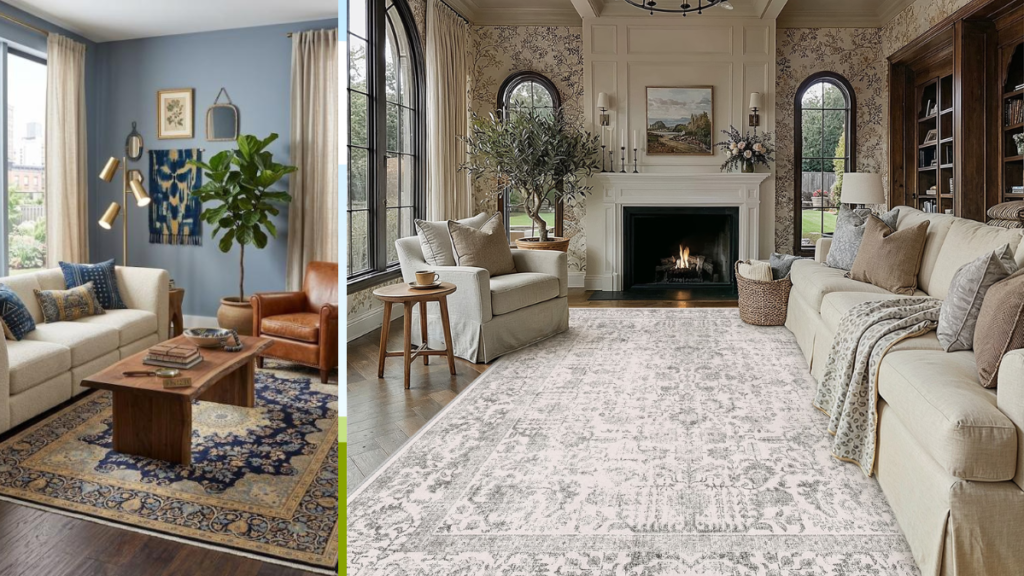

Large rugs for living room spaces can completely change the look and feel of a home. A well-chosen rug adds warmth, defines the seating area, softens hard flooring and creates a more connected interior. It can also make furniture feel more intentional rather than simply arranged around the edges of a room.
The right rug is about much more than appearance. Size, material, colour, pile height, maintenance and furniture placement all influence whether a rug works successfully in a particular space. A beautiful design can still look awkward if it is too small, while a generous rug can make even a compact seating arrangement feel polished and cohesive.
For many homeowners, the biggest challenge is knowing where to begin. Interior designers often recommend treating the rug as an important foundation rather than an afterthought. As the familiar design principle goes, “the rug should help anchor the room,” which is why proportions matter so much.
Why Large Rugs for Living Room Spaces Make Such a Difference
A generously sized rug helps establish a visual boundary within an open-plan or traditionally arranged living room. Instead of having a sofa, chairs and coffee table floating independently, the rug brings these elements together into one defined seating zone. This creates a stronger sense of balance and makes the room easier to navigate visually.
Large rugs for living room interiors are especially useful in homes with open layouts. When the kitchen, dining area and lounge share one large space, a rug can subtly identify the living area without requiring walls or partitions. It gives the room a purpose and creates a comfortable transition between different functional zones.
A large floor covering can also influence how spacious the room feels. When the rug extends beyond the main furniture, the eye reads the seating arrangement as one larger composition. This can make the living area appear more established and luxurious, particularly when the rug is correctly proportioned to the sofa and surrounding furniture.
How to Choose the Right Rug Size
Choosing the correct dimensions is one of the most important decisions when buying a living room rug. A common mistake is selecting a rug based only on the available floor space rather than considering the furniture arrangement. The rug should complement the seating layout and provide enough surface area for the room’s main pieces.
For many standard living rooms, an 8 x 10 foot rug is a practical starting point. Larger rooms may benefit from a 9 x 12 foot rug or even a larger size. The ideal dimensions depend on the sofa, chairs, coffee table and distance between furniture pieces, so measuring the complete arrangement before shopping is worthwhile.
| Living Room Layout | Common Rug Size | Recommended Furniture Placement |
|---|---|---|
| Compact seating area | 5 x 7 ft or 6 x 9 ft | Coffee table and front sofa legs on rug |
| Medium living room | 8 x 10 ft | Sofa and chairs partly or fully on rug |
| Large living room | 9 x 12 ft | Main seating furniture comfortably on rug |
| Open-plan space | 10 x 14 ft or larger | Entire seating zone anchored by rug |
| Extra-large lounge | 12 x 15 ft or larger | Most furniture positioned within rug area |
The most important principle is proportion. A rug that is only slightly larger than the coffee table can look disconnected from the seating area. In contrast, a rug that reaches beneath the sofa and chairs usually creates a more unified appearance.
Understanding Furniture Placement on a Large Rug
There are several successful ways to arrange furniture around a rug, but the most cohesive approach usually involves placing at least the front legs of the main seating furniture on the rug. This visually connects the sofa and chairs while keeping the arrangement grounded.
In particularly spacious rooms, placing all four legs of the sofa and accent chairs on the rug can create a more substantial effect. This approach works especially well when the rug is large enough to leave a comfortable border of visible flooring around the seating area.
Large rugs for living room designs should not disappear underneath furniture completely. Ideally, enough of the pattern or texture should remain visible to make the rug an intentional decorative feature. A useful interior-design rule is to leave sufficient space around the coffee table and furniture so that the rug remains visually noticeable.
Choosing the Best Rug Material
The material of a rug affects its comfort, durability, appearance and maintenance requirements. Wool remains a popular choice because it is naturally resilient, soft and capable of adding warmth to a room. It can also develop an attractive appearance over time when properly maintained.
Cotton rugs tend to be lighter and more casual. They can work particularly well in relaxed interiors, although larger cotton designs may require more frequent cleaning depending on the construction. Synthetic materials such as polypropylene and polyester are often chosen for their affordability, stain resistance and broad range of styles.
Natural fibres including jute and sisal can bring an organic character to a living room. Their textured surfaces work beautifully with neutral furniture, wooden floors and contemporary interiors. However, natural fibre rugs can feel less soft underfoot than plush wool or synthetic alternatives.
Selecting Colours That Work With Your Interior
Colour is one of the easiest ways to make a rug either blend into a room or become a statement feature. Neutral shades such as beige, cream, taupe and soft grey are versatile and can complement a wide variety of furniture styles. They are particularly useful when the room already contains strong colours or bold artwork.
Patterned rugs can introduce personality without requiring major changes to the rest of the décor. Geometric patterns suit contemporary interiors, while traditional motifs can add character to classic or transitional spaces. Abstract designs often work well when the surrounding furniture has simple shapes.
When selecting large rugs for living room décor, consider the colours already present in the space. A rug does not need to match the sofa exactly. Instead, look for complementary tones that connect with cushions, curtains, artwork, wood finishes or other decorative details.
Modern Styles for Contemporary Living Rooms
Modern interiors often benefit from rugs with simple patterns, muted colours and clean geometric designs. A restrained rug can soften a minimalist room without competing with architectural features or carefully selected furniture.
Abstract rugs are another popular choice for contemporary homes. Their irregular shapes and layered tones can create visual interest while maintaining a sophisticated appearance. Designs featuring several related shades can also make it easier to coordinate the rug with existing décor.
Large rugs for living room settings can become the foundation of a modern colour palette. A rug containing subtle touches of charcoal, cream, beige or muted blue can provide enough contrast to make neutral furniture feel more interesting.
Traditional and Vintage-Inspired Rug Designs
Traditional rugs remain popular because they can add depth and character to otherwise simple interiors. Persian-inspired patterns, medallion designs and distressed finishes can create a timeless appearance that works with both classic and contemporary furniture.
Vintage-style rugs are particularly effective when homeowners want a room to feel comfortable rather than overly formal. Slightly faded colours and intricate patterns can introduce texture and history without making the space feel cluttered.
The key is balance. If the rug has an elaborate pattern, keeping some surrounding elements relatively simple can prevent the room from becoming visually overwhelming. A carefully selected traditional rug can act as the artistic centre of the space.
Creating a Cosy Atmosphere With Texture
Texture plays an important role in how comfortable a living room feels. A thick pile rug can provide softness underfoot and create a cosy atmosphere, making it particularly appealing in rooms designed for relaxation.
Low-pile rugs offer a cleaner appearance and are often easier to move furniture across. They can also be more practical beneath coffee tables and sofas because doors, robot vacuums and furniture legs are less likely to catch on the material.
Large rugs for living room areas can also be layered with other textures throughout the space. Cushions, knitted throws, curtains, upholstered furniture and natural wood can work together to create depth without relying on excessive decoration.
Low-Pile, Medium-Pile and High-Pile Rugs
Low-pile rugs have shorter fibres and generally provide a neat, streamlined appearance. They are practical for high-traffic areas and can be easier to clean, making them suitable for busy households.
Medium-pile rugs offer a balance between comfort and practicality. They provide noticeable softness without the deeper texture associated with shag or high-pile designs.
High-pile and shag rugs create a particularly soft, relaxed atmosphere. They can make a living room feel luxurious and inviting, although their deeper fibres may require more maintenance. For homes where ease of cleaning is a priority, a low or medium pile may be the more practical choice.
Large Rugs for Living Room Open-Plan Interiors
Open-plan homes create a unique challenge because one room may serve several purposes. A large rug can help separate the living area from the dining or kitchen zone without interrupting the openness of the layout.
The rug should generally be large enough to contain the primary seating arrangement. If it ends abruptly between the sofa and coffee table, the room can appear visually fragmented. Extending the rug beneath the seating creates a stronger boundary and a more deliberate design.
In large open spaces, the rug can also help establish scale. Without sufficient furniture or floor coverings, a generous room may feel empty. A substantial rug introduces visual weight and makes the seating area feel more intimate.
Rug Placement on Different Flooring Types
Rugs can work beautifully on hardwood floors, laminate, vinyl, stone and carpet. On wooden flooring, a rug can introduce softness while protecting high-use areas from everyday wear. It can also highlight the natural beauty of the flooring by creating a contrast between hard and soft surfaces.
On stone or tile floors, rugs are especially useful for adding warmth and comfort. They can make rooms feel less stark and provide a softer surface beneath seating furniture.
If placing a rug over existing carpet, consider choosing a low-profile design and using a suitable rug pad. The goal is to prevent excessive movement while avoiding an uneven or bulky appearance.
Using a Rug Pad for Comfort and Protection
A quality rug pad is often overlooked, but it can make a noticeable difference. It helps keep the rug in position, reduces slipping and can provide additional cushioning underfoot. It may also help protect flooring from friction caused by repeated movement.
Rug pads come in different thicknesses and materials, so the best choice depends on the flooring underneath and the rug itself. A pad should normally be slightly smaller than the rug so it remains hidden from view.
For households with children, pets or heavy foot traffic, a non-slip pad can provide additional stability. It can also help the rug maintain its shape and reduce premature wear.
Cleaning and Maintaining a Large Living Room Rug
Regular maintenance keeps a rug looking attractive for longer. Vacuuming removes dust, crumbs and loose particles before they become embedded in the fibres. The frequency required depends on household traffic, pets and the rug’s material.
Spills should generally be addressed promptly. Blotting rather than aggressively rubbing a stain can help prevent it from spreading or becoming more deeply embedded. Always follow the care instructions provided for the specific material.
Professional cleaning may occasionally be worthwhile for expensive natural-fibre or wool rugs. Rotating the rug periodically can also help distribute everyday wear more evenly, especially when certain areas receive more sunlight or foot traffic.
Making a Large Rug Work in a Small Living Room
A large rug can still work in a smaller living room when the proportions are carefully considered. Instead of choosing the smallest possible floor covering, consider how a slightly larger rug might unify the furniture.
Light colours and understated patterns can help maintain an airy feeling. A rug that extends beyond the sofa can make the seating area feel more cohesive rather than cramped.
Avoid selecting a rug so large that it reaches right up against every wall. Leaving some visible flooring around the perimeter usually creates a more balanced appearance and helps define the room’s boundaries.
Styling Large Rugs for Living Room Décor
Large rugs for living room interiors can act as a visual bridge between furniture and accessories. For example, a rug containing warm beige tones can connect a cream sofa with wooden furniture and terracotta accessories.
Layering is another way to create a sophisticated appearance. A neutral foundation rug can sit beneath a smaller decorative rug, although the textures and patterns should complement one another. Too many competing designs can make the room appear busy.
Coffee tables, floor lamps and side tables should also relate to the scale of the rug. Oversized furniture placed on a tiny rug often looks unbalanced, while a properly proportioned floor covering helps everything feel connected.
Common Mistakes to Avoid When Buying a Rug
One of the most common mistakes is buying a rug that is too small. A small rug may look attractive in isolation but fail to connect the sofa, chairs and coffee table. This can make a carefully decorated room feel disjointed.
Another mistake is ignoring the practical needs of the household. A delicate, high-maintenance rug may not be ideal for a busy family room. Similarly, very thick pile may be inconvenient in a home where furniture is moved frequently.
Colour should also be considered in relation to natural light. A shade that looks warm in a bright showroom may appear quite different in a darker home. Checking samples in the actual room can help avoid unexpected results.
How to Make Your Rug Last Longer
Good maintenance begins with choosing the right rug for the room. High-traffic living spaces generally benefit from durable materials and practical constructions. Selecting quality over an unsuitable decorative trend can provide better long-term value.
Furniture can also contribute to uneven wear. Heavy pieces should be moved carefully rather than dragged across the surface. Using appropriate furniture pads may help reduce pressure on the rug fibres.
Sunlight is another consideration. Prolonged direct exposure can gradually affect some colours and materials. Rotating the rug and using curtains or blinds during periods of intense sunlight can help maintain a more consistent appearance.
How to Create a Designer-Looking Living Room
A designer-inspired living room does not necessarily require expensive furniture or luxury accessories. Proportion, repetition and balance often have a greater effect on the final appearance. A well-sized rug can establish the foundation for these principles.
Repeat a few colours from the rug throughout the room using cushions, artwork, curtains or decorative objects. This creates cohesion without requiring every item to match exactly.
A useful design philosophy is that “comfort and proportion should work together.” The most attractive living room is usually one that looks considered while still feeling practical enough for everyday life.
Large Rugs for Living Room Shopping Tips
Before purchasing, measure the room and mark the intended rug dimensions with masking tape or removable markers. This simple step provides a much clearer idea of how the rug will interact with furniture and walking areas.
Check the construction, backing, fibre content and care requirements rather than choosing solely on appearance. Product descriptions can reveal important information about durability, cleaning and suitability for high-traffic spaces.
It is also worth considering the long-term style of the room. A timeless neutral or subtle pattern may remain attractive through several furniture changes, while an extremely trend-driven design could become harder to coordinate later.
Conclusion
The right rug can transform a living room from a collection of furniture into a comfortable, cohesive space. Size is particularly important because the floor covering needs to relate naturally to the sofa, chairs, coffee table and overall proportions of the room.
Large rugs for living room spaces offer an effective way to define seating areas, introduce colour and texture, protect flooring and create a warmer atmosphere. The best choice combines visual appeal with practical considerations such as material, maintenance, traffic levels and furniture placement.
Whether the preferred style is modern, traditional, minimalist, rustic or eclectic, a carefully selected rug can become one of the most important design elements in the room. With accurate measurements, suitable materials and thoughtful styling, the result can feel comfortable, balanced and intentionally designed for years to come.
Frequently Asked Questions About Large Rugs for Living Room Spaces
What is the best rug size for a living room?
For many medium-sized living rooms, an 8 x 10 foot rug provides a useful balance between coverage and proportion. Larger rooms often look better with a 9 x 12 foot or larger design, particularly when the sofa and chairs are arranged around a central coffee table.
The ideal size ultimately depends on the furniture arrangement rather than the room’s measurements alone. The rug should provide enough coverage to visually connect the main seating pieces without making the space feel crowded.
Should a living room rug go under the sofa?
Placing at least the front legs of the sofa on the rug is a widely used interior-design approach. It helps connect the sofa with the coffee table and other seating while making the arrangement feel more unified.
In larger rooms, putting all the sofa legs and chair legs on the rug can create an even stronger visual anchor. Large rugs for living room layouts are particularly effective when they provide enough surface area for the major furniture pieces.
Are large rugs suitable for small living rooms?
Yes, a suitably proportioned large rug can actually make a small living room feel more cohesive. Instead of visually separating each furniture item, the rug groups the seating arrangement into one defined zone.
Choosing a light colour, simple pattern and appropriate size can prevent the room from feeling overwhelmed. The rug should still leave some visible flooring around the room’s perimeter where possible.
What is the most durable material for a living room rug?
Wool is widely valued for durability, resilience and comfort, while synthetic materials such as polypropylene can offer practical stain resistance and affordability. The best material depends on the level of traffic and maintenance expected.
Natural fibre options such as jute and sisal are attractive for textured, organic interiors but may feel firmer underfoot. Considering lifestyle as well as appearance is essential when selecting a durable living room rug.
How should a large living room rug be cleaned?
Regular vacuuming is one of the simplest ways to maintain a rug and prevent dirt from becoming embedded. Spills should generally be blotted promptly, using cleaning methods appropriate for the specific material.
For valuable or delicate rugs, professional cleaning can provide deeper maintenance. Always check the manufacturer’s care instructions before applying cleaning products or moisture to the surface.
What colour rug works best with a neutral sofa?
Neutral sofas can work with almost any rug colour, making them particularly versatile. Beige, cream, grey, muted blue, green and earthy tones can create a calm appearance, while richer patterns can add contrast and personality.
The best choice is usually a colour that connects with other elements in the room. Repeating a rug shade in cushions, artwork or curtains can make the overall interior feel more coordinated.
Do large rugs for living room areas need a rug pad?
A rug pad is strongly recommended in many situations because it can help prevent movement, add cushioning and protect the flooring underneath. It can also make the rug feel more stable when people walk across it.
The correct pad depends on the rug and floor type. It should normally remain hidden beneath the rug and should not be so thick that it creates an unstable or uneven surface.
Read also B&M Suitcases: A Practical Guide to Finding the Right Travel Companion