
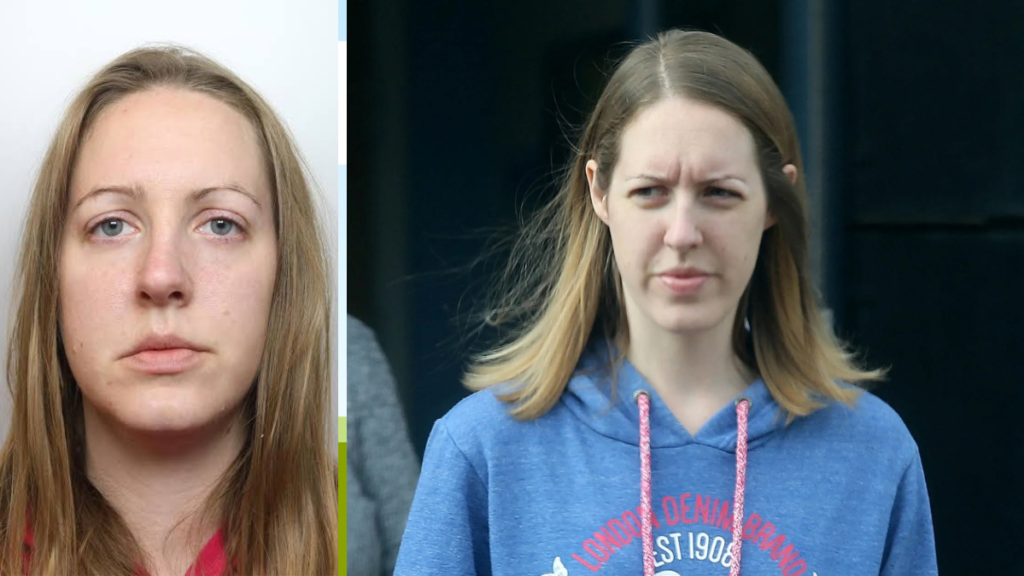

The Lucy Letby retrial remains one of the most closely followed legal episodes in recent British history, and it still shapes how people talk about the wider case. It was a second trial limited to a single charge, held after a jury in the original proceedings could not agree a verdict. Even so, its consequences reached far beyond one courtroom in Manchester.
If you are trying to make sense of the headlines, appeals, inquiry reports and expert panels, this guide walks through the story in plain language. It covers what the jury was asked to decide, how the courts responded, what the Thirlwall Inquiry concluded in September 2026, and where the review by the Criminal Cases Review Commission stands. The case involves the deaths and harm of very young babies and the lasting grief of their families, so nothing here is meant to sensationalise it.
Why the Lucy Letby Retrial Became Such a Big Story
Most criminal retrials pass with little public attention. This one did not, because it came on top of a conviction that had already made national and international news. Letby, a former neonatal nurse, was sentenced to a whole life order after being convicted of murdering seven babies and attempting to murder others at the Countess of Chester Hospital between 2015 and 2016. She is serving multiple life sentences with no chance of release. Any further court action involving her was bound to draw attention. ABC News
The second reason is timing. The retrial happened while a public inquiry was still hearing evidence, while campaigners and some medical experts were questioning the original science, and while social media was full of competing theories. That mix made even a narrow legal step feel like a verdict on the entire case. In reality, the retrial dealt with one allegation and one baby, and it is worth keeping that limited scope in mind.
The Original Trial and the Counts the Jury Could Not Decide
The first trial at Manchester Crown Court ran for around ten months. It began on 4 October 2022, the jury reached its final deliberations on 18 August 2023, and Letby was sentenced three days later. Jurors convicted her on the majority of the counts, but they were unable to reach decisions on several of the attempted murder allegations. The jury could not agree on allegations involving three baby girls, known in court papers as Child H, Child J and Child K, and she was cleared of two other counts. stvstv
After the verdicts, prosecutors had to decide how many of the undecided counts were worth putting before a new jury. The Crown Prosecution Service chose to pursue a retrial on one charge only, the alleged attempted murder of Child K in February 2016, and not on the other outstanding allegations. Some families were unhappy about that. A solicitor from the firm representing seven of them said they were “disappointed with the CPS decision” not to go further. The choice of a single count is a big part of why the Lucy Letby retrial looked so different from the sprawling original trial. yorkshireeveningpostyorkshireeveningpost
How the Child K Retrial Played Out in Court
The second trial took place at the same court in Manchester, with a new jury hearing a much shorter case. The prosecution told jurors that, a little over an hour after the baby girl was born, a senior doctor found her breathing tube dislodged and saw Letby standing there “doing nothing”. The allegation was that Letby had tried to kill the child by removing the tube. The defence position never changed. Letby testified that she never harmed a child and has continued to proclaim her innocence. stratnewsglobalABC News
The jury returned a guilty verdict in July 2024, adding another conviction for attempted murder to her record. Because she was already serving a whole life order, the result did not alter her sentence in practical terms. Its importance was legal and symbolic. It showed that a second jury, hearing a trimmed-down case, reached the same conclusion about a charge the first jury could not resolve. The Lucy Letby retrial also gave her lawyers a fresh set of arguments to take to the Court of Appeal.
A Timeline of the Lucy Letby Retrial and Related Legal Steps
The case has moved through so many stages that the order of events gets muddled. The table below pulls the major steps into one place, based on court reporting and published coverage up to October 2026. A few entries, such as the exact scope of the expert submissions, come from secondary reporting and may be refined as official documents emerge.
| Period | Event | Why it matters |
|---|---|---|
| June 2015 to June 2016 | Series of deaths and collapses on the neonatal unit at the Countess of Chester Hospital | Forms the period covered by the charges |
| July 2018 | Letby arrested at her home in Chester, charged that November | Starts the formal criminal process |
| October 2022 to August 2023 | First trial at Manchester Crown Court, followed by a whole life order | Establishes the core convictions |
| Late 2023 | CPS confirms it will seek a retrial on the Child K count only | Narrows the second trial to one allegation |
| May 2024 | Court of Appeal refuses leave to appeal the first set of convictions | Closes the standard appeal route for those counts |
| June to July 2024 | Retrial held; jury convicts on the Child K count | Adds a further attempted murder conviction |
| Autumn 2024 | Court of Appeal refuses leave to appeal the retrial conviction | Ends the challenge based on prejudicial publicity |
| February 2025 onward | Criminal Cases Review Commission reviews the case, with expert material submitted on her behalf | Remains the main route for any future reference to the courts |
| January 2026 | CPS reportedly declines to bring additional charges | Limits the number of formal allegations |
| 15 September 2026 | Thirlwall Inquiry publishes its report | Examines hospital failings rather than guilt |
Read in sequence, the table shows that the retrial was only one chapter. The wider story is a slow back-and-forth between criminal courts, a public inquiry, an independent review body and a police investigation that is still running.
Appeal Attempts and Why They Failed
Letby has already tried the ordinary appeal route twice. In May 2024, a Court of Appeal panel dealt with her application against the first convictions. Judge Victoria Sharp announced that the court had decided to “refuse leave to appeal on all grounds”, which ended that stage of the process. Leave to appeal is a filter, so the refusal meant the judges did not think any of the arguments had enough merit to be heard in full. gulfnews
The second attempt focused on the retrial itself. Her lawyer argued that it should not have gone ahead because it was overshadowed by “overwhelming and irremediable prejudice” from news coverage of the first trial. The idea was that no jury could be expected to ignore years of hostile reporting. Judge William Davis refused permission to appeal. Courts generally assume that juries follow directions to decide cases only on the evidence, and that assumption is hard to overturn. This is the main reason the Lucy Letby retrial conviction still stands today. ABC Newsstratnewsglobal
The Challenge to the Convictions: Experts, Statistics and the CCRC
Once ordinary appeals ran out, attention turned to the Criminal Cases Review Commission, the independent body that investigates possible miscarriages of justice in England, Wales and Northern Ireland. The commission is considering evidence presented on Letby’s behalf by an international panel of medics who argue that poor medical care and natural causes explain why the babies collapsed. That panel, which included Canadian neonatologist Dr Shoo Lee, made its case at a London press conference in early 2025. Reports in 2026 suggested that dozens of additional expert reports were later submitted, although the exact number should be checked against official statements. itv
Criticism has also targeted the way statistics and medical evidence were used at trial. Some experts have criticised the medical and statistical evidence presented by the prosecution. The prosecution and the courts, for their part, have held that the convictions rest on a wide body of evidence, including shift patterns, medical records and the observations of clinicians. It is important to be clear about what the CCRC can do. It does not hold a new trial. It decides whether there is a real possibility that the Court of Appeal would quash a conviction, and only then can it send the case back. Until it reports, the legal position is unchanged. stratnewsglobal
What the Thirlwall Inquiry Added
The Thirlwall Inquiry was never designed to decide whether Letby is guilty. Its task was to examine how events unfolded at the hospital and why she was not stopped sooner. Lady Justice Thirlwall published her report on 15 September 2026, finding a “complete failure” to protect babies at the Countess of Chester and concluding that some deaths could have been avoided. The report also made recommendations that included tighter controls on insulin and a personal duty of candour for managers. ground
That focus matters because the inquiry and the criminal appeals are often mixed together in public debate. The inquiry worked from the convictions as a starting point, and the review of their safety sits with a different body. Cheshire Constabulary investigations into possible corporate and gross negligence manslaughter are still ongoing, and inquests into the babies’ deaths are scheduled for May 2027. For families, those later processes may bring more answers than any single courtroom ruling has done. ground
Could There Be Another Lucy Letby Retrial?
At the time of writing, there is no second Lucy Letby retrial scheduled, and none has been formally proposed. The only realistic route to a fresh trial runs through the CCRC. If the commission concluded that a conviction might be unsafe, it could refer the matter to the Court of Appeal. If the judges there quashed a conviction, they would then have to decide whether the Crown should be allowed to try the count again. Each of those steps is a hurdle, and none is guaranteed.
It is also worth remembering how the prosecution handled the earlier decision. The CPS chose not to retry most of the undecided counts, and reports suggest it declined to bring further charges in January 2026. That history suggests prosecutors are cautious about opening new fronts. Anyone speculating about a future Lucy Letby retrial should treat predictions with care, because the process is slow, procedural and rarely produces dramatic turns on a predictable schedule.
Why Public Opinion Remains Divided
Few criminal cases in Britain have split opinion in the same way. On one side are people who trust the juries and the Court of Appeal and who see the expert challenges as an attempt to reopen a case that has been tested thoroughly. On the other are people who think the medical and statistical evidence was weaker than it first appeared and who worry about the risk of a wrongful conviction. Documentaries, podcasts and online forums have fed both camps, and the arrival of new programmes in 2026 kept the debate alive.
The most useful approach is to separate what is settled from what is under review. Settled: two juries convicted her, and two sets of appeal judges refused permission to challenge those verdicts. Under review: whether new expert material can persuade the CCRC that the convictions are unsafe. Whatever view you take, the parents of the babies deserve respect, and the wider debate should not lose sight of them.
Conclusion
The Lucy Letby retrial was a narrow legal event with an outsized impact. A single count, left unresolved by the first jury, ended in a conviction in July 2024, and later appeal efforts failed. Since then the story has shifted to the CCRC review, the findings of the Thirlwall Inquiry and a continuing police investigation into possible corporate failings at the hospital.
What happens next depends on processes that move slowly and carefully. Readers who want to follow the case sensibly should look to court rulings, official inquiry reports and statements from the CCRC rather than online speculation. Until those bodies say otherwise, the convictions stand, the review continues, and the families wait for answers.
Frequently Asked Questions
What was the Lucy Letby retrial about?
The retrial concerned a single allegation that Letby attempted to murder a baby girl, known in court as Child K, in February 2016. The first jury could not reach a verdict on that count, so the Crown asked for a fresh trial before a new jury. The second jury convicted her in July 2024.
Why was only one count retried?
After the first trial, the jury had failed to decide several attempted murder counts. The CPS reviewed those allegations and chose to pursue only the Child K charge, deciding not to retry the rest. The decision disappointed some families, but prosecutors have discretion over what is in the public interest and what has a realistic prospect of conviction.
Has Lucy Letby appealed the retrial conviction?
Yes. Her lawyers argued that the retrial should never have gone ahead because of heavy and hostile publicity from the first trial. The Court of Appeal refused permission to appeal, which means that challenge did not succeed. The outcome of the Lucy Letby retrial therefore remains in place.
What is the Criminal Cases Review Commission doing?
The CCRC is an independent body that examines possible miscarriages of justice. It is reviewing material submitted on Letby’s behalf, including reports from international medical experts. It does not decide guilt itself, but it can refer a case to the Court of Appeal if it sees a real possibility that a conviction is unsafe.
Did the Thirlwall Inquiry decide whether Letby is guilty?
No. The inquiry examined how the hospital handled the crisis and why she was not removed sooner. Its report, published in September 2026, found serious failures in protecting babies and made recommendations on safety and managerial accountability. Questions about the safety of the convictions sit with the courts and the CCRC.
Is another Lucy Letby retrial likely?
There is currently no sign of one. A new trial would only be considered if the Court of Appeal quashed a conviction after a CCRC referral and then allowed the Crown to try the count again. That is a long road with many uncertain steps, so any talk of a second retrial is speculation for now.
When might the case be resolved?
There is no fixed date. The CCRC review has no public deadline, the police investigation into possible manslaughter offences is continuing, and inquests are scheduled for May 2027. Readers should expect developments to arrive gradually and should rely on official announcements for accurate updates.