
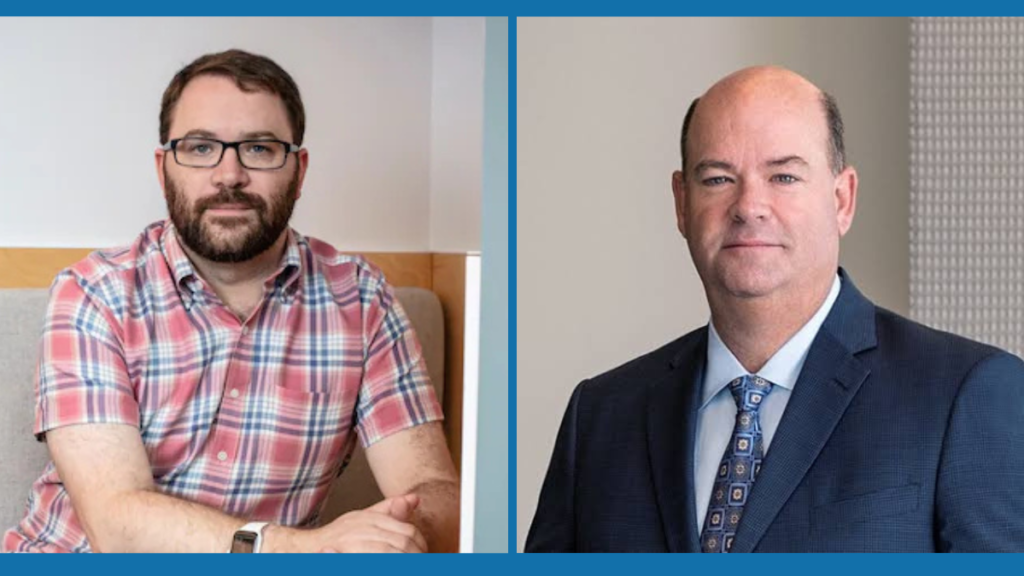

The names Cal Henderson and Ryan Lance are associated with very different areas of professional life. Cal Henderson is widely recognised as a technology entrepreneur and software engineer, best known as a co-founder of Slack and for his earlier work at Flickr. Ryan Lance is known for his leadership in the energy sector, particularly through his role as chairman and chief executive officer of ConocoPhillips. Although their careers developed in separate industries, both names offer interesting examples of how professional expertise, strategic thinking, and long-term decision-making can shape successful organisations.
Understanding Cal Henderson and Ryan Lance means looking beyond job titles and examining the industries they have influenced. One helped develop digital communication tools that changed how businesses collaborate, while the other has led a major energy company through changing market conditions, technological developments, and global energy challenges. Their careers illustrate two distinct approaches to leadership: building technology that transforms everyday working practices and managing a large industrial organisation that operates on a global scale.
This article explores their professional backgrounds, achievements, leadership styles, and broader significance. It also distinguishes between their individual careers and explains why comparisons between technology executives and energy leaders can provide useful insights into modern business.
Who Is Cal Henderson?
Cal Henderson is a British software engineer and technology entrepreneur best known for co-founding Slack, the workplace communication platform used by businesses and teams around the world. His career has involved software development, engineering leadership, web technologies, and the creation of digital products designed to make online communication more efficient.
Before Slack became a major name in workplace collaboration, Henderson had already established himself in the technology industry through his work at Flickr. He helped build and lead engineering teams responsible for developing web-based services that could support growing numbers of users. This experience provided a foundation for his later work on communication software and scalable online systems.
Henderson’s background combines practical engineering knowledge with an understanding of how people interact with technology. Rather than focusing exclusively on software code, his work has involved making complex technical systems reliable, accessible, and useful in everyday situations. These skills are particularly important for products that must support large organisations with different communication needs.
His professional reputation is also connected to his contributions to web development. Henderson authored Building Scalable Websites, a technical book that explores approaches to designing websites capable of handling increased traffic and demand. His work on web APIs and related technologies has also contributed to his standing within the software engineering community.
Cal Henderson’s Career at Flickr and Slack
Henderson’s work at Flickr was an important stage in his career. Flickr developed into a well-known online photo-sharing service, and its growth demonstrated the importance of building systems that could handle substantial user activity. Working in this environment gave Henderson experience in engineering management, product development, and the technical challenges associated with operating a successful internet platform.
His experience became particularly relevant when he co-founded Slack. The platform emerged from work associated with an earlier company project, illustrating how technology developed for one purpose can eventually become the foundation for an entirely different product. Slack focused on bringing workplace conversations, files, integrations, and team collaboration into a shared digital environment.
The product addressed a familiar business problem: information often becomes scattered across email inboxes, meetings, separate applications, and individual conversations. By creating organised channels and searchable communication histories, Slack offered teams another way to coordinate work.
Henderson served as Slack’s co-founder and chief technology officer, helping shape its technical direction and engineering organisation. His contribution was especially relevant to the platform’s ability to operate at scale while supporting integrations with other business applications.
An important distinction is that Henderson’s public profile has changed over time. In a September 2025 interview, he discussed having left Slack approximately 18 months earlier. Therefore, his association with the company should be understood in the context of his founding and engineering contributions rather than treated as confirmation that he continues to hold the same operational position.
Who Is Ryan Lance?
Ryan Lance is an American energy executive and petroleum engineer whose career has centred on oil and natural gas exploration and production. He became widely recognised through his leadership of ConocoPhillips, one of the major independent companies operating in the global energy industry.
Lance studied petroleum engineering at Montana Technological University, graduating with a bachelor’s degree in 1984. His education gave him a technical foundation for a career in an industry where engineering knowledge, resource management, operational safety, and commercial decision-making are closely connected.
He began his professional career in the energy sector with ARCO and developed experience across engineering, operations, planning, and management. Over time, he took on increasingly senior responsibilities, including roles involving international exploration and production, technology, major projects, and regional operations.
These experiences helped prepare him for executive leadership at ConocoPhillips. In May 2012, Lance became the company’s chairman and chief executive officer, a position he held for more than 14 years. His responsibilities included setting corporate priorities, overseeing major investment decisions, managing business risks, and representing the company in discussions involving governments, industry organisations, investors, and other stakeholders.
In September 2026, following a planned leadership transition, Lance moved into the role of executive chairman. Andy O’Brien succeeded him as president and chief executive officer. The change marked a new stage in the company’s leadership structure while allowing Lance to continue serving on its board in a transitional capacity.
Ryan Lance’s Leadership at ConocoPhillips
ConocoPhillips operates in a sector that requires substantial long-term investment, careful management of physical assets, and the ability to respond to changing energy markets. Oil and natural gas projects can involve years of planning, significant capital expenditure, complex regulatory requirements, and exposure to fluctuating commodity prices.
During his tenure as chief executive, Lance was responsible for guiding the company through these challenges. His background in petroleum engineering and international operations gave him direct experience with the technical and commercial realities of the business.
A central responsibility of energy-sector leadership is balancing investment in future production with financial discipline. Companies must decide where to allocate capital, which projects offer acceptable returns, how to manage operational costs, and how to respond when market conditions change. These decisions can influence a company’s financial performance for years.
Lance’s previous responsibilities at ConocoPhillips covered international exploration and production, technology, major projects, and business integration. This breadth of experience was relevant to overseeing a company operating across multiple regions and geological environments.
His career also illustrates the importance of industry relationships. Energy companies interact with regulators, governments, engineering specialists, local communities, investors, and environmental organisations. Effective leadership requires understanding these different interests while maintaining operational standards and pursuing commercially viable projects.
Lance has also held leadership and advisory roles outside the company, including positions connected with the National Petroleum Council and other industry and charitable organisations. These activities reflect the wider responsibilities often associated with senior executives in strategically important industries.
Cal Henderson and Ryan Lance Compared
The careers of Cal Henderson and Ryan Lance provide a useful comparison of leadership in technology and energy. Both developed substantial industry experience before reaching senior positions, but the environments in which they worked required different priorities, time horizons, and approaches to managing risk.
Henderson’s work centred on software engineering and digital collaboration. His professional achievements are closely associated with designing systems, building engineering teams, and developing products that can grow alongside user demand. Lance’s career, by contrast, focused on managing large-scale energy operations, directing investment, and navigating a business environment influenced by commodity markets and global energy policy.
The following table summarises the main differences between their professional backgrounds.
| Category | Cal Henderson | Ryan Lance |
|---|---|---|
| Primary industry | Technology and software | Oil and natural gas |
| Best-known association | Co-founder of Slack | Long-serving ConocoPhillips chief executive |
| Professional background | Software engineering and technical leadership | Petroleum engineering and energy operations |
| Major leadership focus | Product development, software infrastructure, team communication | Exploration, production, investment, and corporate strategy |
| Notable experience | Flickr and Slack | ARCO and ConocoPhillips |
| Education | Computer science and software engineering background | Bachelor’s degree in petroleum engineering |
| Leadership environment | Digital products and rapidly evolving technology | Capital-intensive global energy operations |
| Career significance | Workplace collaboration and scalable software | Energy-sector management and corporate governance |
Although their careers differ, both demonstrate the value of understanding the technical foundations of an industry. Henderson’s engineering experience helped him contribute to the development of software products, while Lance’s petroleum engineering background informed his understanding of energy operations and investment decisions.
Their professional journeys also highlight the importance of organisational leadership. Technology companies depend on talented engineers, product specialists, and effective collaboration. Energy companies rely on engineers, geologists, operations teams, commercial specialists, and regulatory expertise. In both settings, executives must coordinate different teams around shared goals.
What Their Careers Reveal About Modern Business Leadership
One lesson from Henderson’s career is that innovation often develops through practical problem-solving. Many successful technology products address difficulties that people experience repeatedly. Slack’s focus on workplace communication reflects the need for businesses to share information efficiently without allowing essential knowledge to become fragmented across disconnected systems.
Building a successful software platform requires more than creating an attractive interface. Engineering teams must consider reliability, security, performance, integrations, and the experience of users working in different environments. Henderson’s background in scalable websites and software engineering is relevant to understanding these challenges.
Lance’s career offers a different lesson: leadership in a capital-intensive industry requires patience, financial discipline, and an understanding of long-term risk. Energy infrastructure cannot usually be developed at the speed of a software feature. Projects may require substantial investment before generating returns, making careful planning and execution essential.
The comparison between Cal Henderson and Ryan Lance also shows why leadership cannot be separated from industry context. A software company may prioritise product releases, user adoption, and rapid experimentation, while an energy producer must also consider resource availability, safety, infrastructure, market cycles, and regulatory obligations.
Neither approach is universally superior. Successful leadership depends on understanding the problems an organisation needs to solve, the risks it faces, and the capabilities of its workforce.
Innovation, Technology, and Long-Term Strategy
Innovation is frequently associated with new products, but it can also involve improving existing processes and making organisations more effective. Henderson’s work reflects the product-oriented side of innovation, where software tools can change how teams exchange information and coordinate projects.
Digital collaboration platforms have become increasingly important as businesses operate across offices, time zones, and countries. Searchable records, integrations, and organised conversations can reduce communication friction and help employees locate information more efficiently. However, technology alone cannot guarantee better collaboration. Companies must also establish clear communication practices and choose tools that support their actual workflows.
In the energy sector, innovation may involve improved engineering methods, better operational data, more efficient equipment, or technologies that help manage environmental and production challenges. These developments can influence project economics and operational performance, but they must be evaluated against practical constraints and long-term costs.
Lance’s technical and executive experience illustrates how engineering knowledge can contribute to corporate strategy. Senior leaders do not need to personally perform every technical task, but they benefit from understanding the assumptions, trade-offs, and limitations behind important investment decisions.
A useful principle for any organisation is that strategy should connect technical capability with measurable objectives. Businesses need to understand what they are trying to achieve, how they will measure progress, and which risks could prevent them from reaching their goals.
Public Recognition and Professional Influence
Henderson’s professional influence comes primarily from his contributions to software engineering and workplace technology. His work at Flickr and Slack connects him with two significant developments in internet-based services: online photo sharing and modern business communication. His technical writing also provides insight into the engineering principles behind scalable websites.
Lance’s influence has developed through energy-sector leadership and corporate governance. His long tenure at ConocoPhillips involved responsibility for a major international business and participation in wider industry discussions. His move to executive chairman in 2026 represents a transition from direct executive management to a board leadership role.
Their professional recognition reflects different measures of success. In technology, influence may be assessed through product adoption, engineering contributions, business growth, and the usefulness of digital tools. In energy, leadership is often evaluated through financial performance, operational results, investment decisions, safety, and the ability to manage complex assets.
Neither career can be reduced to a single achievement. Both developed through years of experience, increasing responsibility, and work within organisations that needed to adapt to changing circumstances.
What Is Known About Their Personal Lives and Net Worth?
Public information about executives often focuses on professional achievements rather than private life. Henderson is primarily known for his engineering career, his role in founding Slack, and his contributions to web development. Reliable public biographies provide more detail about these professional activities than about his private finances or personal circumstances.
Similarly, Lance’s public profile centres on his energy-sector career, education, corporate responsibilities, and involvement in industry and charitable organisations. His professional positions are documented more clearly than the details of his personal wealth.
It is important to distinguish between verified financial information and estimates circulated online. A senior executive’s compensation may include salary, bonuses, stock awards, and other benefits, but compensation is not the same as net worth. Net worth also depends on personal assets, investments, liabilities, taxes, and other financial factors that may not be publicly disclosed.
For that reason, assigning precise net-worth figures to either individual without reliable documentation would be misleading. Their career achievements can be examined through documented responsibilities and professional contributions without relying on speculative financial estimates.
The Lasting Significance of Their Careers
The professional stories of these two executives illustrate different ways that expertise can influence an industry. Henderson’s work demonstrates how software engineering and product development can reshape workplace communication. Lance’s career shows how technical knowledge and executive decision-making can guide a major energy business through complex commercial and operational conditions.
Their experiences also underline the value of adaptability. Technology leaders must respond to changing user expectations, competition, and new technical possibilities. Energy executives must respond to changing demand, commodity prices, regulation, investment requirements, and evolving expectations about environmental performance.
Long-term professional success rarely depends on technical knowledge alone. It also requires sound judgement, communication, collaboration, and the ability to make decisions when information is incomplete. These qualities are relevant across industries, even when the day-to-day work differs considerably.
Ultimately, the significance of Cal Henderson and Ryan Lance lies in their distinct contributions to their respective fields. Their careers offer useful examples of how specialist knowledge, organisational leadership, and strategic thinking can shape businesses and influence the way industries operate.
Frequently Asked Questions
Who are Cal Henderson and Ryan Lance?
Cal Henderson is a software engineer and entrepreneur known for co-founding Slack and previously working at Flickr. Ryan Lance is an energy executive and petroleum engineer who served as ConocoPhillips’ chairman and CEO from 2012 until September 2026, when he became executive chairman.
What is Cal Henderson best known for?
Henderson is best known for co-founding Slack, a workplace communication platform. He also built engineering experience at Flickr and contributed to the development of scalable websites and web technologies.
What is Ryan Lance known for?
Lance is known for his long leadership tenure at ConocoPhillips and his extensive experience in the oil and natural gas industry. His background includes petroleum engineering, international exploration and production, major projects, and corporate strategy.
Do Cal Henderson and Ryan Lance work in the same industry?
No. Henderson’s career is centred on technology, software engineering, and digital collaboration, while Lance’s career has focused on petroleum engineering, energy production, and executive leadership. Their careers are comparable in terms of professional development and organisational leadership, but they operate in different sectors.
What is the main difference between their leadership styles?
Their professional responsibilities suggest different leadership priorities. Henderson’s work involved software engineering, product development, and scalable digital systems. Lance’s responsibilities involved long-term investment, global energy operations, and corporate strategy. These differences reflect the needs of their industries rather than proving that one individual follows a universally better leadership style.
Did Ryan Lance retire from ConocoPhillips?
Lance retired as president and CEO in September 2026 and moved into the role of executive chairman as part of a planned leadership transition. Andy O’Brien succeeded him as president and CEO.
Is Cal Henderson still the chief technology officer of Slack?
A September 2025 interview reported that Henderson had left Slack approximately 18 months earlier. His lasting association with the company is as a co-founder and former technology leader, rather than as its current chief technology officer.
What can businesses learn from Cal Henderson and Ryan Lance?
Businesses can learn the importance of technical expertise, effective teams, strategic planning, and adapting to changing circumstances. Henderson’s career highlights the value of solving practical problems through software, while Lance’s career illustrates the need for financial discipline and long-term decision-making in a complex industrial sector.
Conclusion
The careers of Cal Henderson and Ryan Lance demonstrate how different forms of expertise can lead to significant professional influence. Henderson helped build technology that supports communication and collaboration, while Lance led a major energy company through years of operational, commercial, and strategic challenges.
Although their industries differ, their professional journeys share common themes: technical knowledge, leadership development, organisational decision-making, and the ability to adapt to changing conditions. Examining their achievements provides a broader understanding of modern business leadership and shows how industry-specific experience can contribute to lasting professional impact.
Read also David Cordani and John Paulson: Leadership, Finance, and Business Influence