
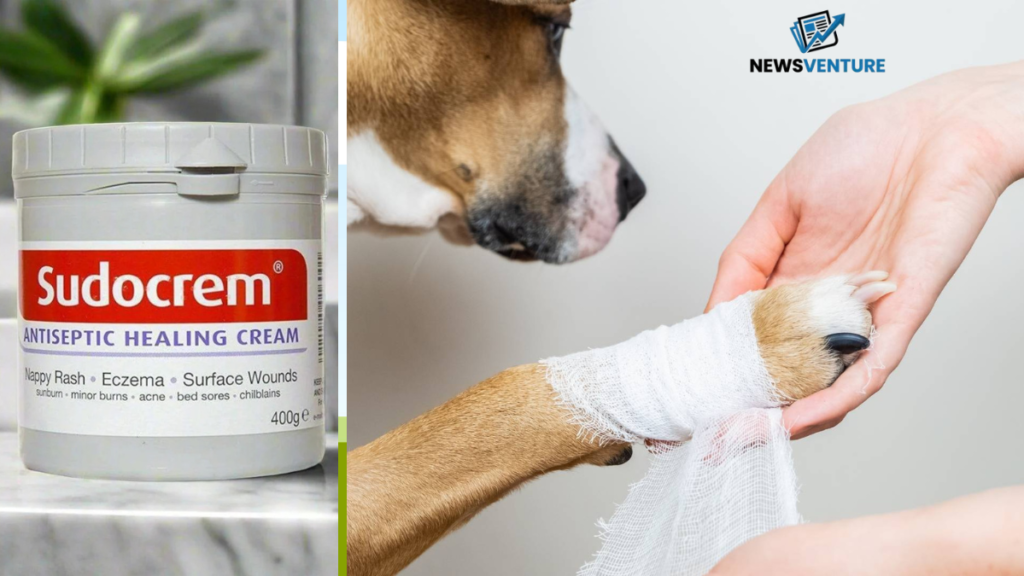

If your dog has a minor rash, irritated patch of skin, sore paw, or small area of redness, you may wonder whether a product already sitting in your bathroom cabinet could help. This is why many pet owners ask, can you use Sudocrem on dogs and whether it is safe to apply a small amount to their skin.
The short answer is that Sudocrem is not a product specifically formulated for dogs, so it should not automatically be treated as a safe veterinary skin cream. The biggest concern is that dogs frequently lick anything placed on their skin. Sudocrem and similar barrier creams can contain zinc oxide, and ingestion of zinc oxide products can cause gastrointestinal irritation in dogs. Veterinary references report vomiting and diarrhea as common effects following acute ingestion of zinc oxide creams.
That does not necessarily mean that every small amount applied to a dog’s skin will cause poisoning. The situation depends on the dog’s size, the amount used, the ingredients in the particular product, where it is applied, and whether the dog can lick it. For that reason, a veterinarian should be involved when a skin problem is persistent, painful, infected, or unclear.
What Is Sudocrem?
Sudocrem is a topical barrier cream commonly used for irritated skin and minor skin problems in people. Its formulation is designed to create a protective barrier over the skin while helping soothe irritation. One ingredient of particular importance for dogs is zinc oxide.
Zinc oxide is widely used in human skin-protection products, including diaper-rash creams and some sunscreens. Veterinary toxicology references describe zinc oxide as capable of causing stomach irritation when swallowed. Acute exposure to zinc oxide ointments generally presents a lower toxicity risk than ingestion of certain metallic zinc objects, but gastrointestinal symptoms can still occur.
This distinction matters because a cream that is considered perfectly normal for human topical use is not automatically appropriate for a dog. Dogs have different behaviors and exposure patterns, particularly because licking is a natural response to something unusual on their coat or skin.
Can You Use Sudocrem on Dogs?
The question of can you use Sudocrem on dogs does not have a simple yes-or-no answer for every situation. A veterinarian may occasionally recommend a human topical product for a specific animal, but that does not mean pet owners should routinely use Sudocrem without professional guidance.
If a dog has a very small area of superficial irritation, the most important consideration is identifying what caused the irritation in the first place. A red patch might result from allergies, parasites, contact irritation, excessive licking, a bacterial or yeast infection, an injury, or another underlying condition.
Covering the area with a thick cream could make the surface look better temporarily without treating the actual cause. In some cases, an unsuitable product can also interfere with the veterinarian’s assessment of the skin.
For this reason, Sudocrem should not be considered a universal treatment for canine skin conditions.
Why Zinc Oxide Matters for Dogs
The presence of zinc oxide is one of the main reasons pet owners should be cautious. According to the Merck Veterinary Manual, acute ingestion of zinc oxide ointments or creams generally has a low toxicity risk compared with more concentrated or metallic zinc sources, but it can cause dose-dependent gastrointestinal upset, including nausea, vomiting, and diarrhea.
The Pet Poison Helpline similarly notes that zinc oxide in topical products can irritate a dog’s gastrointestinal tract when eaten.
The risk becomes more relevant when a cream is repeatedly applied to a location that the dog can easily lick. Merck notes that chronic ingestion of zinc oxide cream from the skin over days or weeks can potentially result in more serious zinc-related complications.
This is one reason applying a human cream repeatedly without veterinary direction is not advisable.
Is a Small Amount of Sudocrem Dangerous?
A small amount accidentally licked from the skin is generally less concerning than a dog eating a large quantity directly from a tube. Veterinary toxicology sources indicate that acute ingestion of zinc oxide cream most commonly produces gastrointestinal irritation rather than severe systemic poisoning.
However, “small amount” is difficult to define because dogs vary greatly in size. A tiny lick by a large dog is different from repeated ingestion by a small dog. The exact formulation and other ingredients also matter.
If your dog has licked a small amount, monitor closely for vomiting, diarrhea, reduced appetite, lethargy, or other unusual behavior. If a substantial quantity was swallowed, the dog consumed the contents of a tube, or symptoms develop, contact a veterinarian promptly.
Do not deliberately make your dog vomit unless a veterinary professional specifically instructs you to do so. Vomiting an oily or creamy topical product can create additional complications, including the possibility of aspiration into the lungs. Pet Poison Helpline specifically warns about aspiration risks associated with some topical ointments after vomiting.
What Happens If a Dog Licks Sudocrem?
Licking is one of the biggest practical problems with using human skin creams on dogs. Even if a product is relatively low-risk when swallowed in a small quantity, repeated licking can increase exposure.
After ingesting a zinc oxide cream, a dog may develop vomiting, diarrhea, nausea, loss of appetite, or lethargy. Merck Veterinary Manual states that signs from zinc oxide exposure can include gastrointestinal irritation and, in less common circumstances, allergic reactions such as facial swelling or hives.
The dog should be watched particularly carefully after a known ingestion. Contact your veterinarian if symptoms appear, if a significant amount was swallowed, or if you are uncertain how much was consumed.
Can Sudocrem Be Used on a Dog’s Minor Rash?
A minor rash can have many different causes, which makes self-treatment difficult. Dogs can develop skin irritation from environmental allergens, fleas, food-related allergies, grooming products, moisture, friction, or excessive licking.
A barrier cream might temporarily cover the redness while the underlying problem continues. If the dog keeps scratching or licking the same area, the condition can become increasingly irritated.
Instead of focusing only on whether a cream can be applied, consider why the skin has become irritated. A veterinarian can determine whether the area requires cleaning, an appropriate topical treatment, parasite control, allergy management, or another form of treatment.
Can Sudocrem Be Used on a Dog’s Paws?
Dog paws can become irritated from rough surfaces, excessive moisture, allergies, chemicals, hot pavement, or minor injuries. Because paws are easy for dogs to lick, applying a human cream to them requires particular caution.
If the paw is simply slightly dry, a veterinarian-approved paw balm may be more appropriate. If there is a cut, swelling, bleeding, discharge, significant redness, or persistent licking, the underlying cause should be evaluated.
Sudocrem should not be used as a substitute for veterinary treatment when the paw appears injured or infected.
What About Hot Spots?
Hot spots are areas of inflamed skin that dogs often scratch, chew, or lick repeatedly. They can develop quickly and become much larger than they initially appear.
Applying a thick human barrier cream over a hot spot may not address the underlying cause. Hot spots can be associated with allergies, parasites, moisture, skin infections, or self-trauma. Veterinary treatment may therefore involve identifying the trigger, cleaning the affected area, controlling inflammation, and treating infection when present.
If a hot spot is spreading, wet, painful, producing discharge, or causing persistent discomfort, veterinary assessment is more appropriate than experimenting with household creams.
When You Should Not Use Sudocrem
There are situations where using a human cream on a dog is particularly inappropriate without veterinary guidance. Avoid experimenting with Sudocrem or other human topical products when the dog has a deep wound, puncture wound, significant burn, extensive skin damage, bleeding, pus, severe swelling, or a rapidly spreading rash.
You should also be cautious around the eyes, mouth, nose, genital area, and other sensitive locations. Products intended for human skin may not be suitable for these areas in animals.
A dog that is constantly licking, scratching, or chewing an area may also need more than a topical cream. Persistent self-trauma can indicate an underlying allergy, infection, parasite problem, pain, or other condition.
Safer Alternatives for Minor Skin Problems
The safest topical option depends on the actual skin problem. Veterinarians may recommend products specifically formulated for dogs, including certain veterinary wound-care products, medicated shampoos, antiseptic preparations, or paw products.
Merck Veterinary Manual explains that topical therapy is an important component of veterinary dermatology and may be used for conditions involving bacterial or yeast overgrowth, allergic dermatitis, and other skin disorders.
The advantage of veterinary-formulated products is that they are selected with animal use and typical exposure risks in mind. Nevertheless, even a veterinary product should be used according to its directions, particularly if the dog is likely to lick it.
For a simple superficial problem, gently cleaning the area according to veterinary advice and preventing excessive licking may be more appropriate than applying an unfamiliar human cream.
How to Stop a Dog From Licking a Treated Area
If a veterinarian recommends a topical product, preventing licking may be an important part of treatment. Dogs can remove medication from their skin within seconds, especially when the affected area is on the legs, paws, abdomen, or tail.
An Elizabethan collar, commonly called an e-collar or cone, may be recommended when appropriate. Depending on the location, a veterinarian may also suggest another protective method.
Do not tightly bandage a wound without professional instructions. Incorrect bandaging can trap moisture, restrict circulation, or worsen an infection.
The goal is not simply to prevent the dog from licking a cream; it is to prevent repeated ingestion while allowing the affected skin to heal properly.
Signs of Zinc Oxide Exposure in Dogs
If a dog eats a zinc oxide-containing cream, gastrointestinal symptoms are among the most likely early signs. These can include vomiting, diarrhea, reduced appetite, and lethargy.
More serious zinc toxicosis can involve weakness, pale gums, changes associated with red blood cell damage, breathing abnormalities, or jaundice. Severe complications are much more commonly associated with significant zinc exposure, particularly certain metallic zinc sources, but concerning symptoms should never be ignored.
Seek veterinary advice promptly if your dog has consumed a substantial quantity, has eaten from the tube, is showing repeated vomiting, becomes unusually weak, develops pale or yellow gums, or behaves abnormally.
What to Do If Your Dog Eats Sudocrem
If your dog has eaten Sudocrem, first move the remaining product out of reach and determine approximately how much may have been consumed. Keep the packaging available so you can tell your veterinarian exactly which product was involved.
Do not rely solely on whether your dog looks normal immediately after ingestion. Some signs can develop after exposure, and the seriousness depends on the quantity consumed and the individual animal.
Contact your veterinarian for advice, particularly if the amount was significant or unknown. Veterinary professionals can determine whether monitoring at home is appropriate or whether an examination is needed.
If your dog has difficulty breathing, collapses, develops severe weakness, repeatedly vomits, has very pale or yellow gums, or shows another serious symptom, seek emergency veterinary care.
Sudocrem Compared With Dog-Specific Skin Products
| Feature | Sudocrem or Human Barrier Cream | Veterinary Skin Product |
|---|---|---|
| Designed specifically for dogs | No | Yes |
| Intended for canine skin conditions | Not generally | Depending on product |
| Zinc oxide may be present | Yes | Depends on formulation |
| Risk from licking | Possible gastrointestinal irritation | Depends on ingredients |
| Suitable for repeated use | Only if veterinarian recommends | Follow veterinary directions |
| Best approach for persistent skin problems | Veterinary assessment recommended | Veterinary guidance recommended |
The key difference is that veterinary products are selected for particular animal conditions and circumstances. A human product may appear useful because it soothes irritated skin in people, but dogs have different skin, behavior, and exposure considerations.
When a Veterinarian Should Examine Your Dog
A veterinary examination is especially important when a skin problem does not improve quickly or repeatedly comes back. Persistent redness, itching, hair loss, scabbing, odor, discharge, swelling, bleeding, or pain can indicate a condition requiring specific treatment.
Dogs that repeatedly lick their paws or chew particular areas may also have an underlying problem rather than simple dry skin. Treating only the surface can delay diagnosis.
Veterinary dermatology involves identifying the cause of the skin problem and selecting an appropriate topical or systemic treatment. Merck describes topical therapy as an important part of managing several canine dermatological conditions, but the appropriate treatment depends on the condition being treated.
Frequently Asked Questions
Can you use Sudocrem on dogs for a small rash?
The safest approach is to avoid using Sudocrem routinely without veterinary advice. A small amount may not cause serious problems in every dog, but the zinc oxide in such creams can cause gastrointestinal irritation if swallowed. The cause of the rash should also be considered before applying a topical product.
Is Sudocrem toxic to dogs?
Sudocrem and similar products can contain zinc oxide, which can cause gastrointestinal irritation when ingested. Acute ingestion of zinc oxide creams is generally considered a lower toxicity exposure than some other zinc sources, but larger or repeated exposures can be more concerning.
What if my dog licks Sudocrem?
A small accidental lick may result in no significant symptoms or mild gastrointestinal upset, but you should monitor your dog. If your dog consumed a substantial amount, repeatedly vomits, develops diarrhea, becomes lethargic, or shows other concerning symptoms, contact a veterinarian.
Can Sudocrem be used on a dog’s paws?
Because dogs commonly lick their paws, human creams containing zinc oxide are not ideal for routine paw care without veterinary guidance. A dog-specific paw product may be more appropriate, while painful, cracked, swollen, bleeding, or infected paws should be examined by a veterinarian.
What cream is safe for dogs?
There is no single cream that is appropriate for every canine skin problem. The correct product depends on whether the dog has dry skin, allergies, infection, parasites, a wound, inflammation, or another condition. Veterinary-formulated products are generally preferable to choosing a human cream based only on its ingredients.
When should I call a vet after my dog eats Sudocrem?
Contact a veterinarian if your dog ate a significant or unknown amount, consumed cream directly from the tube, is very small, or develops vomiting, diarrhea, weakness, loss of appetite, pale gums, breathing problems, or other unusual symptoms. Do not induce vomiting unless a veterinary professional specifically tells you to do so.
Final Thoughts on Using Sudocrem for Dogs
The answer to can you use Sudocrem on dogs depends heavily on the circumstances, but it should not be considered a routine canine skin treatment. The main issue is not simply whether the cream touches the skin; it is also whether the dog can lick and ingest it.
Zinc oxide-containing creams can cause gastrointestinal irritation after ingestion, while repeated exposure may carry additional risks.
For a minor skin concern, a veterinarian-approved product designed for dogs is generally a more sensible choice. For persistent, worsening, painful, infected, or unexplained skin problems, identifying and treating the underlying cause is more important than simply covering the affected area with cream.
If your dog has already ingested Sudocrem, keep the packaging available, estimate the amount consumed, monitor for symptoms, and contact your veterinarian when the exposure is significant or symptoms occur. Taking these precautions can help prevent a minor topical exposure from becoming a more serious problem.
You my read also Part Time Salary Calculator: Easily Estimate Your Pay, Hours, Taxes, and Take-Home Income