
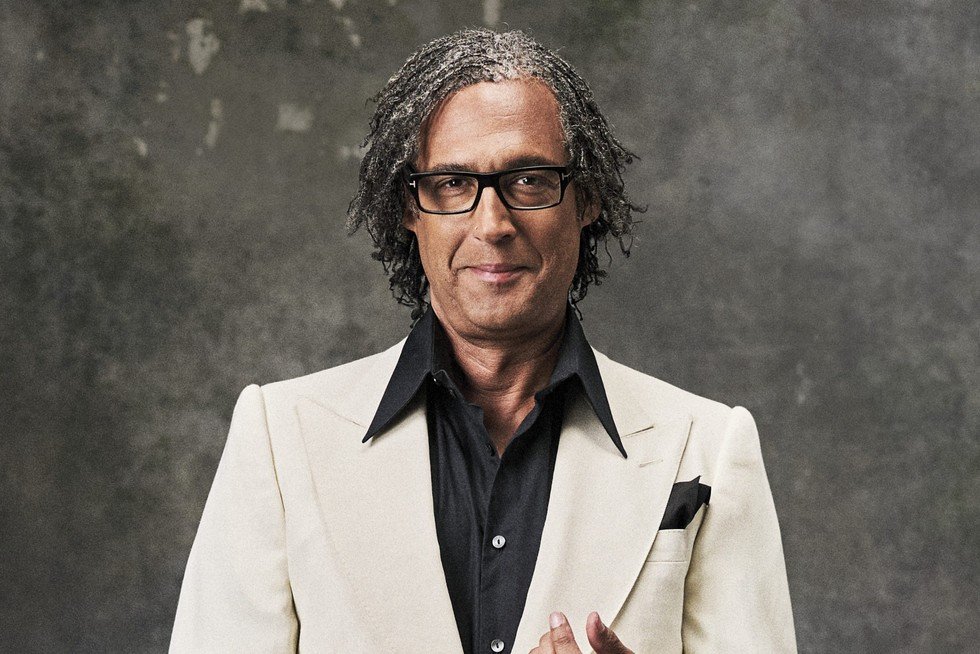

Few historians feel at home in lecture halls, newspaper columns and living rooms all at once, yet David Olusoga does exactly that. Whether he is walking through a Victorian terrace on television or unpacking the legacy of empire in a bestselling book, he has a gift for making the past feel close, human and impossible to ignore.
This guide takes a relaxed but thorough look at his life, his major books and programmes, and the ideas that connect them. Along the way, it covers the wider conversation around public history, Britain’s colonial past and the stories that school textbooks used to skip. If you have ever watched one of his documentaries and wanted to know more about the person behind the voice, this is a good place to start.
Early Life and the Road to History
Olusoga was born in Lagos, Nigeria, in 1970 to a Nigerian father and a British mother. He moved to the North East of England as a child and grew up in Gateshead. Growing up in a working-class neighbourhood, at a time when racism was often openly expressed, shaped how he understood belonging, identity and the stories a nation tells about itself. Those early experiences gave him a sharp ear for what gets remembered and what gets quietly left out.
He went on to study history at the University of Liverpool before moving into television production, which turned out to be a smart apprenticeship. Working behind the camera taught him how to structure a story, hold an audience and boil a complicated argument down to its emotional core without losing accuracy. That blend of academic rigour and storytelling instinct would later become his signature.
Who Is David Olusoga Today
Today, David Olusoga is Professor of Public History at the University of Manchester, a broadcaster, an author and a regular contributor to national newspapers. The title “public history” matters here. It describes a branch of the discipline that takes serious research out of archives and journals and presents it to ordinary readers and viewers, without dumbing it down.
His career sits at the crossroads of several fields: imperial history, race and migration, the First World War, urban and social history, and documentary filmmaking. He is not the kind of historian who retreats into a single narrow specialism. Instead, he follows connections, such as how a ledger in a London archive links to a plantation in the Caribbean, or how a soldier from the colonies ended up on a European battlefield.
Black and British: A Forgotten History
The project that made David Olusoga a household name among history readers was Black and British: A Forgotten History, published in 2016 as a book and broadcast as a BBC series. It traces the presence of people of African and Caribbean descent in Britain across nearly two thousand years, from Roman soldiers stationed on the frontier to Tudor-era musicians, Georgian sailors and twentieth-century migrants.
The central argument is simple but powerful: Black history in Britain is not a recent footnote but a long, continuous thread in the national story. By pulling that thread, Olusoga shows how slavery, trade, empire and migration shaped British cities, fortunes and families. The book is detailed and well sourced, yet it reads like a conversation, which is a big reason it travelled so far beyond university reading lists.
The Kaiser’s Holocaust and the Story of Colonial Violence
Another cornerstone of David Olusoga’s research is The Kaiser’s Holocaust, written with Casper Erichsen. The book examines the genocide of the Herero and Nama peoples in German South West Africa, now Namibia, in the early twentieth century. It explores how colonial ideas about race and territory, along with the use of concentration camps and forced labour, foreshadowed later horrors in Europe.
Handling such material takes care, and the book avoids sensationalism. It lays out evidence, names the perpetrators and gives the victims their rightful place in the story. For readers new to the subject, it is also a reminder that colonial history is rarely a distant or tidy affair, and that it echoes through politics, memory and even museum debates today.
A House Through Time and the Power of Small Stories
If Black and British is his sweeping panorama, A House Through Time is the intimate close-up. In this long-running BBC series, which began in 2018, Olusoga takes a single historic house and follows its occupants across centuries, using census returns, wills, newspapers, court records and family papers. Each episode feels like a detective story in which ordinary people, such as clerks, widows, lodgers and servants, finally get their turn in the spotlight.
The format works because it demonstrates a principle that runs through all his work: big historical forces, such as industrialisation, poverty, war and empire, show up in everyday lives. A rent book or a street directory can reveal more about a society than a speech by a prime minister. Viewers come away with a better understanding of how history is built, and many have been inspired to research their own streets and families.
Other Television Work and Collaborations
His screen résumé stretches well beyond a single series. He has presented programmes on the First World War, including work that drew on his book The World’s War, which highlights the millions of soldiers and labourers from Africa, Asia and the Caribbean who were drawn into the conflict. He also presented Britain’s Forgotten Slave-Owners, a documentary that drew on research into compensation paid to British slave owners after abolition in the 1830s.
He also joined Mary Beard and Simon Schama for the BBC’s Civilisations series, where he explored encounters between cultures through art and objects. Working alongside other well-known historians gave him a chance to show how different voices can approach the same big question from complementary angles. Across all these programmes, the common thread is a refusal to treat the past as a closed book.
David Olusoga’s Major Works at a Glance
The table below gathers some of the best-known books and programmes, so you can see how the themes connect and decide where to begin.
| Work | Format | Main Focus |
|---|---|---|
| The Kaiser’s Holocaust | Book | Genocide of the Herero and Nama in German South West Africa |
| The World’s War | Book | Soldiers and labourers from the wider world in the First World War |
| Britain’s Forgotten Slave-Owners | Documentary | Compensation paid to slave owners and the legacy of slavery in Britain |
| Black and British: A Forgotten History | Book and BBC series | Nearly two thousand years of Black presence in Britain |
| Civilisations | BBC series (co-presenter) | Art, culture and encounters between societies |
| A House Through Time | BBC series | Social history told through the occupants of a single house |
A rough pattern emerges from this list. His early work leans on research into empire and war, while his later television series bring those ideas closer to home, to streets, houses and families. Beginners might enjoy starting with A House Through Time for its warmth and accessibility, then moving to Black and British for the wider sweep, and finally to The Kaiser’s Holocaust for a more demanding but rewarding read.
Why Public History Matters
The novelist William Faulkner once wrote, “The past is never dead. It’s not even past.” That line captures why public history matters, and it sits comfortably alongside the work of David Olusoga. When monuments, school curricula, immigration policy and family stories are all shaped by what we think happened long ago, getting that history right is not an academic luxury.
Public historians act as translators between specialist research and the wider public. L. P. Hartley’s famous remark that the past is a foreign country, where they do things differently, is a useful reminder of the challenge. A good guide helps you navigate that unfamiliar territory without either romanticising it or judging it by modern standards alone. Olusoga’s approach tends to be honest about discomfort, curious about complexity and generous toward the viewer.
Debates About Statues, Empire and Education
Because his work touches on empire and race, Olusoga often becomes part of wider public debates. When statues of slave traders, such as the Edward Colston monument in Bristol, became a focus of protest in 2020, historians were called on to explain who these figures were and why their commemoration was contested. His contribution stressed context, urging people to look at how and why monuments were erected, not only at the individuals themselves.
He has also been a prominent voice in conversations about how history is taught in schools. A recurring theme is that a rounded curriculum should include Britain’s imperial past, Black and Asian British history and the stories of working people, alongside the traditional focus on kings, queens and battles. Reasonable people disagree about how this should be done, and critics raise concerns about balance and national narrative. Even so, the case that students benefit from a fuller, more evidence-based picture is one that many teachers and historians support.
Awards, Recognition and Influence
His work has been widely recognised, and in 2019 he was appointed OBE for services to history and community integration. His books and documentaries have also earned critical praise and a loyal audience, which is no small feat for programmes about archives and old census records. Beyond formal honours, his real influence shows up in how many people now feel confident asking questions about the history of their own towns.
He has also helped shift expectations about who presents history on British television and what stories are considered mainstream. By combining solid scholarship with accessible storytelling, he has shown that audiences can handle complexity, discomfort and nuance. That legacy will likely shape how future broadcasters, authors and teachers approach the past.
What Readers Can Learn from David Olusoga
One lesson is the importance of primary sources. Whether he is reading a ship’s manifest or a nineteenth-century newspaper advert, he treats documents as living voices that deserve to be heard. Anyone interested in family history or local research can borrow the same habit: start with a record, ask who created it and why, and follow the trail wherever it leads.
Another lesson is the value of connecting scales. He moves easily between global systems and individual lives, showing that neither makes sense without the other. If you want to engage more deeply with history, try pairing a broad overview book with a local case study. That combination keeps the big picture grounded and the small details meaningful.
Conclusion
David Olusoga has built a career on one deceptively simple idea: the past belongs to everyone, and everyone deserves an honest account of it. From the global sweep of Black and British to the street-level detective work of A House Through Time, his work shows how empire, migration, war and everyday life are tangled together. His writing and broadcasting invite readers to see Britain, and the wider world, with sharper and more compassionate eyes.
For anyone looking to explore further, the best approach is to pick a book or series that matches your curiosity and let it lead you onward. Whether you are a student, a casual viewer or a seasoned history reader, there is plenty to learn from a historian who treats the audience as intelligent partners in the search for understanding.
Frequently Asked Questions
The following answers cover some of the most common questions people have about the historian, his books and his broadcasting. They are intended as a quick reference, so you can find what you need and then dive into the works themselves.
Each answer is based on his published books and well-known television work, which remain the best places to see his ideas in full.
Who is David Olusoga?
He is a British-Nigerian historian, author and broadcaster who was born in Lagos and raised in the North East of England. He is Professor of Public History at the University of Manchester and is known for books and television series on empire, slavery, race, migration and social history.
His reputation rests on his ability to combine academic depth with clear, engaging storytelling. That combination has made his work popular with general readers as well as students and teachers.
What is David Olusoga best known for?
He is best known for Black and British: A Forgotten History and for presenting A House Through Time on the BBC. He is also widely recognised for The Kaiser’s Holocaust and The World’s War, which examine colonial violence and the global dimensions of the First World War.
What books has David Olusoga written?
His major titles include The Kaiser’s Holocaust, written with Casper Erichsen, The World’s War and Black and British: A Forgotten History. Each of them challenges familiar national stories by bringing overlooked people and events into view, and each is a good entry point depending on your interests.
Where should a beginner start with his work?
Newcomers often find A House Through Time the most welcoming introduction, because it uses a single building to tell a human story across centuries. From there, Black and British offers a broader overview of the Black presence in Britain, while The Kaiser’s Holocaust suits readers ready for a more sobering examination of colonial history.
What does public history mean?
Public history is the practice of presenting historical research to a wide audience through books, television, museums, podcasts and other formats. It aims to be accurate and accessible at the same time, which is exactly the space where David Olusoga has built his career.
Why is his work considered important?
His work is considered important because it widens the lens of British history to include stories of Black and Asian communities, colonised peoples and ordinary working families. By doing so, it helps audiences understand how the past shapes present-day debates about identity, memory and belonging.
Read also Nikita Kuzmin: From Italian Ballroom Champion to Strictly Fan Favourite