
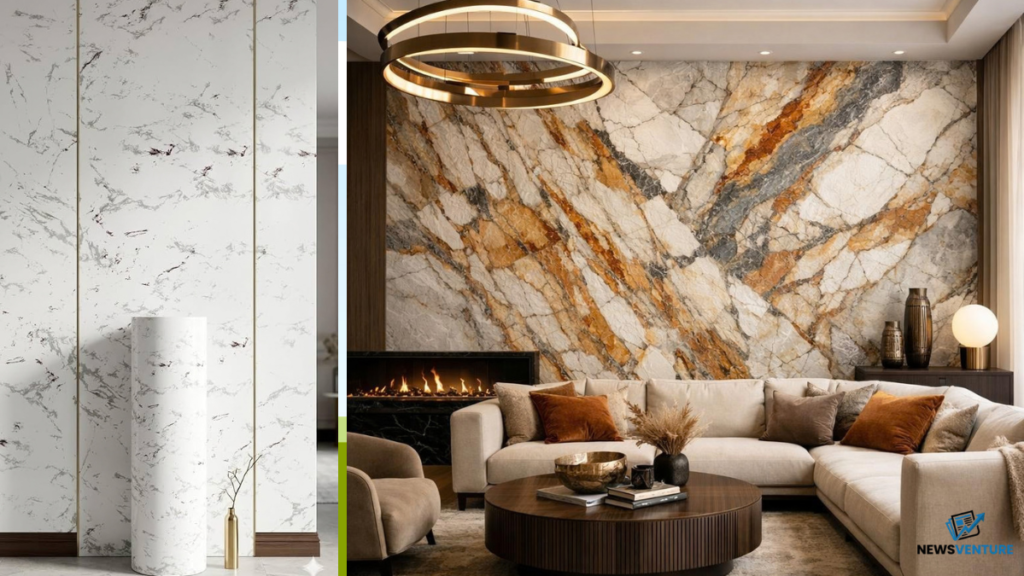

Marble effect wall panels have become a popular choice for homeowners, landlords, designers, and renovation enthusiasts who want the elegant appearance of natural stone without the demanding installation process and high cost often associated with real marble. These decorative wall panels can create a dramatic focal point in a room while keeping the overall design clean, contemporary, and relatively easy to maintain.
The appeal goes beyond appearance. Modern wall panels are available in a wide range of colours, veining patterns, finishes, thicknesses, and materials, making them suitable for bedrooms, bathrooms, kitchens, living rooms, hallways, offices, and commercial interiors. Depending on the product, installation can also be considerably faster than traditional tiling or stonework.
For anyone planning an interior makeover, understanding how these panels work, where they can be used, and what to consider before buying can make the difference between an ordinary renovation and a polished-looking space. This guide explores the main benefits, materials, installation considerations, maintenance requirements, design ideas, and buying factors in detail.
What Are Marble Effect Wall Panels?
Marble effect wall panels are decorative surfaces designed to reproduce the appearance of natural marble. Instead of being cut from a solid block of stone, they are generally manufactured from materials such as PVC, acrylic, laminate, composite materials, or other engineered surfaces. Digital printing and modern finishing techniques allow manufacturers to recreate intricate marble veining with impressive visual detail.
Unlike conventional marble slabs, these panels are usually produced in larger sections. That means fewer joints may be visible across a wall, creating a smoother and more continuous appearance. The result can resemble a premium stone installation while offering a different balance of cost, weight, maintenance, and installation time.
The phrase “marble look without the marble workload” neatly captures why this style has become attractive to modern renovators. It offers the visual character of stone while avoiding some of the practical challenges associated with natural materials.
Another advantage is design flexibility. Classic white surfaces with grey veining remain popular, but contemporary products can imitate black marble, green marble, beige stone, dramatic gold-veined designs, and many other patterns. This makes it easier to coordinate a feature wall with furniture, flooring, lighting, and decorative accessories.
Why Marble Effect Wall Panels Are So Popular
One of the biggest reasons for their popularity is visual impact. A marble-inspired wall can immediately make a room feel more sophisticated, particularly when paired with modern lighting, brushed metal fixtures, glass, wood, or neutral furniture. The strong veining creates movement across a large surface without requiring additional artwork or decorative elements.
Cost is another important factor. Natural marble can involve material costs, specialist handling, transportation, cutting, sealing, and professional installation. Decorative panels can provide a more accessible route to a similar visual concept. The exact price varies considerably according to material, size, finish, brand, and installation requirements, but the overall project can be simpler.
Weight also matters. Some engineered wall coverings are significantly lighter than natural stone slabs, which can make handling easier and reduce certain structural and installation challenges. This is particularly useful during residential renovations where accessibility and working space may be limited.
Maintenance can be another attraction. Many smooth panel surfaces can be cleaned with a soft cloth and suitable mild cleaner. There is generally no need to treat every panel like natural stone, although the manufacturer’s care instructions should always be followed.
Materials Used for Marble-Style Wall Panels
The material behind a decorative panel affects its appearance, durability, moisture resistance, weight, installation method, and price. Understanding the differences helps buyers select a product that suits the intended room rather than choosing solely on appearance.
PVC panels are widely used because they can be lightweight, relatively affordable, and easy to work with. They are particularly common in bathroom and utility-room applications, although suitability depends on the manufacturer’s specifications. Some products feature waterproof or water-resistant construction, making them useful where regular splashing occurs.
Acrylic panels can provide a glossy, contemporary appearance and are often chosen for bathrooms, kitchens, splashbacks, and feature walls. Their reflective surface can also help make a smaller room appear brighter. However, the surface may require appropriate cleaning products to avoid scratches or damage.
Laminate and composite panels can offer a more substantial appearance and may be available in highly realistic stone patterns. These products vary considerably, so checking the construction, core material, edge treatment, and moisture rating is important before purchase.
The table below provides a practical overview of common panel types.
| Panel material | Typical characteristics | Common applications | Main consideration |
|---|---|---|---|
| PVC | Lightweight, practical and often moisture resistant | Bathrooms, utility rooms, feature walls | Check heat and moisture specifications |
| Acrylic | Smooth, glossy and contemporary | Bathrooms, kitchens, splashbacks | Can require careful cleaning |
| Laminate | Wide range of decorative finishes | Living rooms, bedrooms, offices | Quality varies by manufacturer |
| Composite | Solid feel and detailed finishes | Feature walls, commercial interiors | Usually costs more than basic panels |
| Engineered stone-style panels | Premium visual appearance | Luxury interiors and statement walls | Weight and installation requirements vary |
Choosing the right material should always begin with the room’s conditions. A beautiful panel that is unsuitable for continuous moisture or high heat may not perform well over time.
Where to Use Marble Effect Wall Panels
Bathrooms are one of the most obvious applications because marble has traditionally been associated with luxury bathroom interiors. A large-format wall covering can create a seamless spa-like atmosphere around a shower area, behind a freestanding bath, or across a vanity wall, provided the chosen product is rated for the environment.
Living rooms can also benefit from a dramatic feature wall. A marble-inspired surface behind a television, fireplace, shelving unit, or media console can become the central visual element of the space. Combining it with warm wood or soft furnishings prevents the room from feeling excessively cold or clinical.
In bedrooms, a subtle marble pattern can work particularly well behind the headboard. Rather than covering every wall, using a single statement surface can provide depth while keeping the rest of the room understated.
Kitchens offer another opportunity. A stone-effect panel can be used as a splashback or decorative wall surface where the product is specifically designed for that purpose. Heat exposure should always be considered around cookers and other appliances.
Commercial spaces such as reception areas, salons, hotels, restaurants, and offices can also use decorative stone-look panels to create a high-end first impression. In these environments, durability, cleaning requirements, fire performance, and installation standards become especially important.
Choosing the Right Colour and Veining
White marble-inspired panels with soft grey veins are among the easiest designs to incorporate into an interior. They work with black fixtures, chrome, brushed brass, natural timber, neutral fabrics, and many flooring styles. This makes them a practical choice for people who want an elegant finish without committing to a highly specific colour scheme.
Darker designs create a stronger visual statement. Black backgrounds with white or gold-coloured veining can produce a luxurious, dramatic appearance, especially when combined with warm lighting and metallic details. They tend to work particularly well on feature walls rather than throughout an entire room.
Green, beige, cream, and warmer stone-inspired patterns offer an alternative for interiors that need more warmth. These tones can complement natural materials such as oak, walnut, rattan, linen, and stone flooring.
Veining direction can also influence the appearance of a room. Large, flowing patterns can draw the eye across a wall and make the surface feel expansive. More restrained patterns can create a quieter and more timeless effect.
“Let the wall make the statement, and let the furniture support it” is a useful design principle when working with dramatic stone patterns. A highly detailed wall usually needs fewer competing decorative elements.
How to Install Marble Effect Wall Panels
Installation methods depend heavily on the panel construction and the manufacturer’s instructions. Some products can be bonded directly to a suitably prepared wall, while others may require battens, mechanical fixings, trims, profiles, or specialist adhesives.
Wall preparation is one of the most important stages. The surface generally needs to be clean, dry, stable, and reasonably even. Dust, grease, loose paint, wallpaper, dampness, or significant unevenness can interfere with adhesion and affect the finished appearance.
Accurate measuring is equally important. Large panels are visually impressive, but mistakes during cutting can be costly. Openings for sockets, switches, pipes, taps, and other fixtures should be measured carefully before cutting.
Edges and joints deserve attention too. Even an excellent panel can look unfinished if the corners and transitions are poorly handled. Matching trims, colour-coordinated sealants, or carefully designed junctions can give the installation a much more professional appearance.
For wet areas, sealing details are especially important. The panel itself may be water resistant, but the overall installation also depends on joints, corners, penetrations, and the condition of the supporting wall. Always follow the manufacturer’s installation system rather than assuming that every decorative panel can be installed in the same way.
Preparing the Wall Before Installation
Good preparation is often more important than the panel itself. A wall that is dusty, unstable, damp, or badly uneven can create problems after installation, regardless of how attractive the chosen finish looks.
Existing surfaces should be inspected carefully. Loose plaster, peeling paint, damaged tiles, or unstable wallpaper may need to be removed or repaired. If moisture is present, the underlying cause should be addressed before any new wall covering is installed.
Measurements should be taken at several points because walls are not always perfectly square. Checking height and width in multiple locations helps identify variations that could affect panel positioning.
It is also sensible to plan the layout before making any permanent cuts. Where a panel has distinctive veining, positioning can significantly influence the finished result. A carefully planned arrangement can make the pattern look intentional and balanced.
Maintenance and Cleaning
One of the practical benefits of decorative wall panels is straightforward cleaning. Smooth surfaces can generally be wiped with a soft cloth or sponge and a mild cleaning solution. Regular gentle cleaning is preferable to allowing grease, soap residue, or dirt to accumulate.
Abrasive pads and aggressive chemicals should be avoided unless the manufacturer specifically confirms that they are safe. Strong cleaners can dull glossy finishes or damage printed surfaces.
Bathrooms may need more frequent attention because soap residue and mineral deposits can accumulate around showers and baths. Good ventilation can help reduce condensation and keep the surrounding environment healthier for the wall system.
The key principle is simple: “Clean gently, maintain regularly.” A small amount of routine care can help preserve the original appearance for much longer than occasional aggressive cleaning.
Are Marble-Style Panels Suitable for Bathrooms?
Many products are specifically designed for bathroom environments, but suitability should never be assumed from appearance alone. A decorative wall panel may look waterproof while having limitations around prolonged moisture, direct water exposure, heat, or installation conditions.
When selecting panels for a bathroom, check the manufacturer’s moisture-resistance information and installation instructions. Pay close attention to shower areas, corners, joints, and penetrations around plumbing fixtures.
Large-format panels can be particularly attractive in bathrooms because they may reduce the number of visible joints compared with smaller tiles. Fewer joints can also mean fewer grout lines to clean, depending on the system being installed.
Ventilation remains important. Even a moisture-resistant wall finish should not be treated as a substitute for effective extraction and sensible bathroom maintenance.
Comparing Panels With Traditional Marble and Tiles
Natural marble has a unique appearance because every piece contains naturally formed variations. It can be exceptionally beautiful, but it can also require careful handling and ongoing maintenance. Decorative alternatives aim to reproduce the visual character while offering different practical characteristics.
Traditional ceramic or porcelain tiles provide enormous design flexibility and proven durability. However, they involve grout lines, individual tile placement, and potentially longer installation processes. Large-format panels can create a more continuous appearance.
The best choice depends on the specific project. A luxury renovation may prioritise authentic stone, while a quick bathroom update may place greater emphasis on installation convenience and easy cleaning.
| Feature | Decorative marble-style panels | Natural marble | Porcelain or ceramic tiles |
|---|---|---|---|
| Visual style | Marble-inspired | Authentic natural variation | Wide range of designs |
| Joint appearance | Often fewer visible joints | Depends on slab layout | Usually more grout lines |
| Weight | Often lighter | Generally heavy | Moderate |
| Installation | Can be relatively quick | Usually specialist work | Requires careful tiling |
| Maintenance | Often straightforward | May require stone-specific care | Grout requires regular attention |
| Design range | Extensive printed patterns | Naturally limited by stone | Extremely extensive |
| Cost | Varies, often accessible | Often premium | Broad price range |
This comparison shows why there is no universal answer for every renovation. The right surface depends on the room, budget, installation conditions, desired appearance, and long-term expectations.
Creating a Luxury Look on a Budget
A luxury interior does not necessarily require every wall to use an expensive material. Strategic placement can have a much greater visual effect than covering an entire room.
A single feature wall behind a bed, sofa, television, vanity, or reception desk can create a strong focal point. Pairing the wall with warm lighting, carefully selected furniture, and minimal clutter can make the finish feel significantly more sophisticated.
Lighting is particularly important. Wall-mounted lights, concealed LED strips, pendant lighting, or directional spotlights can highlight veining and add depth to the surface.
Metallic details can also enhance the design. Brass, brushed gold, chrome, and matte black fixtures can each create a different mood when combined with a stone-inspired wall.
Common Mistakes to Avoid
Choosing a panel based only on photographs is one of the most common mistakes. Online images can make colours and textures appear different from the physical product. Ordering a sample, where available, can help reveal the actual finish, thickness, surface texture, and colour.
Another mistake is ignoring the existing room. A dramatic black marble pattern may look impressive in a showroom but could overwhelm a small room filled with dark furniture. Similarly, an understated design may disappear in a large space without suitable lighting.
Poor installation preparation can also compromise the final appearance. Uneven walls, inaccurate measurements, inadequate adhesive, or poorly finished edges can make a premium product look inexpensive.
Finally, buyers should avoid assuming that all panels have the same technical properties. Moisture resistance, heat resistance, fire classification, cleaning requirements, and installation methods can differ significantly between products.
How to Choose the Best Panels for Your Space
Start by identifying where the panels will be installed. A bedroom feature wall has very different requirements from a shower enclosure or kitchen splashback. The intended location should determine the required material and technical specification.
Next, consider the room’s existing palette. Look at flooring, cabinetry, furniture, doors, metal fixtures, and natural light. The wall should complement these elements rather than competing with everything else.
Panel size also matters. Large panels can produce a more seamless appearance, while smaller formats may be easier to handle in certain spaces. Always check the actual dimensions and calculate the coverage carefully before purchasing.
Quality should be assessed beyond the printed pattern. Examine the surface finish, backing material, rigidity, edge quality, thickness, installation instructions, and warranty information where available.
It is also worth considering future repairs. Ask whether replacement panels or matching trims are likely to remain available. Keeping a small amount of leftover material can be useful for future repairs or modifications.
Sustainability and Long-Term Value
The environmental profile of decorative wall panels varies according to their material, manufacturing process, lifespan, and disposal options. Buyers interested in sustainability should look beyond marketing claims and check available product information.
Long-term value is also important. A low-cost product that needs replacement quickly may not represent better value than a more durable panel with a longer service life. Installation quality plays a major role in this equation.
Choosing timeless colours and restrained patterns can also help an interior remain appealing as design trends change. While dramatic finishes can be striking, a balanced pattern may offer greater flexibility when furniture or room décor is updated.
Design Ideas for Modern Interiors
A white marble-inspired panel behind a floating vanity can give a bathroom a clean, hotel-inspired appearance. Pairing it with warm timber and soft lighting can prevent the space from feeling overly clinical.
In a living room, a darker stone pattern behind a television can create depth and visual contrast. Keeping surrounding walls neutral helps maintain balance while allowing the feature surface to remain the focal point.
For bedrooms, a soft veined design behind the headboard can function almost like oversized artwork. Minimal bedside furniture and warm textiles can complement the pattern without competing with it.
In offices, marble-style surfaces can be used behind reception desks or meeting areas to create a polished environment. The key is moderation: one carefully positioned feature can often have more impact than excessive use throughout the entire workplace.
Cost Factors to Consider
The price of a panel installation depends on several factors, including panel material, dimensions, surface finish, brand, number of panels required, trims, adhesive, wall preparation, and labour.
Simple installations on sound, flat walls may be relatively straightforward. Projects involving extensive preparation, complicated cuts, plumbing fixtures, corners, or specialist requirements can cost considerably more.
When calculating the project budget, avoid looking only at the panel price. Include preparation materials, adhesive, trims, sealants, cutting equipment, delivery, and professional installation if required.
A realistic budget should also include a small allowance for cutting waste and future repairs. Buying exactly the calculated coverage may leave no spare material if a panel is accidentally damaged during installation.
Final Thoughts on Marble Effect Wall Panels
Marble effect wall panels offer a practical way to introduce the visual character of luxury stone into contemporary interiors. Their combination of dramatic patterns, large-format designs, relatively simple maintenance, and broad material selection makes them suitable for a wide range of residential and commercial applications.
The best results come from treating the project as a complete design rather than simply buying an attractive panel. Wall preparation, product specifications, layout, lighting, colour coordination, sealing, and installation quality all influence the final appearance.
For homeowners seeking a statement finish, panels can transform a plain wall into a sophisticated focal point without requiring a complete room renovation. Used thoughtfully, they can deliver a polished stone-inspired aesthetic while fitting naturally into modern interiors.
Frequently Asked Questions
Are marble effect wall panels waterproof?
Some products are specifically manufactured to be waterproof or highly water resistant, while others are intended for dry interior walls only. Always check the manufacturer’s technical specifications before using a panel in a bathroom, shower area, or other moisture-prone location.
Can marble effect wall panels be installed over existing tiles?
Some systems can be installed over existing tiles if the surface is stable, clean, dry, and sufficiently flat. The manufacturer’s adhesive and preparation requirements should be followed carefully because loose tiles, deep grout lines, or uneven surfaces can affect the installation.
Are marble effect wall panels easy to clean?
Most smooth decorative panels are relatively easy to maintain. A soft cloth, sponge, and suitable mild cleaner are commonly sufficient for routine cleaning. Abrasive products should generally be avoided unless the manufacturer confirms they are safe for the specific surface.
Can these panels be used in a shower?
Certain products are designed for wet-room and shower applications, but not every decorative panel is suitable for continuous direct water exposure. The complete installation system, including joints, corners, seals, and substrate preparation, must meet the manufacturer’s requirements.
Do marble effect wall panels look realistic?
Modern printing and surface-finishing techniques can produce highly detailed stone patterns with convincing veining and colour variation. The realism depends on the quality of the product, surface texture, pattern repetition, panel size, and installation quality.
Are marble-style panels cheaper than natural marble?
They can be considerably more accessible than natural marble in many projects, particularly when installation, handling, and maintenance are taken into account. However, prices vary widely between materials and manufacturers, so a complete project comparison is more useful than comparing material prices alone.
Can these panels be used in kitchens?
Yes, some products are suitable for kitchen walls and splashbacks, but heat exposure must be considered carefully. Panels installed near cookers or other heat-producing appliances should meet the relevant manufacturer’s temperature and installation requirements.
How long do decorative wall panels last?
Their lifespan depends on the material, installation quality, environmental conditions, cleaning routine, and level of use. A well-installed, properly maintained product can remain attractive for many years, but buyers should review the manufacturer’s durability information for the specific panel.
Are marble-style panels suitable for small rooms?
They can work particularly well in smaller rooms when the pattern, colour, and lighting are chosen carefully. Lighter colours and flowing veining can create an open feeling, while a darker panel can be used selectively to create a dramatic focal point.
What makes marble effect wall panels a good interior design choice?
They combine decorative impact with practical versatility. They can introduce the appearance of luxury stone without requiring a full natural-stone installation, while the broad selection of colours, patterns, finishes, and panel materials makes them adaptable to different interior styles.
Read also Janome Sewing Machine: A Complete Guide to Choosing and Using the Right Model