
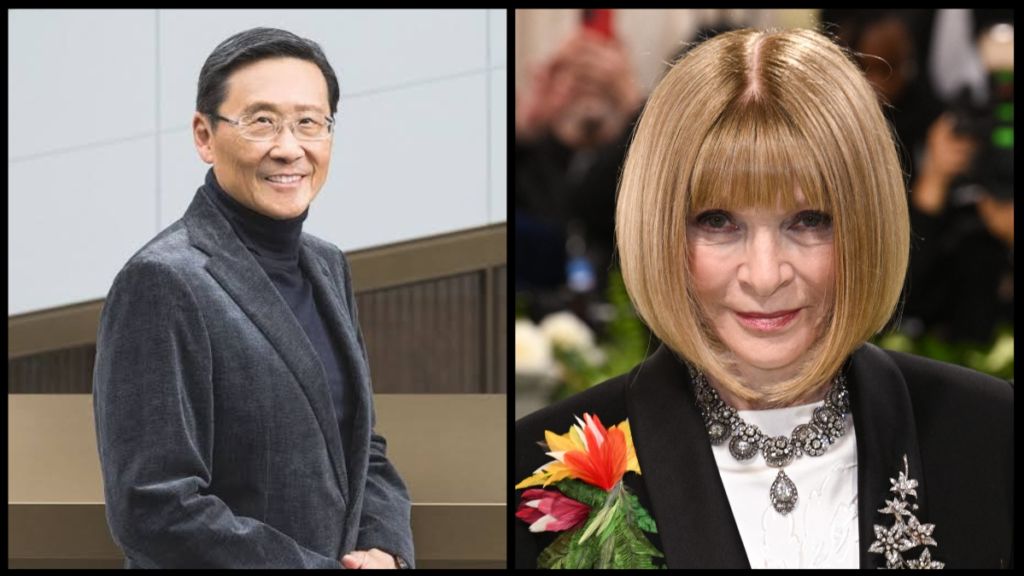

The worlds of international business and high fashion are often closer than they appear. Some influential figures build their reputations through major investments, property development, and commercial success, while others shape global culture through publishing, fashion journalism, and creative leadership. Peter Woo and Anna Wintour represent these two powerful sides of the modern luxury industry.
Peter Woo is a prominent Hong Kong businessman known for his leadership in property, investment, and retail-related enterprises. Anna Wintour, meanwhile, is one of the most influential figures in international fashion media. Her decades-long career at Vogue helped transform fashion journalism and establish her as a major voice in the global creative industry.
Although their professional backgrounds are different, their names can appear together in discussions about luxury, wealth, fashion, and international influence. Understanding their individual achievements helps explain why people might be interested in both personalities.
It is important to establish one point from the beginning: there is no reliably documented evidence that they are relatives, romantic partners, or direct business partners. Their connection is better understood through their respective positions in the wider luxury economy.
Who Are Peter Woo and Anna Wintour?
Peter Woo Kwong-ching is a Hong Kong businessman born on September 5, 1946, in Shanghai, China. He developed an impressive career in international business, becoming particularly associated with major companies such as Wheelock and Company and The Wharf Holdings.
His professional achievements have made him an important figure in Hong Kong’s corporate and commercial history. His work has involved property development, investments, shipping-related business interests, and large commercial projects.
Anna Wintour was born on November 3, 1949, in London, England. She built an international reputation through fashion journalism and editorial leadership. Her name became closely associated with Vogue, one of the world’s most influential fashion magazines.
She became editor-in-chief of American Vogue in 1988 and held the position for 37 years before moving into broader leadership responsibilities in 2025. She continues to serve as Vogue’s global editorial director and Condé Nast’s chief content officer.
Together, these personalities represent different forms of influence. One developed a reputation through business leadership and commercial investments, while the other shaped fashion publishing and international cultural conversations.
Peter Woo’s Early Life and Educational Background
Peter Woo was born into a Chinese family in Shanghai and later moved to Hong Kong with his parents. His early experiences helped shape his understanding of international business and the importance of education.
He attended St Stephen’s College in Hong Kong before continuing his studies in the United States. His educational journey took him to the University of Cincinnati, where he graduated in 1970 with a degree in physics and mathematics.
Woo subsequently attended Columbia Business School, earning an MBA in 1971. His combination of scientific education and business training provided a strong foundation for his future career.
After completing his studies, he began working in banking at Chase Manhattan Bank. This experience introduced him to international finance, commercial relationships, and corporate decision-making.
His professional journey eventually brought him back to Hong Kong, where he became involved in the business interests of the Pao family.
Peter Woo’s Rise in International Business
Peter Woo’s business career developed significantly after he joined the World-Wide Shipping Group in 1975. The organisation was associated with his father-in-law, shipping entrepreneur Y. K. Pao.
Woo gradually became involved in larger corporate responsibilities. His experience in banking and finance helped him understand how major companies could expand their operations and strengthen their commercial positions.
His leadership became particularly important within Wheelock and Company and The Wharf Holdings. Both organisations played significant roles in Hong Kong’s commercial property and investment landscape.
During his career, Woo was associated with the development of major commercial properties, shopping destinations, hotels, and other business assets.
His leadership helped strengthen the commercial presence of these organisations during important periods of economic development.
According to the University of Cincinnati’s account of his career, Woo’s education and early banking experience were important foundations for his later business success.
Anna Wintour’s Early Life and Family Background
Anna Wintour grew up in London in a family with strong connections to journalism and publishing. Her father, Charles Wintour, was a prominent newspaper editor, while her mother, Eleanor Trego Baker, had an interest in literature and culture.
Growing up in this environment exposed her to newspapers, magazines, writing, and public affairs from an early age.
Her interest in fashion developed during her teenage years. Rather than following a conventional academic path, she became increasingly interested in the creative industries and the changing fashion culture of London.
She attended North London Collegiate School but left before completing a traditional university education. Her early experiences included working in fashion retail and developing an understanding of the clothing industry.
These experiences helped her recognise that fashion was not simply about garments. It was also connected to identity, creativity, business, celebrity culture, and social change.
Her interest in these areas eventually developed into a remarkable career in international fashion journalism.
Anna Wintour’s Journey to Becoming a Fashion Icon
Anna Wintour began her professional fashion journalism career in 1970 as an editorial assistant at Harper’s & Queen in London.
She later moved to New York, where she worked for several fashion publications and gained valuable experience in editorial management.
Her career continued to develop through positions at magazines such as Harper’s Bazaar, Viva, and New York.
In 1985, she became editor of British Vogue, demonstrating her ability to lead a major fashion publication. Two years later, she moved to House & Garden in the United States.
Her biggest professional breakthrough arrived in 1988 when she became editor-in-chief of American Vogue.
Wintour introduced a distinctive editorial direction that combined high fashion with everyday clothing, celebrity culture, emerging designers, and contemporary lifestyles.
Her first Vogue cover became particularly memorable because it challenged traditional fashion photography conventions by featuring a model wearing a mixture of high-end designer clothing and relatively accessible fashion.
This approach reflected her belief that fashion magazines needed to connect with real cultural changes rather than simply repeat established industry traditions.
Peter Woo and Anna Wintour: Is There a Confirmed Connection?
One of the main reasons people search for Peter Woo and Anna Wintour together is curiosity about whether their professional or personal lives overlap.
However, publicly available biographical information does not establish a confirmed family relationship, romantic relationship, or direct business partnership between them.
Peter Woo’s documented professional history is primarily associated with Hong Kong business, property investment, corporate leadership, and commercial development.
Anna Wintour’s career is centred on fashion publishing, editorial strategy, international media, and cultural institutions.
Their professional environments are different, although both operate within the broader world of luxury and international influence.
It is possible to understand why their names might appear together in online discussions without assuming that they share a private relationship.
Luxury businesses depend on several interconnected industries. Fashion publishers influence consumer interests, retailers distribute designer products, and major investors provide the commercial infrastructure that supports international markets.
These connections help explain the broader relationship between their professional worlds, but they do not establish a direct association between the two individuals.
How Their Careers Connect to the Luxury Industry
Luxury is a broad international industry that includes fashion houses, retail businesses, commercial properties, publishing organisations, and cultural events.
Peter Woo’s business career has been connected to major commercial developments and retail-related interests. His association with the wider Pao family business network also connects his background to international commerce.
Anna Wintour’s influence comes from the media side of luxury. Through Vogue, she helped determine which designers, models, fashion trends, and cultural movements received international attention.
Fashion publishing and luxury retail often work alongside one another. A designer may receive editorial recognition in a prestigious magazine before attracting greater attention from retailers and consumers.
This relationship demonstrates how business and fashion media can influence one another.
| Area of influence | Peter Woo | Anna Wintour |
|---|---|---|
| Main industry | Business and investment | Fashion and media |
| Country association | Hong Kong | United Kingdom and United States |
| Professional background | Banking and corporate leadership | Journalism and publishing |
| Major organisation | Wheelock and Wharf | Vogue and Condé Nast |
| Main influence | Commercial development | Fashion and cultural influence |
| Public recognition | Hong Kong business leadership | International fashion leadership |
| Career focus | Investments and business strategy | Editorial direction and media leadership |
The comparison highlights their different professional achievements while showing why both names can appear in conversations about international power and luxury.
Peter Woo’s Family and Personal Life
Peter Woo has generally maintained a relatively private personal life compared with many internationally recognised business figures.
He married Bessie Pao in 1973. She is the daughter of the influential Hong Kong shipping entrepreneur Y. K. Pao.
Their marriage connected Woo to one of Hong Kong’s established business families and played an important role in his eventual involvement with the family’s commercial interests.
The couple have three children, including Douglas Woo and Jennifer Woo.
His family has also maintained business interests across different sectors. Jennifer Woo is particularly associated with the Lane Crawford Joyce Group, an important luxury retail organisation in Asia.
Peter Woo’s personal and professional history demonstrates how family relationships and commercial responsibilities can become closely connected in major business organisations.
Unlike many entertainment personalities, he has not built his public identity around personal publicity. His reputation is primarily connected to his corporate achievements and business leadership.
Anna Wintour’s Marriage, Children, and Personal Life
Anna Wintour’s personal life has attracted public attention throughout her career, although she has generally maintained clear boundaries between her professional responsibilities and private relationships.
She was previously married to child psychiatrist David Shaffer in 1984. Their marriage ended in divorce in 1999.
In 2004, she married American businessman Shelby Bryan. Their relationship later ended, with their separation becoming publicly known around 2020.
Wintour has two children, Charles and Katherine, commonly known as Bee.
Her children have pursued their own professional interests, with her daughter Bee Shaffer becoming known for her work in the entertainment and film industry.
Despite her demanding career, Wintour has spoken about the importance of balancing professional ambitions with family responsibilities.
One of her widely quoted observations captures this perspective:
“I think it’s very important for children to understand that women work and that it’s fulfilling.”
The comment reflects her belief that professional success and family life do not necessarily need to conflict.
Anna Wintour’s Influence on Vogue and Modern Fashion
Anna Wintour’s impact on the fashion industry goes far beyond her editorial title.
When she became editor-in-chief of American Vogue in 1988, the magazine was already an established fashion publication. However, she introduced changes that helped it become even more influential in international popular culture.
One of her most recognisable editorial decisions was the increased use of celebrities on magazine covers.
Previously, fashion magazines often focused primarily on professional models. Wintour recognised that actors, musicians, and other public personalities could attract readers while making fashion more accessible to wider audiences.
She also supported emerging designers and helped introduce new creative talent to international audiences.
Her involvement with the Council of Fashion Designers of America and the CFDA/Vogue Fashion Fund demonstrated her interest in supporting the next generation of fashion professionals.
Another major part of her influence is the Met Gala.
The annual event combines fashion, art, celebrity culture, and fundraising. Under Wintour’s leadership, it developed into one of the most recognised events on the international fashion calendar.
Her work has demonstrated how a fashion publication can influence not only clothing trends but also entertainment, culture, business, and public conversations.
Peter Woo’s Business Legacy in Hong Kong
Peter Woo’s legacy is closely connected to Hong Kong’s development as an international financial and commercial centre.
His leadership at Wheelock and Company and The Wharf Holdings placed him at the centre of major property and investment activities.
The companies were associated with important commercial destinations, including Harbour City in Tsim Sha Tsui and Times Square in Causeway Bay.
These developments demonstrate the importance of commercial property in Hong Kong’s economy.
Large shopping centres, hotels, office buildings, and retail destinations contribute to employment, tourism, investment, and international business activity.
Woo’s career also demonstrates the value of combining financial knowledge with long-term commercial planning.
Rather than concentrating on a single industry, his professional experience involved several connected areas of business.
His influence remains part of the wider history of Hong Kong’s corporate development, even though he stepped away from the chairmanship of Wheelock and Wharf in 2015.
Their Different Approaches to Leadership and Influence
Peter Woo and Anna Wintour represent two distinct approaches to professional leadership.
Woo’s influence has been built through corporate strategy, financial decision-making, investments, and commercial development.
His work required understanding market conditions, evaluating business opportunities, managing large organisations, and building relationships with important commercial partners.
Wintour’s leadership has been based on editorial judgement, creative direction, communication, and an understanding of cultural trends.
Her role required identifying talented designers, recognising changing consumer interests, and maintaining the relevance of an internationally recognised publication.
Despite these differences, their careers share several important characteristics.
Both developed significant professional influence over several decades. Both became associated with internationally recognised organisations, and both demonstrated the importance of long-term decision-making.
Their careers also illustrate that influence can take many forms. It does not always come from entertainment, politics, or public popularity. Sometimes it develops through the ability to shape industries, organisations, and commercial decisions.
Anna Wintour’s Career After Leaving the Editor-in-Chief Position
In 2025, Anna Wintour announced that she would step away from her traditional role as editor-in-chief of American Vogue after nearly four decades.
However, this development did not represent her departure from the fashion industry or Condé Nast.
She continued as Vogue’s global editorial director and Condé Nast’s chief content officer.
These positions allow her to focus on the wider direction of the company’s publications and international editorial strategy.
Chloe Malle was appointed head of editorial content at American Vogue, taking responsibility for the magazine’s day-to-day editorial and creative operations.
This transition represents an important change in Vogue’s leadership structure.
Wintour’s continuing responsibilities show that her influence extends beyond a single publication. Her experience and industry relationships remain important to the wider Condé Nast organisation.
What Makes Their Stories Interesting?
The interest in Peter Woo and Anna Wintour comes from the different ways they have achieved international recognition.
Woo’s story is connected to business development, education, family enterprises, and Hong Kong’s economic growth.
Wintour’s story is connected to journalism, fashion, creativity, and the transformation of one of the world’s best-known magazines.
Their careers also highlight the relationship between commercial success and cultural influence.
A luxury brand, for example, needs more than a good product to become internationally recognised. It also needs distribution, marketing, editorial exposure, retail partnerships, and a strong reputation.
Business leaders and fashion editors contribute to different parts of this process.
That broader connection makes their professional backgrounds interesting to compare, even without evidence of a direct personal association.
Conclusion
Peter Woo and Anna Wintour have established impressive careers in two different but influential areas of the international luxury economy. Woo became recognised for his leadership in Hong Kong business, property, and commercial investment, while Wintour transformed fashion journalism through her long association with Vogue and Condé Nast.
Although people may search for their names together, there is no verified evidence establishing that they are relatives, romantic partners, or direct business associates. Their connection is best understood through their broader influence on business, luxury retail, fashion, and international culture.
Both stories demonstrate that lasting professional influence comes from experience, strategic thinking, leadership, and the ability to shape an industry. Their individual achievements provide an interesting perspective on how business and fashion contribute to the modern global economy.
Frequently Asked Questions
Are Peter Woo and Anna Wintour related?
There is no reliable public evidence establishing a family relationship between Peter Woo and Anna Wintour. They come from different family backgrounds and have developed separate professional careers. Woo is associated with Hong Kong business, while Wintour is internationally recognised for her fashion journalism and leadership at Condé Nast.
Who is Peter Woo?
Peter Woo Kwong-ching is a Hong Kong businessman born in Shanghai in 1946. He is best known for his former leadership positions at Wheelock and Company and The Wharf Holdings. His business interests and career have been associated with property development, investment, and commercial enterprises.
Who is Anna Wintour?
Anna Wintour is a British-American fashion journalist and media executive. She became editor-in-chief of American Vogue in 1988 and held the position until 2025. She currently serves as Vogue’s global editorial director and Condé Nast’s chief content officer.
Do Peter Woo and Anna Wintour work together?
There is no confirmed public record establishing a direct business partnership between them. Their professional activities are associated with different organisations and responsibilities. Their broader connection comes from their involvement in industries that contribute to the international luxury economy.
Is Peter Woo married?
Yes. Peter Woo married Bessie Pao in 1973. She is the daughter of Hong Kong shipping entrepreneur Y. K. Pao. The couple have three children and have maintained a relatively private family life.
Was Anna Wintour married?
Yes. Anna Wintour was previously married to David Shaffer, with their marriage ending in divorce in 1999. She later married businessman Shelby Bryan in 2004. Their relationship subsequently ended, with their separation becoming publicly known around 2020.
Does Anna Wintour still work for Vogue?
Yes. Although she stepped down as editor-in-chief of American Vogue in 2025, she remains Vogue’s global editorial director and Condé Nast’s chief content officer. She continues to influence the wider direction of the publication and the company’s international media operations.
Why are Peter Woo and Anna Wintour discussed together?
Their names may appear together because of their connections to luxury, international business, fashion, and influential professional circles. Woo’s business background and Wintour’s fashion media career represent different parts of the broader luxury industry. However, this shared professional environment does not establish a direct personal relationship.
Read also Peter Thiel and Kevin Hart: The Truth Behind Their Connection, Careers, and Success