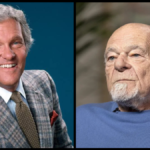


Ray Dalio and Patricia Poppe are two influential figures in American business who have built their reputations in very different industries. Ray Dalio is internationally recognised for founding Bridgewater Associates, one of the world’s best-known investment management firms. Patricia Poppe, widely known as Patti Poppe, has established herself as an experienced business executive in the energy and utility sector, particularly through her leadership at PG&E Corporation.
At first glance, their professional journeys might appear unrelated. Dalio developed his career through financial markets, economic research, investment strategies and institutional investing. Poppe, meanwhile, progressed through engineering, manufacturing, power generation and energy management before becoming a prominent corporate executive. Their experiences offer interesting perspectives on how leadership works across different industries.
The interest surrounding Ray Dalio and Patricia Poppe also raises an important question about their professional connection. Are they business partners, direct collaborators or simply two executives whose professional worlds overlap? Understanding the distinction requires looking at their individual careers, the organisations associated with them and the available public information.
Although no verified public record establishes a direct personal partnership between the two, there is an interesting institutional connection involving Bridgewater Associates and PG&E Corporation. Exploring that connection provides a useful starting point for understanding why their names are discussed together.
Who Is Ray Dalio?
Ray Dalio is an American billionaire investor, entrepreneur, author and economic thinker. He is best known as the founder of Bridgewater Associates, an investment management company that became one of the most influential hedge funds in the world. His approach to investing combines economic research, historical analysis, risk management and systematic decision-making.
Born on August 8, 1949, in Queens, New York, Dalio developed an interest in financial markets at a surprisingly young age. He reportedly purchased his first shares when he was just 12 years old. That early experience introduced him to the possibilities and uncertainties of investing and helped shape his interest in understanding how markets behave.
After completing his education, Dalio attended Long Island University and later earned an MBA from Harvard Business School in 1973. His academic background provided a foundation for his future work in finance, but much of his investment philosophy developed through practical experience.
In 1975, he founded Bridgewater Associates from his two-bedroom apartment. What began as a relatively small financial advisory operation eventually developed into a major global investment organisation. Dalio became particularly respected for his understanding of economic cycles, international markets and the relationship between debt, currencies and financial systems.
His influence extends beyond investment management. Through books such as Principles: Life and Work, he has shared his ideas about decision-making, organisational culture and personal development. His philosophy encourages people to examine mistakes, challenge assumptions and make decisions using evidence rather than emotion.
According to Bridgewater’s official founder biography, Dalio gradually stepped away from the company’s executive responsibilities, including his CEO role in 2017 and CIO position in 2020. His career remains an important example of how an investor can build an institution around a distinctive philosophy. Bridgewater+1
Who Is Patricia Poppe?
Patricia K. Poppe, commonly known as Patti Poppe, is an American business executive recognised for her work in the energy industry. She serves as the chief executive officer of PG&E Corporation, a major energy company responsible for delivering electricity and natural gas services to customers across California.
Unlike Dalio, whose career developed primarily in investment management, Poppe built her professional experience through engineering, industrial operations and utility management. Her background combines technical knowledge with corporate leadership, making her a notable figure in the American energy sector.
Poppe studied industrial engineering at Purdue University, earning both bachelor’s and master’s degrees. She later completed a master’s degree in management at Stanford Graduate School of Business. This combination of engineering and business education helped prepare her for leadership positions in complex industrial organisations.
Before joining PG&E, she held several senior positions at CMS Energy and Consumers Energy in Michigan. She eventually became president and chief executive officer of CMS Energy, where she worked on operational improvements, customer experience and the development of a more efficient energy business.
In January 2021, Poppe joined PG&E Corporation as its CEO. The appointment placed her in charge of a company facing significant challenges involving infrastructure, public safety, wildfire prevention, customer trust and the transition towards cleaner energy.
Her leadership responsibilities extend beyond financial performance. PG&E operates essential infrastructure that affects millions of households and businesses, making safety, reliability and affordability central parts of its corporate mission.
PG&E’s official leadership biography identifies Poppe as its chief executive and highlights her previous experience at CMS Energy, Consumers Energy, DTE Energy and General Motors. PG&E+1
What Connects Ray Dalio and Patricia Poppe?
The connection between these two business figures is primarily institutional rather than personal. Dalio founded Bridgewater Associates, while Poppe leads PG&E Corporation. The two organisations operate in different parts of the economy, but their names have appeared together in discussions about institutional investment and the energy industry.
One notable point of overlap involves Bridgewater’s reported investment position in PG&E Corporation. Investment disclosures for 2026 indicated that Bridgewater Associates reported holding approximately 5.93 million PG&E shares at the end of June 2026, with a reported quarter-end value of approximately $99.8 million.
This is an important distinction because the investment was reported by Bridgewater Associates, not by Ray Dalio as an individual. A regulatory filing showing an investment manager’s holdings does not establish that its founder personally purchased the shares, selected the investment or directed the transaction.
Similarly, the reported investment does not establish that Poppe personally communicated with Dalio or participated in an investment arrangement with him.
The connection is therefore best understood through their respective professional organisations. Dalio founded an influential investment firm, and Poppe leads a publicly traded energy corporation that has attracted institutional investor interest.
This distinction makes the story more interesting than a simple claim that two executives work together. It demonstrates how investment management and energy infrastructure can intersect through public financial markets without requiring a direct personal relationship.
Ray Dalio’s Journey From a Young Investor to a Financial Leader
Dalio’s career demonstrates the importance of curiosity, independent thinking and learning from experience. His interest in financial markets began during childhood, when he started following stock prices and eventually made his first investment.
His early investment experience was not necessarily based on sophisticated financial analysis. However, it introduced him to a principle that would become central to his professional life: understanding why markets move and recognising that successful investing requires more than simply following popular opinions.
After graduating from Harvard Business School, Dalio established Bridgewater Associates in 1975. Initially, the company provided financial research and advisory services to institutional clients. Over time, it developed investment management capabilities and became known for its global macroeconomic strategies.
One of Dalio’s most important contributions was his focus on understanding economic environments rather than concentrating exclusively on individual companies. His research examined inflation, interest rates, debt levels, currency movements and changes in economic policy.
This approach helped Bridgewater develop investment strategies designed to perform across different market conditions. Its All Weather strategy became particularly well known because it focused on balancing risk across various economic environments.
Dalio also developed a distinctive approach to organisational management. He believed that employees should be encouraged to challenge ideas, discuss mistakes and evaluate decisions openly.
His philosophy is often summarised through the expression “radical truthfulness and radical transparency.” These ideas describe his belief that organisations make better decisions when people communicate honestly and examine problems rather than hide them.
Although Dalio no longer manages Bridgewater in the same way he once did, his influence on modern investment thinking remains significant.
Patricia Poppe’s Professional Journey in the Energy Industry
Poppe’s career provides a different example of business leadership. Rather than entering finance, she developed her experience in engineering and industrial operations, where decisions can directly affect infrastructure, employees and customers.
Her early work in the manufacturing industry included positions at General Motors. She later moved into the energy sector, where she gained experience managing power plant operations and other important business functions.
Her professional background at DTE Energy helped her understand the operational challenges associated with electricity generation and distribution. Working in the utility industry requires balancing technical performance, regulatory requirements, employee safety and customer expectations.
Poppe subsequently joined CMS Energy, where she held multiple leadership positions. These included responsibilities involving customer operations, engineering, transmission, distribution and regulatory matters.
Her experience eventually led to the position of president and CEO of CMS Energy and its principal subsidiary, Consumers Energy.
At CMS Energy, she focused on improving the organisation’s operational efficiency and strengthening relationships with customers. Her leadership approach placed considerable importance on reducing unnecessary complexity and making business processes more effective.
Her appointment at PG&E in January 2021 represented another major stage in her career. The company faced substantial challenges involving wildfire prevention, infrastructure investment and public confidence.
Poppe’s responsibilities required her to lead a large organisation while addressing issues that had consequences for millions of California residents.
Her career illustrates how technical knowledge, practical management experience and strategic thinking can combine to create opportunities for senior executive leadership.
Comparing Their Leadership Philosophies
Although their careers developed in different industries, Dalio and Poppe offer useful examples of how successful executives approach complicated business environments.
Dalio’s leadership philosophy is closely connected to intellectual honesty, systematic decision-making and the examination of evidence. He has consistently argued that people should recognise mistakes as opportunities to learn and improve.
Poppe’s leadership approach is more closely associated with operational excellence, customer experience, workplace culture and public safety. These priorities reflect the responsibilities of managing a major utility provider.
The similarities are found in their emphasis on improving organisational performance. Both professional journeys demonstrate that leadership involves more than maintaining existing systems. It requires identifying weaknesses, setting priorities and creating an environment where people can work towards measurable improvements.
However, their industries demand different approaches. Investment managers must assess financial uncertainty and market behaviour, while utility executives must manage physical infrastructure, regulatory responsibilities and essential public services.
| Business factor | Ray Dalio | Patricia Poppe |
|---|---|---|
| Main industry | Investment management | Energy and utilities |
| Best-known organisation | Bridgewater Associates | PG&E Corporation |
| Professional background | Finance and economics | Engineering and operations |
| Major leadership focus | Investment strategy and risk management | Infrastructure, safety and customer service |
| Educational background | Long Island University and Harvard Business School | Purdue University and Stanford Graduate School of Business |
| Major professional achievement | Building Bridgewater Associates | Leading major energy companies |
| Public influence | Investing and economic research | Energy infrastructure and utility leadership |
Their different experiences demonstrate that effective leadership does not follow a single formula. The best approach depends on the organisation, its responsibilities and the environment in which it operates.
Bridgewater Associates and Its Influence on Financial Markets
Bridgewater Associates is central to understanding Dalio’s professional reputation. Founded in 1975, the company grew from a small financial research operation into one of the world’s most recognised institutional investment managers.
Its development was built around the belief that financial markets are influenced by recurring economic patterns. Inflation, monetary policy, government borrowing and changes in economic growth can all affect asset prices.
Bridgewater became known for using extensive economic research to identify these patterns. Its investment strategies have included global macro approaches and risk diversification techniques designed to manage exposure across different economic conditions.
The firm also developed a distinctive workplace culture. Dalio believed that organisations should make decisions based on the quality of ideas rather than the seniority of the person presenting them.
This concept became known as an idea meritocracy. In practical terms, it encourages employees to share opinions, challenge assumptions and examine evidence.
Dalio’s influence on Bridgewater extended beyond investment decisions. He helped shape the organisation’s approach to communication, performance evaluation and management.
His book Principles: Life and Work introduced these ideas to a much wider audience. The book became popular among business leaders, entrepreneurs and readers interested in improving their decision-making abilities.
Bridgewater’s institutional identity continues to be associated with the principles developed during Dalio’s leadership, even as the company has transitioned to a new generation of executives.
PG&E Corporation and Patricia Poppe’s Leadership Responsibilities
PG&E Corporation is one of the major energy companies in the United States. Its subsidiary, Pacific Gas and Electric Company, provides electricity and natural gas services to customers throughout Northern and Central California.
The organisation operates a large network of energy infrastructure, including electricity distribution systems, transmission facilities and natural gas assets.
Managing such a company requires careful attention to safety and reliability. Power outages, equipment failures and infrastructure damage can affect households, businesses and entire communities.
One of PG&E’s most significant challenges has involved wildfire risk. California’s environmental conditions, including dry vegetation, high temperatures and strong winds, create difficult operating circumstances for energy providers.
Under Poppe’s leadership, the company has focused on improving operational processes, investing in infrastructure and strengthening its safety culture.
Another major responsibility involves affordability. Electricity and natural gas are essential services, and customers are sensitive to changes in energy bills. PG&E must therefore balance infrastructure investment with the need to provide affordable services.
Poppe’s position also involves navigating regulatory expectations and maintaining relationships with government officials, employees, customers and investors.
These responsibilities show why her career is particularly important to discussions about modern energy leadership.
The Importance of Institutional Investment in the Energy Sector
The relationship between financial institutions and energy companies is an important part of the modern economy. Energy providers require significant capital to maintain infrastructure, upgrade equipment and respond to changing customer needs.
Institutional investors often evaluate energy companies based on their financial performance, growth opportunities, regulatory environment and long-term business prospects.
Bridgewater’s reported PG&E shareholding provides an example of how an investment management organisation can have exposure to a major utility company. However, the presence of institutional shareholders does not mean that those investors control daily business operations.
For PG&E, operational decisions remain the responsibility of its executive leadership and governing structures. Its investment profile is also influenced by broader factors, including energy demand, electricity prices, infrastructure spending and California’s regulatory environment.
The wider significance of Ray Dalio and Patricia Poppe is therefore connected to the relationship between investment capital and essential infrastructure.
Their professional worlds illustrate two important sides of the American economy. Financial institutions allocate capital and evaluate business opportunities, while energy companies operate the infrastructure that supports economic activity.
Understanding this relationship requires looking beyond individual personalities and recognising the organisations and financial systems involved.
Are Ray Dalio and Patricia Poppe Business Partners?
There is no verified public evidence establishing that Dalio and Poppe are direct business partners. Their professional histories show separate career paths, with Dalio concentrating on investment management and Poppe developing her career in manufacturing and energy.
Their organisations have an identifiable institutional connection through Bridgewater’s reported PG&E investment position. However, this should not be confused with a formal partnership between the two executives.
A business partnership generally involves an identifiable agreement, shared project, joint venture or direct professional arrangement. The available public information does not establish any such arrangement between these individuals.
It is also important not to assume that a company’s founder personally controls every investment made by that organisation. Large investment management firms employ professional teams and operate through established decision-making structures.
Consequently, descriptions of Ray Dalio and Patricia Poppe as personal business collaborators would go beyond what the available evidence supports.
The most accurate description is that they are prominent American business leaders whose professional organisations have an indirect connection through financial markets.
Their Influence on the Future of American Business
Both executives represent important developments in the American corporate landscape.
Dalio’s influence is particularly visible in investment management. His emphasis on economic cycles, diversification and risk management has contributed to discussions about how institutional investors should approach uncertainty.
His published work has also influenced conversations about business culture. Many entrepreneurs and managers have found value in his ideas about learning from mistakes, communicating honestly and making decisions based on evidence.
Poppe represents another important area of corporate leadership: the modernisation of essential infrastructure. Energy companies are under increasing pressure to improve reliability, manage environmental risks and support the transition towards cleaner energy.
Her experience demonstrates the importance of combining technical knowledge with strategic business management.
The challenges facing American energy companies are considerable. Electricity demand is changing, infrastructure needs investment and customers increasingly expect dependable services at reasonable prices.
Executives in this sector must also consider renewable energy, grid modernisation, environmental responsibilities and emerging technologies.
Although Dalio and Poppe operate in different professional environments, their careers both demonstrate the importance of adapting to economic and organisational change.
Important Facts About Ray Dalio and Patricia Poppe
The following table summarises the most useful facts about their professional backgrounds and the connection between their organisations.
| Detail | Ray Dalio | Patricia Poppe |
|---|---|---|
| Full name | Raymond Thomas Dalio | Patricia K. Poppe |
| Nationality | American | American |
| Profession | Investor and author | Business executive |
| Known for | Founding Bridgewater Associates | Leading PG&E Corporation |
| Main industry | Financial services | Energy and utilities |
| Education | Harvard Business School MBA | Purdue University and Stanford |
| Career beginning | Financial markets | Manufacturing and engineering |
| Leadership interests | Economic principles and investing | Safety and operational performance |
| Public recognition | Investment philosophy and books | Energy industry leadership |
These facts highlight the differences between their careers while explaining why both names are relevant to discussions about American business leadership.
What Makes Their Stories Interesting?
One reason Ray Dalio and Patricia Poppe attract interest together is the contrast between their professional backgrounds. One built an investment organisation that studies global economic conditions, while the other leads a company responsible for delivering essential energy services.
Their careers also demonstrate how different types of expertise can influence large organisations.
Dalio’s professional success was built around identifying patterns in financial markets and developing systems for managing risk. Poppe’s experience has involved improving operational performance and managing the complicated responsibilities of an energy business.
Another interesting aspect is the difference between their public influence. Dalio communicates with investors, policymakers and readers interested in economics. Poppe’s work affects customers, employees, regulators and communities that depend on reliable electricity and natural gas.
Neither career can be understood simply through wealth or corporate titles. Both involve long-term decision-making, organisational responsibility and the ability to respond to changing economic conditions.
Their stories also demonstrate that successful business leadership can emerge from different educational backgrounds and professional experiences.
Frequently Asked Questions
Are Ray Dalio and Patricia Poppe connected?
Ray Dalio and Patricia Poppe have an indirect professional connection through their respective organisations. Dalio founded Bridgewater Associates, which reported a position in PG&E Corporation shares in 2026. Poppe serves as PG&E Corporation’s CEO. However, there is no verified public evidence establishing a direct personal or business partnership between them.
Who is Ray Dalio?
Ray Dalio is an American investor, entrepreneur and author best known for founding Bridgewater Associates in 1975. He developed a reputation for global macroeconomic investing, risk management and financial research. He is also known for writing Principles: Life and Work, which explains his approach to business, decision-making and personal development.
Who is Patricia Poppe?
Patricia Poppe, also known as Patti Poppe, is an American business executive who serves as the chief executive officer of PG&E Corporation. She previously led CMS Energy and Consumers Energy and has professional experience in manufacturing, engineering and energy operations.
Did Ray Dalio personally invest in PG&E Corporation?
The reported 2026 shareholding identifies Bridgewater Associates as the institutional investment manager. It does not establish that Dalio personally purchased the shares, selected the investment or directed the transaction. It is therefore more accurate to describe it as a Bridgewater investment position rather than a personal investment by Dalio.
Are Ray Dalio and Patricia Poppe from the same industry?
No. Dalio built his career in investment management and financial research, whereas Poppe developed her professional experience in manufacturing, engineering and the energy industry. Their organisations operate in different sectors, although institutional investing creates connections between financial markets and energy businesses.
What is Ray Dalio best known for?
Ray Dalio is best known for founding Bridgewater Associates and developing influential approaches to investment management and economic analysis. He is also recognised for his All Weather investment strategy and his emphasis on radical transparency, evidence-based decision-making and learning from mistakes.
What is Patricia Poppe known for?
Patricia Poppe is recognised for her leadership in the American energy sector. She became CEO of PG&E Corporation in January 2021 after leading CMS Energy and Consumers Energy. Her work has focused on operational improvements, energy reliability, customer experience and safety.
What is the main difference between their leadership styles?
Dalio’s leadership philosophy emphasises intellectual honesty, systematic thinking, investment principles and open discussion. Poppe’s leadership responsibilities focus more heavily on operational excellence, employee safety, customer service and infrastructure management. Both approaches place importance on organisational improvement, although they reflect different industries.
Conclusion
Ray Dalio and Patricia Poppe represent two distinct but important areas of American business leadership. Dalio built Bridgewater Associates into a globally recognised investment management organisation, while Poppe developed a successful career in engineering, manufacturing and energy management before becoming CEO of PG&E Corporation.
Their professional journeys demonstrate the importance of knowledge, adaptability, strategic thinking and effective organisational management. Dalio’s influence comes from his investment philosophy and economic research, while Poppe’s leadership is connected to the challenges of operating essential energy infrastructure.
The most notable connection between their professional worlds is the reported Bridgewater investment position in PG&E Corporation. Nevertheless, this institutional overlap should not be mistaken for a confirmed personal relationship or direct business partnership.
Ultimately, Ray Dalio and Patricia Poppe offer two interesting examples of how leadership can shape major organisations in different industries. Their careers highlight the relationship between financial markets, corporate strategy and the infrastructure that supports everyday economic life.
Read also Tom Kennedy and Sam Zell: Their Lives, Careers, Achievements, and the Truth Behind Their Connection