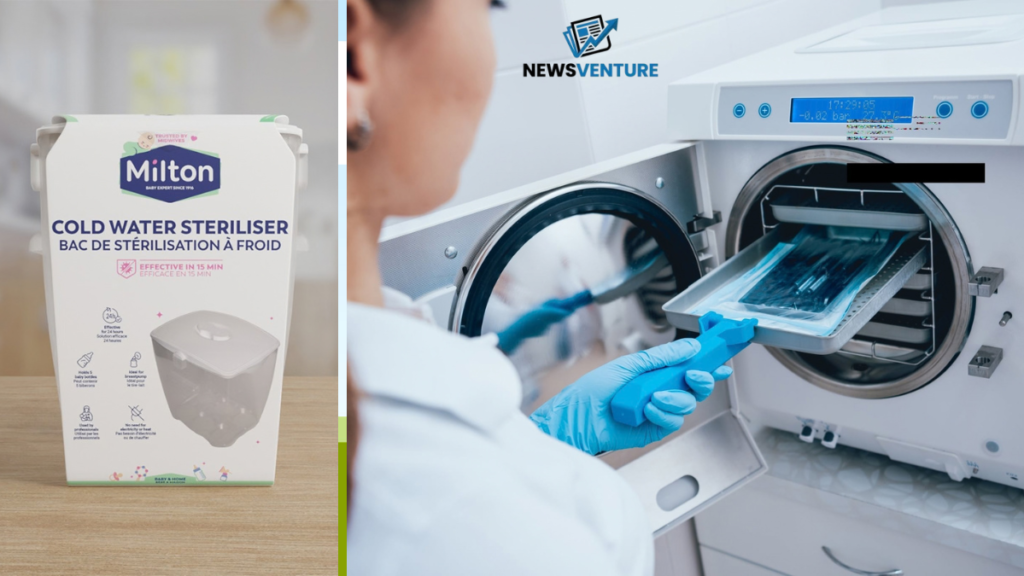

A milton cold water steriliser is a popular way to sterilise baby bottles, breast pump parts, teats, soothers, and other feeding equipment without using heat or electricity. The basic idea is simple: clean the items thoroughly, place them in a suitable sterilising solution, and keep them fully submerged for the recommended period. This makes cold-water sterilisation particularly useful for parents who want a straightforward routine at home or while travelling.
The appeal of this method is its convenience. There is no need to boil a large pan of water, operate an electric steam steriliser, or wait for heated equipment to cool down. A suitable container can remain ready for use throughout the day, allowing cleaned feeding equipment to be sterilised as needed. For busy families, that can make everyday bottle preparation feel considerably more manageable.
Sterilisation is especially relevant during the early months of a baby’s life because feeding equipment can come into contact with milk, saliva, and other substances that support bacterial growth. Proper cleaning and sterilising work together. Sterilisation should not be treated as a replacement for careful washing, because food residue and milk deposits need to be removed before the sterilising stage.
What Is a Milton Cold Water Steriliser?
A milton cold water steriliser generally refers to the cold-water method associated with Milton’s baby-care sterilising products. Rather than relying on heat, the process uses a sterilising solution designed for use with properly cleaned feeding equipment. The solution is prepared according to the manufacturer’s instructions, and the items are immersed so that the solution can reach all relevant surfaces.
This method has been used by parents for decades because it is relatively uncomplicated. A typical routine involves washing bottles and components, preparing the sterilising solution in an appropriate container, completely immersing the equipment, and following the stated contact time. The equipment can then be removed when required and used according to the product instructions.
The term “cold water” can sometimes be misleading because it does not mean ordinary tap water alone will sterilise baby equipment. The effectiveness comes from the correctly prepared sterilising solution and the recommended contact time. As with any baby-care product, the manufacturer’s current instructions should take priority over general advice.
How Cold Water Sterilisation Works
Cold-water sterilisation relies on a chemical sterilising solution rather than steam, boiling water, or electrical heating. Once the appropriate amount of sterilising product has been mixed with water, cleaned feeding equipment is submerged in the solution. The solution needs access to the relevant surfaces, including the inside of bottles and smaller components such as teats.
One of the main advantages of this approach is that the temperature of the water does not need to be high. That makes the process useful in situations where heating equipment is unavailable. It can also be convenient for parents who want a sterilisation system that does not require a power socket.
The exact preparation instructions depend on the specific Milton product being used. Different formulations and product sizes may have different dilution instructions, so measuring the solution carefully is important. Using more product does not necessarily make the process better, while using too little may compromise the intended effectiveness.
What Can Be Sterilised Using This Method?
A milton cold water steriliser can be suitable for many types of baby feeding equipment when the items are compatible with the manufacturer’s instructions. Common examples include feeding bottles, bottle caps, teats, breast pump components, storage containers, and soothers. The important point is that each item should be suitable for the sterilisation method and able to tolerate immersion.
Bottles should normally be taken apart before cleaning and sterilising. Milk can remain trapped around screw threads, valves, collars, teat openings, and other small areas. Separating the components allows water and cleaning solution to reach places that could otherwise be missed.
Parents should also check the instructions supplied with specialist equipment. Some breast pump parts, bottle accessories, or electronic components may have specific cleaning requirements. Electrical parts should never be submerged unless the manufacturer specifically states that they are designed for it.
Cleaning Before Sterilising
One of the most important parts of using a milton cold water steriliser correctly is thorough cleaning before immersion. Sterilisation is most effective when bottles and accessories are free from visible milk residue, grease, and other deposits. Washing should therefore be considered a separate stage rather than something that happens automatically during sterilisation.
Use clean hands and suitable bottle-cleaning equipment. Pay particular attention to narrow openings, screw threads, valves, and teat holes. A bottle brush can help clean the interior of bottles, while smaller brushes can be useful for components that are difficult to reach.
After washing, rinse according to the instructions for the equipment and sterilising system. Avoid placing visibly dirty equipment directly into the sterilising solution. Doing so can make the whole routine less effective and can leave residue behind.
Using a Milton Cold Water Steriliser Safely
When using a milton cold water steriliser, preparation is important. Begin with a clean sterilising container that is large enough to hold the feeding equipment without forcing pieces together. Prepare the solution exactly according to the instructions on the product packaging.
Once the solution is ready, fully immerse the cleaned items. Bottles and other hollow components should be positioned so that the solution reaches the inside as well as the outside. Trapped air can prevent complete contact, so equipment should be arranged carefully and kept submerged as directed.
A clean cover or suitable lid can help protect the solution and its contents from contamination. Do not casually add unclean items to the container or handle sterilised equipment with dirty hands. A simple, consistent routine reduces the chance of recontaminating equipment after sterilisation.
Practical Cold-Water Sterilising Routine
| Stage | What to do | Why it matters |
|---|---|---|
| Preparation | Wash your hands and clean the sterilising container | Reduces avoidable contamination |
| Disassembly | Separate bottles, teats, collars and caps | Helps reach hidden milk residue |
| Washing | Clean every component thoroughly | Removes milk and food residue |
| Rinsing | Follow the equipment and product instructions | Helps prepare surfaces for sterilisation |
| Solution | Prepare the sterilising solution precisely | Correct concentration is important |
| Immersion | Submerge all suitable components completely | Allows the solution to contact surfaces |
| Contact time | Follow the manufacturer’s stated time | Ensures the intended process is completed |
| Removal | Handle items with clean hands or suitable utensils | Helps prevent recontamination |
| Storage | Follow product instructions for keeping equipment sterile | Maintains hygiene until feeding |
The routine may look lengthy at first, but it quickly becomes familiar. Many parents find that keeping bottle-cleaning supplies together makes the process easier to manage, particularly when several bottles need to be prepared during the day.
Why Parents Choose Cold-Water Sterilisation
The biggest advantage of a milton cold water steriliser is convenience. Unlike steam sterilisation, the method does not require an electrical appliance. That can be helpful in homes with limited counter space, during power interruptions, or when travelling.
It can also be useful for families who want to sterilise several items together. A suitably sized container can accommodate multiple pieces of feeding equipment, provided they are arranged correctly and the manufacturer’s capacity guidance is followed.
Another benefit is that the method does not involve boiling water. This removes the need to handle pans of hot water or wait for steam-based equipment to cool. For some households, the simpler temperature-free process makes the daily routine easier.
Cold-Water Sterilisation for Travel
Travel is one situation where a milton cold water steriliser can be particularly practical. Families may not always have access to a steriliser, microwave, or suitable kitchen equipment when staying away from home. A cold-water system can reduce the amount of specialist equipment needed.
However, travelling requires additional attention to water quality and hygiene. Parents should follow local guidance regarding the suitability of available water and use safe, clean containers. If travelling internationally, it is sensible to check the instructions supplied with the specific sterilising product and consider how the solution should be transported and prepared.
A travel routine should also include enough clean bottles, washing equipment, and sterilising supplies for the expected length of the trip. Good organisation can make feeding away from home considerably less stressful.
Common Mistakes to Avoid
A common mistake is assuming that sterilising compensates for inadequate washing. It does not. Milk residue can remain in small parts and interfere with good hygiene practices. Every component should therefore be cleaned carefully before it enters the sterilising solution.
Another mistake is guessing the amount of sterilising product required. Concentration matters, so instructions should be followed precisely rather than relying on estimates. Parents should also avoid mixing different sterilising products together unless the manufacturer specifically states that doing so is safe.
Overcrowding the container is another practical issue. If bottles and accessories are packed together so tightly that the solution cannot circulate around them, some surfaces may not receive proper contact. Arrange components so they remain fully submerged and accessible to the solution.
Finally, avoid touching sterilised surfaces unnecessarily. Clean hands are important when handling baby feeding equipment, particularly immediately after the sterilisation process.
How to Keep Feeding Equipment Hygienic
Good bottle hygiene extends beyond the sterilising stage. Bottles should be cleaned promptly after use whenever possible, because dried milk can be harder to remove and may leave residue in difficult-to-reach areas. A consistent cleaning routine is easier to maintain than allowing several used bottles to accumulate.
Bottle brushes should themselves be kept clean and replaced when they become worn. Sponges and cloths can harbour microorganisms if they remain damp and are not cleaned properly, so dedicated baby-feeding cleaning equipment is generally preferable.
The surrounding preparation area matters too. Countertops, drying areas, hands, and storage containers can all affect the cleanliness of feeding equipment. Sterilised equipment can become contaminated again if it is placed on an unclean surface.
Cold-Water Steriliser Versus Steam Sterilisation
The choice between cold-water and steam sterilisation often comes down to household routine and equipment preferences. Steam sterilisers use high temperatures and may offer a convenient push-button process, while cold-water systems do not require electricity and can be easier to use when travelling.
Steam appliances can occupy valuable kitchen space and require access to electricity. Cold-water sterilisation instead requires a suitable container and sterilising solution. Neither approach should be viewed as a shortcut around cleaning; both work best when feeding equipment is thoroughly washed first.
For families comparing methods, practical considerations include available space, travel requirements, number of bottles used each day, access to electricity, and comfort with handling sterilising solutions. Manufacturer instructions should always determine how a particular product is used.
Choosing the Right Sterilising Container
The container used with a milton cold water steriliser should be large enough to accommodate the equipment while allowing the sterilising solution to reach all surfaces. A container that is too small can make it difficult to keep bottles and accessories completely submerged.
A secure lid can also be useful because it helps protect the solution and its contents from dust and accidental contact. The container itself should be kept clean and maintained according to the product instructions.
It is also worth considering where the container will sit. A stable location away from children and pets is preferable, particularly because sterilising solutions are not intended to be treated like ordinary drinking water. Safe storage and careful handling are essential parts of the routine.
Understanding Sterilising Solution Safety
Sterilising products are designed for a specific purpose and concentration. They should therefore be handled according to the label instructions. Avoid improvising dilution ratios, combining products, or changing the recommended process.
Keep concentrated sterilising products safely away from children. Read the packaging for storage, handling, disposal, and first-aid information. If the product comes into contact with skin or eyes, follow the manufacturer’s safety guidance and seek appropriate medical advice when necessary.
The same principle applies to baby equipment. Only items that are specifically suitable for the sterilising method should be immersed. If an item has special care instructions, those instructions should take precedence.
When to Replace Bottles and Accessories
Sterilisation does not make feeding equipment last forever. Bottles, teats, valves, and other components can become worn through regular use. Scratches, cracks, cloudiness, changes in texture, damaged seals, or enlarged teat holes may be signs that a component needs attention or replacement.
Teats deserve particular care because they are exposed to repeated sucking, washing, sterilising, and handling. Manufacturers may recommend replacing them at particular intervals or whenever signs of wear appear.
Parents should inspect equipment regularly rather than assuming that an item remains suitable simply because it can still be sterilised. Following the manufacturer’s replacement guidance helps maintain a safe and reliable feeding routine.
Making Bottle Preparation Easier Every Day
A milton cold water steriliser can become much easier to manage when the process is organised around a consistent routine. Keeping clean bottles, washing equipment, and sterilising supplies in predictable places reduces unnecessary steps.
Some parents prefer to wash bottles immediately after feeds, while others organise several cleaning sessions during the day. The most practical approach depends on the household, but the essential principle remains the same: used feeding equipment should not be allowed to sit with milk residue unnecessarily.
It is also helpful to keep track of which components belong to each bottle system. Modern feeding equipment can include several small pieces, and losing a valve or collar can make an otherwise complete bottle unusable. A dedicated storage area can make daily preparation more efficient.
Frequently Asked Questions
How long does a Milton cold water steriliser take to work?
The required contact time depends on the specific Milton product and formulation being used. Always follow the current instructions printed on the packaging rather than relying on a general time found elsewhere. The recommended period is part of the sterilisation process, so shortening it without manufacturer guidance is not advisable.
Can bottles stay in a Milton cold water steriliser?
Some Milton systems are designed to allow cleaned feeding equipment to remain in the prepared solution until it is needed, but the exact conditions depend on the product. Follow the manufacturer’s instructions regarding how long the solution remains usable, how items should be stored, and when the solution should be replaced.
Does a Milton cold water steriliser require boiling water?
No. The cold-water approach is designed to use a prepared sterilising solution rather than boiling water. However, the water used to prepare the solution should meet the quality requirements stated by the manufacturer and any relevant local guidance.
Do bottles need to be washed before using a Milton cold water steriliser?
Yes. Washing is an important step before sterilisation. Milk residue, grease, and other visible contamination should be removed from bottles and components first. Sterilisation should follow thorough cleaning rather than replace it.
Can breast pump parts be sterilised with cold water?
Some breast pump components can be sterilised using a cold-water method, but compatibility varies between manufacturers and individual parts. Always check the breast pump manufacturer’s cleaning instructions before placing components into a sterilising solution, particularly when the equipment contains valves, membranes, or other delicate pieces.
Is a Milton cold water steriliser useful for travelling?
A milton cold water steriliser can be convenient for travel because it does not require electricity or a steam appliance. Its practicality depends on access to suitable water, a clean container, and the required sterilising product. Travelling parents should plan the complete cleaning and sterilisation routine rather than relying on sterilisation alone.
Can soothers be sterilised using cold water?
Many baby soothers can be sterilised using an appropriate cold-water sterilising solution, but the product instructions should be checked first. Soothers should be cleaned and handled carefully, and any item showing damage or excessive wear should be replaced according to the manufacturer’s guidance.
Final Thoughts on Cold-Water Bottle Sterilisation
A milton cold water steriliser offers a practical approach to baby-feeding hygiene for families who want a simple method that does not depend on heat or electricity. Its main strengths are convenience, flexibility, and suitability for many everyday feeding routines, including situations where space or access to appliances is limited.
The best results come from treating sterilisation as one part of a complete hygiene routine. Thoroughly clean feeding equipment first, prepare the sterilising solution accurately, keep suitable items completely submerged, respect the manufacturer’s contact-time instructions, and handle sterilised equipment carefully afterward.
For new parents, simplicity can make a real difference. Once the process becomes part of the daily routine, cold-water sterilisation can be a straightforward way to manage bottles and feeding accessories while keeping hygiene at the centre of baby care.
Read also Bone Profile Blood Test: What It Checks and What Your Results May Mean