
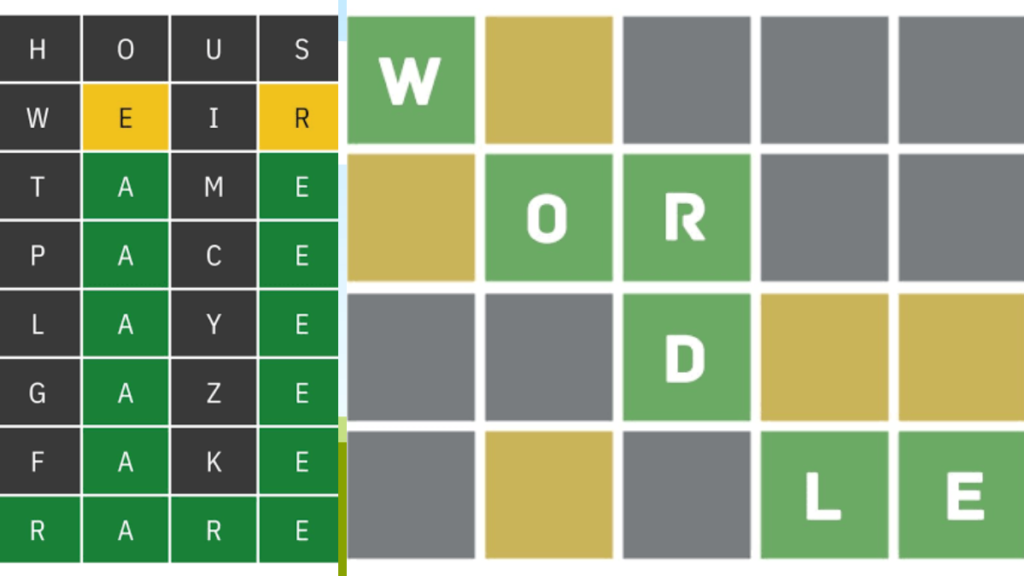

Wordle has become one of the most recognizable daily word games on the internet, combining a simple five-letter format with surprisingly deep vocabulary and deduction. Every day brings a new solution, but the game becomes even more interesting when players look back at previous answers. Understanding wordle words used can reveal recurring patterns, unusual vocabulary, common letter combinations, and useful clues for future games.
The appeal of Wordle comes partly from its balance. You do not need an enormous vocabulary to play well, but knowing how English words are constructed can make a major difference. A strong opening guess, careful attention to letter placement, and familiarity with previously selected answers can turn an uncertain game into a much more manageable puzzle.
Past Wordle solutions are especially useful for players who want to improve rather than simply find today’s answer. Looking through historical answers can show which five-letter words have already appeared and which types of words are commonly selected. It can also help prevent wasted guesses when a familiar-looking word has already been used.
The history of wordle words used also provides an interesting snapshot of everyday English. Some solutions are extremely common, while others are less familiar but still valid words. This mixture keeps the game accessible while occasionally challenging even experienced players.
Meta Description: Explore wordle words used in past puzzles, discover patterns, common answers, useful strategies, and ways to improve your Wordle game.
What Are Wordle Words Used in Past Puzzles?
The phrase wordle words used generally refers to previous five-letter answers that have appeared in the daily Wordle puzzle. These words form a historical record of solutions and can be valuable to players who want to understand how the game selects vocabulary.
Wordle solutions are not simply random combinations of five letters. The game’s answer vocabulary is curated, which means many possible five-letter dictionary entries never become daily solutions. This distinction is important because the words that can be entered as guesses are not necessarily identical to the words selected as answers.
The solution list contains familiar words such as everyday verbs, nouns, adjectives, and other commonly recognized terms. Occasionally, however, players encounter a word that feels less obvious. That variety is part of the challenge and encourages players to expand their vocabulary.
A useful way to think about past answers is as a study resource. Instead of memorizing an enormous dictionary, players can examine the actual vocabulary that has appeared in the game. This makes historical Wordle data much more practical for improving real gameplay.
Why Past Wordle Answers Matter
Studying wordle words used can improve your strategy because Wordle rewards elimination rather than simple guessing. Every previous solution gives you information about the vocabulary and patterns favored by the puzzle.
For example, historical answers can reveal how frequently certain vowels appear, how often words contain repeated letters, and which consonant combinations are common. A player who recognizes these tendencies can make more informed guesses when the board becomes difficult.
Past solutions are also useful for avoiding accidental repetition. If you regularly play Wordle, it is easy to remember a word that feels promising and type it again in a different game. Knowing the historical answer list can reduce this problem, particularly when several possible solutions appear to fit the clues.
There is also a learning benefit. Reading unfamiliar answers in context helps build vocabulary naturally. As one popular Wordle principle suggests, “every guess should teach you something.” That mindset makes the game less about luck and more about collecting useful information.
Common Patterns Found in Wordle Answers
One of the most interesting features of wordle words used is the variety of spelling patterns they contain. Five-letter English words may include one or several vowels, repeated consonants, uncommon letter combinations, or letters that appear in unexpected positions.
Vowels are particularly important. Words containing A, E, I, O, or U can provide valuable information early in a game. Some players prefer opening guesses with several common vowels, while others choose words that combine frequently occurring consonants with one or two vowels.
Repeated letters are another important pattern. A word may contain two identical letters even when the first few guesses provide little indication that repetition is possible. Words with double letters can therefore create some of the game’s most frustrating moments.
Common endings are also worth noticing. Five-letter words frequently end in combinations such as “-ed,” “-er,” “-ly,” or “-ch,” although players should avoid assuming that a familiar ending is always correct. Wordle rewards testing possibilities rather than relying entirely on habits.
| Wordle Pattern | Why It Matters | Example Pattern |
|---|---|---|
| Common vowels | Helps identify the word’s structure | A, E, I, O |
| Repeated letters | Can dramatically reduce possibilities | LL, EE, OO |
| Common consonants | Useful for early elimination | S, T, R, N |
| Common endings | Narrows possible word families | -ER, -ED, -LY |
| Unusual letters | Can distinguish similar words | J, Q, X, Z |
| Consonant clusters | Helps identify word structure | ST, TR, CH |
How to Study the Wordle Archive Effectively
Simply reading a huge collection of wordle words used is not necessarily the best way to improve. A more effective approach is to study the answers by pattern, letter frequency, and word structure.
Start by paying attention to repeated letters. These are easy to overlook during normal play because players naturally assume that every confirmed letter is unique. Reviewing previous solutions can make you more comfortable with possibilities such as double consonants or repeated vowels.
Next, consider the position of common letters. A letter appearing frequently in English does not mean it will appear in every position equally often. For instance, some letters are much more common at the beginning or end of words than in the middle.
It is also helpful to group answers by spelling structure. Looking at words with similar endings or consonant combinations can teach your brain to recognize patterns faster. Over time, this becomes an intuitive skill rather than something you consciously calculate during every game.
The Difference Between Answers and Valid Guesses
Understanding wordle words used requires knowing the difference between a solution and a playable guess. Wordle accepts a much broader vocabulary for guesses than the relatively controlled set used for daily answers.
This difference explains why players sometimes enter a perfectly valid five-letter word and wonder why it has never appeared as a solution. A word can be recognized by the game without being part of the answer rotation.
The distinction also affects strategy. Players should not assume that every obscure word they know is equally likely to become the answer. Common English vocabulary generally provides a more useful foundation, especially when several candidates remain.
This does not mean unusual words should be ignored. An uncommon word can sometimes be the correct solution, and knowledge of less familiar vocabulary can be an advantage. The key is to combine vocabulary knowledge with the evidence provided by the colored tiles.
Choosing Better Opening Guesses
A strong first guess is one of the easiest ways to improve your Wordle performance. The ideal opening word typically tests several high-frequency letters while providing useful information about vowels and consonants.
Words containing letters such as S, T, R, N, L, C, A, and E can be valuable because these letters occur frequently in English. However, there is no single universally perfect starting word. The best choice depends on whether your priority is discovering vowels, testing common consonants, or balancing both.
Players should also avoid using an opening word simply because it looks clever. The purpose of the first guess is information. A word that tests several useful letters can be more valuable than a word chosen because it feels linguistically interesting.
Historical wordle words used can help evaluate opening strategies. By examining previous answers, players can see how often their favorite starting letters appear and whether their opening guesses tend to produce useful information.
Using Letter Frequency Without Becoming Predictable
Letter frequency is a powerful Wordle tool, but it should not become a rigid rule. English has predictable patterns, yet Wordle deliberately creates situations where the most obvious assumption is wrong.
Suppose you know that E and S are present but their positions are unclear. There may be dozens of possibilities. Instead of repeatedly rearranging those letters, a smart guess can introduce new consonants and eliminate entire groups of potential answers.
This is where information theory becomes useful in a practical sense. A guess does not have to be the answer to be valuable. Sometimes the strongest move is a word designed specifically to test several uncertain letters.
As one useful strategy principle puts it, “use guesses to eliminate possibilities.” Once you adopt this approach, a failed guess can still be a successful move.
Handling Repeated Letters
Repeated letters are among the biggest traps in Wordle. A player may correctly identify one letter and assume it cannot appear again, only to discover that the solution contains a duplicate.
Reviewing wordle words used can make repeated-letter solutions easier to recognize. Once you become familiar with examples containing double letters, you are less likely to reject a candidate simply because it feels repetitive.
There is also an important distinction between knowing that a letter exists and knowing how many times it occurs. Wordle’s color feedback can provide clues about letter quantity, but players need to interpret those clues carefully.
When a puzzle seems impossible despite having several confirmed letters, repeated letters are worth reconsidering. They often explain why a seemingly complete set of possibilities does not produce an obvious answer.
Building a Strong Wordle Vocabulary
Vocabulary development is one of the natural benefits of studying wordle words used. Because the game focuses on five-letter words, players encounter a manageable but surprisingly broad portion of English vocabulary.
You do not need to memorize thousands of obscure dictionary entries. Instead, learn words that repeatedly appear in word games, especially those containing unusual letter combinations or tricky vowel structures.
Reading is another excellent way to develop this vocabulary. Newspapers, novels, essays, magazines, and quality websites naturally expose players to words that may later become useful in Wordle.
When you encounter an unfamiliar five-letter word, remembering its meaning as well as its spelling is particularly valuable. Vocabulary becomes easier to retain when it is connected to an idea rather than treated as a random collection of letters.
Why Some Wordle Answers Feel Much Harder
Some wordle words used in the game’s history feel significantly more difficult than others. Usually, the problem is not that the word is impossibly obscure. Instead, the answer may contain an unusual letter arrangement, repeated letters, or several words that look almost identical.
For example, words with similar consonant structures can create difficult final guesses. Once the board shows several green tiles, players may find themselves choosing between multiple candidates that differ by only one letter.
The hardest puzzles often exploit this uncertainty. A word may be familiar when seen in isolation but difficult to identify from incomplete information. This is why strong Wordle play requires both vocabulary and deduction.
Difficulty can also be subjective. A word that is everyday vocabulary for one player may be unfamiliar to another. Regional English, professional experience, reading habits, and age can all influence which answers feel natural.
Using Historical Answers Without Spoiling the Game
Looking at wordle words used can be helpful, but players should decide how much historical information they want to see. Reading the complete answer list before playing may remove some of the enjoyment because discovery is a major part of Wordle’s appeal.
A better approach for many players is to use past answers after finishing the daily puzzle. This preserves the challenge while still allowing you to learn from the result.
Historical lists can also be used for vocabulary practice. Pick a few previous answers and examine their meanings, letter structures, and unusual features. This turns the archive into a learning tool rather than simply a source of spoilers.
If you enjoy competitive play, reviewing old puzzles can be especially valuable. You can compare your opening guesses, number of attempts, and solving patterns with the structure of previous answers.
SEO and Search Interest Around Wordle Vocabulary
Searches related to wordle words used often reflect several different intentions. Some people want historical answers, others want lists of previous solutions, while some are researching patterns to improve their daily results.
This broad search behavior explains why Wordle vocabulary content can remain useful beyond a single day’s puzzle. Historical information does not become irrelevant when the next puzzle appears. Instead, it becomes part of a growing reference resource.
For publishers, useful Wordle content should prioritize organization and genuine information rather than repeating lists of words. Readers benefit more from explanations of patterns, strategy, vocabulary, and answer history than from pages filled with disconnected terms.
Strong topical coverage can naturally include related concepts such as Wordle answers, five-letter words, past Wordle solutions, Wordle archive, Wordle strategy, letter frequency, starting words, repeated letters, vowel patterns, and word guessing techniques.
How Wordle Has Changed the Way People Think About Five-Letter Words
The popularity of wordle words used has made five-letter vocabulary more visible to a huge audience. Before Wordle became a daily habit for millions of people, most players probably did not spend much time considering which English words contain exactly five letters.
The game’s format encourages players to break words into components. You start thinking about vowels, consonants, prefixes, suffixes, repeated letters, and positional patterns. This analytical approach can make ordinary vocabulary seem surprisingly complex.
Wordle also demonstrates how constraints can make a simple game intellectually engaging. There are only six guesses, each word contains five letters, and the feedback system is straightforward. Yet those limitations create thousands of possible reasoning paths.
That balance explains the game’s lasting appeal. As one natural description of the experience might put it, “five letters can create a remarkably deep puzzle.”
Common Mistakes Players Make
One common mistake is focusing too heavily on confirmed letters while ignoring letters that have not yet been tested. A board with several green tiles can create tunnel vision, making players repeatedly rearrange the same known letters.
Another mistake is guessing words that change almost nothing. If a guess contains mostly letters you already know are present, it may provide little new information. Strategic guesses should ideally test uncertain letters when the solution remains unclear.
Players also sometimes overlook the possibility of repeated letters. When a familiar pattern refuses to produce a valid solution, duplicate letters should remain on the table as a possibility.
Finally, many players become attached to a particular candidate too early. Good Wordle solving requires flexibility. A word can look perfect and still be wrong, so every guess should be evaluated against all available evidence.
How to Use Wordle History to Improve Your Results
The most effective way to use wordle words used is to look for lessons rather than memorize a giant list. Pay attention to why certain answers were difficult and what clues eventually separated them from similar possibilities.
Keep track of words that surprised you. If an answer contained a repeated vowel, unusual consonant, or spelling pattern you had overlooked, make a mental note of it. These small observations accumulate quickly.
You can also review your own solving history. Identify games where you used many guesses and determine what caused the difficulty. Was the problem a lack of vowel testing? Did you overlook a repeated letter? Did you waste an attempt on a word with already-tested letters?
This type of reflection is more useful than simply chasing a better average score. It builds a repeatable method that can be applied to future puzzles.
Frequently Asked Questions About Wordle Words
What does wordle words used mean?
Wordle words used generally refers to the words that have already appeared as solutions in previous Wordle puzzles. These historical answers can be studied to understand vocabulary, spelling patterns, repeated letters, and common structures.
Can previously used Wordle answers appear again?
Players generally use historical answer lists to determine which solutions have already appeared, although the precise handling of the answer pool can depend on how the game’s official word list is maintained. Checking reliable historical records is therefore more useful than assuming every familiar word is still available.
Are all five-letter words possible Wordle answers?
No. The game accepts a broad collection of valid guesses, but the daily solution pool is more selective. This is why a perfectly legitimate five-letter word may work as a guess without ever appearing as a daily answer.
Why are some Wordle words so difficult?
Difficult solutions often contain repeated letters, uncommon letter combinations, tricky vowel arrangements, or several closely related possible answers. A familiar word can become challenging when the available clues do not clearly distinguish it from alternatives.
Does studying past Wordle answers improve your game?
Yes. Reviewing wordle words used can help players recognize common patterns, understand repeated-letter possibilities, improve vocabulary, and avoid certain inefficient guessing habits. The biggest benefit comes from studying how words are structured rather than memorizing answers blindly.
What makes a good Wordle starting word?
A good starting word usually tests several common letters and provides useful information about vowels and consonants. There is no single starting word that guarantees success, so the most important quality is the amount of useful information the guess can reveal.
Should players memorize the Wordle answer list?
Memorization is not necessary for most players. Understanding common five-letter patterns and developing a strong solving process is generally more practical. Historical answers are best treated as a reference and learning resource.
Conclusion
Studying wordle words used provides much more value than simply creating a list of old answers. Historical solutions reveal how five-letter English words are structured, how repeated letters can complicate a puzzle, and why some combinations are easier to identify than others.
The strongest Wordle players combine vocabulary with deduction. They use opening guesses to gather information, interpret every colored tile carefully, consider repeated letters, and remain willing to abandon an attractive candidate when the evidence points elsewhere.
Past answers can support that process by showing real examples of the patterns that occur in the game. Over time, reviewing those examples builds familiarity with vowels, consonants, word endings, unusual spellings, and the many ways five letters can fit together.
Ultimately, Wordle is not just a test of vocabulary. It is a compact exercise in reasoning, pattern recognition, memory, and decision-making. The more thoughtfully you study its vocabulary and solving patterns, the more confidently you can approach each new puzzle.
Read also Milton Cold Water Steriliser: A Practical Guide for Safe Baby Bottle Sterilising