

Knowing when to plant garlic UK gardeners can rely on is one of the simplest ways to improve the size, flavour, and quality of your harvest. Garlic is a wonderfully low-maintenance crop once it gets established, but planting at the right time makes a noticeable difference. The UK climate gives gardeners a useful growing window, although the ideal timing varies slightly depending on your location, soil conditions, garlic variety, and whether you are growing outdoors in a garden bed, raised bed, or container.
For most gardeners, autumn is the main planting season. Garlic cloves planted between October and December have plenty of time to develop roots before winter becomes severe. They then remain dormant during the coldest period and begin producing vigorous green growth as temperatures rise in spring. This natural cycle is one of the reasons garlic is such a rewarding crop for British gardens.
Understanding when to plant garlic UK growers commonly recommend also helps you avoid one of the biggest mistakes beginners make: treating garlic like a spring-sown vegetable. Although some varieties can be planted in spring, autumn planting is generally preferred for many hardneck and softneck types because the cloves benefit from a prolonged period of cool weather.
The Best Time to Plant Garlic in the UK
The best general planting period is from October through December, with October and November often being particularly useful months. In milder parts of the UK, planting can sometimes continue into December, provided the ground is workable and not waterlogged or frozen. Gardeners in colder northern areas may prefer to plant earlier in autumn so the cloves have enough time to establish roots.
The reason autumn works so well is that garlic needs a period of cold weather to help with bulb formation. After planting, the cloves gradually develop roots underground while the plant remains relatively quiet above the soil. Once spring arrives, growth accelerates and the plant starts putting more energy into developing its leaves and eventually its bulb.
A common piece of practical gardening advice is to plant garlic while the soil is “cool but workable.” That simple description captures the ideal conditions. You do not need perfectly warm soil, but you should avoid planting into ground that is frozen, saturated, or extremely compacted.
Why Autumn Planting Works So Well
Garlic is naturally adapted to experiencing a period of cold before producing a mature bulb. Autumn planting allows the cloves to experience this seasonal change naturally. The roots can establish before the hardest winter weather arrives, giving the plant a useful head start when spring growth begins.
An autumn-planted clove may appear to do very little during winter, but that does not mean nothing is happening. Beneath the surface, a root system is developing. This early establishment can help the plant cope with changing spring temperatures and make better use of moisture and nutrients.
Spring-planted garlic has less time to establish before the main growing season begins. It can still produce a harvest, but bulbs may be smaller if the variety requires a substantial cold period. For this reason, gardeners looking for large, well-developed bulbs generally benefit from getting their crop into the ground during autumn.
Understanding Garlic Growing Seasons
The UK garlic growing cycle is quite different from that of many summer vegetables. Instead of planting in spring and harvesting a few months later, garlic is usually planted in autumn and harvested during the following summer. This makes it an excellent crop for using garden space during a season when many beds might otherwise be empty.
After planting, garlic spends autumn establishing roots. Winter brings slower growth, followed by a stronger period of leaf development in spring. As summer approaches, the plant gradually shifts its energy from leafy growth towards bulb development.
The timing of these stages depends on weather, variety, soil, and location. A mild spring may encourage rapid leaf growth, while a cold or wet season can slow development. Gardeners should therefore think of garlic planting dates as a flexible seasonal window rather than one fixed day on the calendar.
Garlic Planting Times by Region
The ideal planting period can vary across the UK because the climate is not identical everywhere. Southern England and sheltered areas often experience milder autumns and winters, while Scotland, northern England, Wales, and exposed upland locations can become cold much earlier.
In southern and central areas, planting from October into November is often suitable. In colder regions, October can be a sensible target because it gives cloves time to root before persistent freezing conditions arrive. In very mild coastal areas, gardeners may have a little more flexibility later in the year.
| UK area | Typical planting window | Main consideration |
|---|---|---|
| Southern England | October to December | Mild winters may allow later planting |
| Midlands | October to November | Aim for good root establishment before hard frosts |
| Northern England | October to November | Earlier autumn planting can be beneficial |
| Wales | October to November | Consider local rainfall and soil drainage |
| Scotland | September to November | Colder areas may benefit from earlier planting |
| Northern Ireland | October to November | Avoid saturated winter soil |
| Mild coastal areas | October to December | Soil condition matters more than a strict date |
These dates are useful guidelines rather than strict rules. Local weather can vary significantly from year to year. If the soil is cold and saturated, planting immediately simply because the calendar says it is November is unlikely to produce the best result.
Choosing the Right Garlic Variety
Variety selection is an important part of successful garlic growing. UK gardeners commonly grow both hardneck and softneck garlic, and each type has different characteristics. Hardneck varieties usually produce a flowering stem called a scape and are often appreciated for their strong flavour. Softneck varieties generally store well and can be suitable for milder climates.
Some garlic varieties are particularly well suited to cooler climates because they respond well to a proper winter period. When buying planting material, look for garlic sold specifically for planting rather than supermarket bulbs intended for cooking. Planting stock is more likely to be selected for reliable growth and may offer a wider range of suitable varieties.
Do not assume that every bulb available in a supermarket will perform equally well in a British garden. Cooking garlic may have been grown in a completely different climate, and imported bulbs may not be suited to local growing conditions.
Preparing the Soil Before Planting
Good soil preparation can be just as important as choosing the correct planting date. Garlic prefers fertile, well-drained soil that does not remain saturated for long periods. Persistent winter wetness can cause cloves to rot before they have a chance to develop properly.
Start by clearing weeds and removing large stones or debris from the planting area. Digging in well-rotted organic matter can improve soil structure, particularly where the soil is heavy. However, avoid adding large amounts of fresh manure immediately before planting because it can encourage excessive leafy growth and may create an imbalanced growing environment.
A slightly alkaline to neutral soil is generally suitable for garlic. If your garden soil is particularly acidic, a soil test can help you understand what amendments may be appropriate. Good drainage is especially important in areas where winter rainfall is heavy.
How to Plant Garlic Cloves
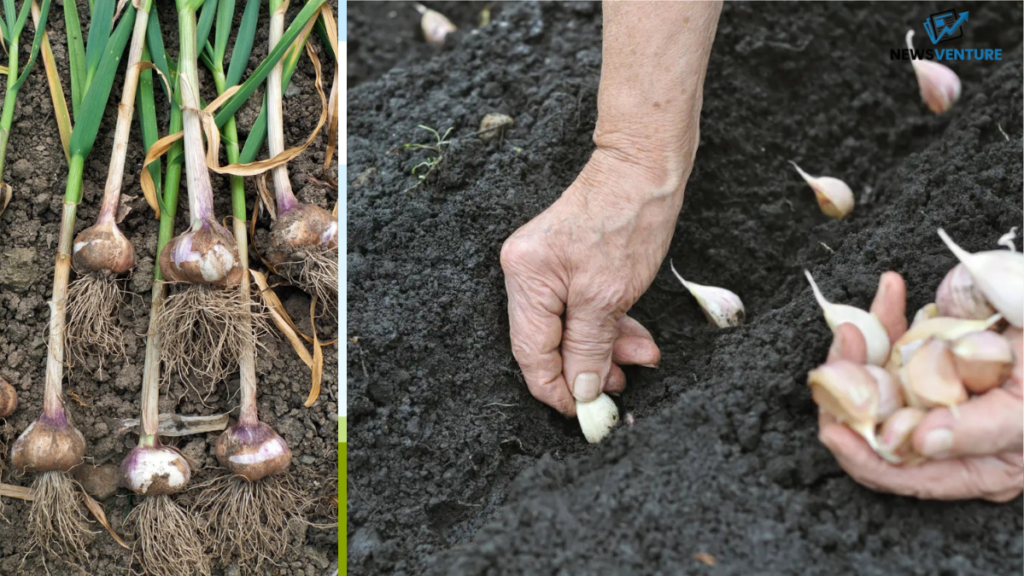
Separate the bulb into individual cloves shortly before planting. Choose the largest, healthiest cloves because they generally have more stored energy available for early growth. Keep the papery skin around each clove intact and avoid planting cloves that are soft, damaged, mouldy, or visibly diseased.
Place each clove with the pointed end facing upwards and the flatter root plate facing downwards. A planting depth of roughly 3 to 5 centimetres is often suitable, although depth can be adjusted slightly depending on soil type and local conditions. In exposed or colder gardens, planting a little deeper can offer additional protection.
Space cloves far enough apart to allow bulbs to develop without excessive competition. Around 15 centimetres between plants is a useful starting point, with approximately 25 to 30 centimetres between rows. Cover the cloves gently with soil and avoid compacting the surface heavily.
When to Plant Garlic UK Gardeners Can Grow in Containers
When to plant garlic UK gardeners growing in containers is broadly similar to planting in open ground, although containers can behave differently. They tend to warm up and cool down faster than garden soil, and they can dry out more quickly or become excessively wet depending on the weather.
Choose a container that is reasonably deep and has several drainage holes. Garlic does not need an enormous amount of space, but shallow containers can restrict root development. A good-quality multipurpose compost mixed with material that improves drainage can create a suitable growing medium.
Containers can also be useful for gardeners with heavy clay soil or limited garden space. Position them somewhere that receives plenty of sunlight and make sure excess rainwater can drain freely. During prolonged wet weather, check that drainage holes are not blocked.
Garlic Spacing and Planting Depth
Spacing affects the final size of the bulbs because each plant needs access to light, water, nutrients, and air circulation. Crowding cloves together may produce smaller bulbs and can increase humidity around the foliage.
For many varieties, planting cloves approximately 15 centimetres apart gives them enough room to mature. Rows can be spaced around 25 to 30 centimetres apart, making it easier to weed between plants and inspect their growth.
Planting depth should also be considered carefully. Cloves that are too shallow may be more exposed to temperature changes, birds, and movement caused by frost. Cloves planted excessively deep can take longer to emerge. The goal is to provide protection without making emergence unnecessarily difficult.
Caring for Garlic Through Winter
Once planted, garlic does not require constant attention. The main priority during winter is protecting the soil and ensuring that the planting area remains reasonably well drained. Heavy rainfall is often more concerning than cold temperatures.
A layer of organic mulch can help protect the soil surface and reduce temperature fluctuations. Materials such as straw, leaf mould, or well-rotted compost can be useful when applied appropriately. Avoid creating a thick, permanently wet layer directly around the plants.
Weeds should also be controlled because they compete with garlic for moisture and nutrients. Garlic has relatively narrow leaves, so it can struggle when surrounded by vigorous weeds. Gentle hand weeding is often sufficient for a small garden.
What Garlic Needs in Spring
Spring is when the crop begins to look much more active. Green shoots become more obvious, and leaf growth accelerates as daylight hours increase. This is an important period because the plant is building the foliage it needs to support later bulb development.
Keep the planting area weed-free and water during prolonged dry spells. Garlic generally does not need excessive watering, and consistently wet soil can create problems. Aim for even moisture rather than repeatedly soaking the ground.
Nitrogen can support leafy growth early in the season, but avoid excessive feeding. Once the plant approaches maturity, its focus should naturally shift from producing leaves to developing the underground bulb.
Garlic Pests and Common Problems
Garlic is relatively robust compared with many vegetables, but it is not completely trouble-free. Poor drainage, fungal diseases, pests, and unsuitable planting material can all affect the crop.
One of the most common problems is rotting caused by excessively wet conditions. This is why well-drained soil is so important. If bulbs repeatedly sit in saturated ground, roots can deteriorate and cloves may fail to establish.
Good garden hygiene can also help reduce disease pressure. Rotate garlic and other allium crops where possible rather than planting them repeatedly in exactly the same location. Remove badly diseased plants and avoid keeping damaged bulbs for future planting.
When to Plant Garlic UK Gardeners Should Consider Spring Planting
When to plant garlic UK gardeners can choose for spring planting depends heavily on the variety. Some garlic types are more suitable for spring planting than others, and planting early in the season is generally preferable if autumn planting was missed.
Spring planting can be useful if the ground was too wet during autumn, if you acquired suitable planting stock late, or if you are experimenting with a variety that performs well without a long winter establishment period.
However, spring-planted garlic may produce smaller bulbs because the plants have less time to establish and may not receive the same winter conditions. If autumn planting is possible and your chosen variety is suited to it, autumn remains the traditional approach for many UK gardens.
Signs Your Garlic Is Growing Well
Healthy garlic usually produces firm green leaves that gradually become taller and more substantial as spring progresses. Colour can vary somewhat between varieties, but vigorous plants should generally show steady growth when temperatures rise.
The number and quality of leaves matter because the foliage helps the plant build energy for the bulb. Avoid removing healthy leaves unnecessarily. Damaged or diseased foliage should be dealt with appropriately, but healthy leaves are valuable to the developing crop.
As summer approaches, the lower leaves naturally begin to turn yellow or brown. This is not necessarily a sign that something is wrong. Instead, it can indicate that the plant is approaching maturity.
When to Harvest Garlic
Knowing when to plant garlic UK gardeners can use successfully is only half of the process. Harvest timing also matters because bulbs left in the ground too long can split, while bulbs harvested too early may not have reached their full size.
Garlic is commonly ready for harvesting in early to mid-summer, although the exact timing varies by variety and growing conditions. A useful indication is when several lower leaves have turned yellow or brown while the upper leaves remain relatively green.
Carefully lift a bulb rather than pulling aggressively on the foliage. If the bulb appears well formed and the cloves have developed properly, the crop may be ready. Once harvested, garlic should be cured in a dry, airy place away from strong direct sunlight.
How to Cure and Store Homegrown Garlic
Curing allows the outer skin to dry and helps prepare garlic for longer storage. After harvesting, avoid washing the bulbs unless absolutely necessary. Instead, gently brush away loose soil and leave the bulbs somewhere dry with good airflow.
The curing process can take several weeks. During this time, the outer layers become papery and the neck dries. Once fully cured, the roots and foliage can be trimmed according to your preferred storage method.
Store garlic somewhere cool, dry, and well ventilated. Avoid sealed plastic containers because trapped moisture can encourage mould. Properly cured softneck garlic can often remain usable for many months under suitable storage conditions.
Common Garlic Planting Mistakes
One mistake is planting cloves upside down. The pointed end should face upwards so the shoot can emerge naturally. While a plant may sometimes manage to grow despite being incorrectly positioned, it can waste energy as it establishes.
Another mistake is choosing unsuitable planting stock. Garlic sold specifically for planting is generally a safer choice than relying on an imported supermarket bulb. Variety suitability matters, particularly in a climate as variable as the UK’s.
Overwatering is another frequent problem. Garlic needs moisture, but it does not thrive in permanently saturated soil. Good drainage, sensible watering, and appropriate soil preparation are often more valuable than constant feeding.
Making the Most of Your Garlic Harvest
A successful garlic crop can provide far more than fresh cloves for cooking. Garlic scapes from suitable hardneck varieties can be harvested while still young and used in pestos, sauces, stir-fries, and other dishes.
The harvested bulbs can also become next year’s planting stock, provided you select healthy, well-developed bulbs and your chosen variety is suitable for saving. Keep the best bulbs separate from those intended for immediate kitchen use.
Growing your own garlic also gives you the opportunity to compare varieties. Flavour, bulb size, storage life, clove size, and growing performance can vary considerably, making garlic an interesting crop for gardeners who enjoy experimenting.
Why Garlic Is Worth Growing in a UK Garden
Garlic takes patience, but it rewards gardeners with a crop that is easy to store and useful throughout the year. It also occupies relatively little space compared with many other vegetables and can be grown in traditional beds, raised beds, allotments, and containers.
The biggest advantage is that much of the growing cycle happens while the garden is relatively quiet. Once the cloves are planted in autumn, they require surprisingly little intervention during winter. By spring, the crop is already established and ready to take advantage of longer days.
For anyone planning an edible garden, garlic is therefore a practical crop with excellent value. Getting the planting date, soil preparation, spacing, and drainage right can make the difference between disappointing bulbs and a harvest worth saving.
Conclusion
For most gardeners, when to plant garlic UK conditions generally points towards autumn, particularly October and November. Planting during this period gives cloves time to establish roots before winter and provides the cold conditions that many garlic varieties need for strong bulb development.
The most important principles are simple: choose suitable planting garlic, use fertile but well-drained soil, plant healthy cloves with the pointed end upwards, give them enough space, and avoid keeping the soil excessively wet. With these basics in place, garlic is one of the more dependable crops for a British garden.
Understanding when to plant garlic UK gardeners commonly use also makes it easier to plan the entire growing cycle, from autumn planting through winter establishment, spring growth, summer harvesting, and proper curing. With a little patience, even a small garden can produce a useful supply of flavoursome homegrown garlic.
FAQ
When is the best time to plant garlic in the UK?
The best general period is October to November, although planting can extend into December in some milder areas if the soil remains workable and well drained. Earlier planting may be useful in colder regions because it gives cloves more time to establish roots before severe winter weather.
Can garlic be planted in spring in the UK?
Yes, some garlic varieties can be planted in spring, particularly if autumn planting was missed. However, spring planting can result in smaller bulbs because the plants have less time to establish and may not receive the same cold period as autumn-planted cloves.
How deep should garlic cloves be planted?
A depth of around 3 to 5 centimetres is commonly suitable, with the pointed end facing upwards. Exact depth can be adjusted according to soil type and local conditions. The aim is to protect the clove while allowing the shoot to emerge without difficulty.
How far apart should garlic cloves be planted?
Around 15 centimetres between individual cloves is a useful guideline, with approximately 25 to 30 centimetres between rows. Giving plants adequate space improves airflow and reduces competition for nutrients, moisture, and sunlight.
Does garlic need full sun in the UK?
Garlic generally performs best in a sunny position where it receives several hours of direct sunlight each day. Good light encourages strong leaf growth, which helps the plant build energy for bulb development.
How often should garlic be watered?
Garlic should be kept reasonably moist during active growth but should never sit in saturated soil. Natural rainfall may provide enough moisture during wetter periods. During prolonged dry spells, water thoroughly and then allow the soil to drain rather than giving small amounts constantly.
When should garlic be harvested?
Garlic is usually harvested in early or mid-summer, although timing depends on the variety and weather. Several lower leaves turning yellow or brown while the upper leaves remain green is a useful sign that the bulbs may be approaching maturity.
Can supermarket garlic be planted?
It is possible, but planting garlic specifically sold for cultivation is generally more reliable. Supermarket bulbs may have been imported from climates with different growing conditions, so they may not perform as well in a UK garden.
What soil is best for growing garlic?
Garlic prefers fertile, well-drained soil with good structure. Heavy soil can be improved with suitable organic matter, while raised beds can be useful where drainage is poor. Avoid planting into ground that remains waterlogged during winter.
When to plant garlic UK gardeners should remember most?
The main point is that autumn is usually the key season. For many parts of the UK, October and November provide a practical planting window, while local climate, soil condition, and garlic variety should guide the exact timing.
Read also Manchester Airport Arrivals: Your Complete Guide to Flights, Terminals and Pick-Up