
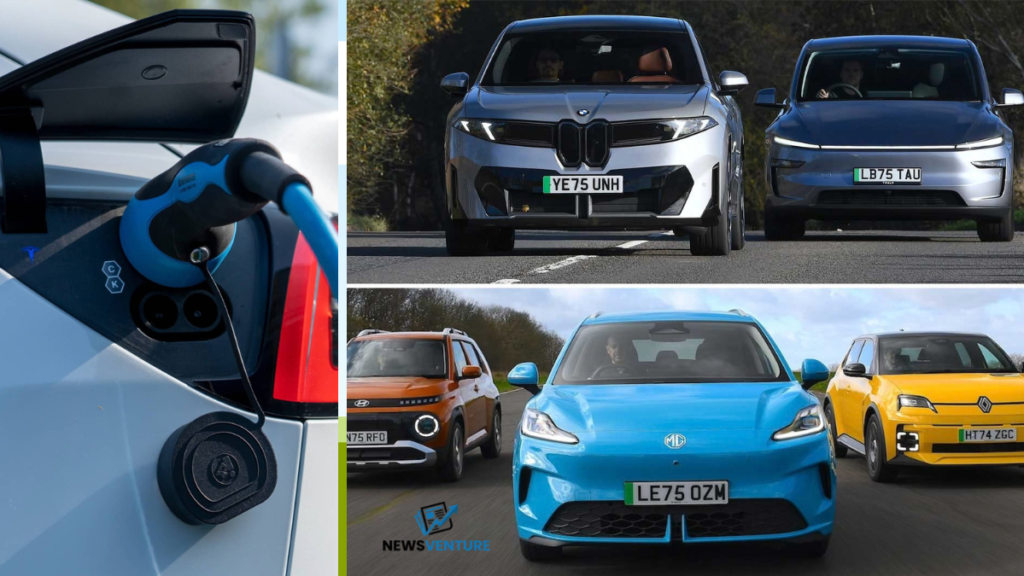

The market for electric cars for sale has changed dramatically as more drivers look for cleaner, quieter, and potentially more economical ways to travel. Electric vehicles, commonly called EVs, are no longer limited to a small selection of futuristic-looking models. Buyers can now find compact city cars, family hatchbacks, spacious SUVs, luxury vehicles, performance-focused models, and practical electric crossovers.
Choosing an electric vehicle is slightly different from buying a traditional petrol or diesel car. Instead of focusing only on engine size, fuel economy, and servicing costs, an EV buyer needs to consider battery capacity, driving range, charging speed, home charging, public charging access, and long-term running costs. Understanding these factors makes the buying process much easier.
For many motorists, the biggest attraction is the driving experience. Electric cars deliver instant torque, smooth acceleration, low cabin noise, and fewer mechanical components than conventional vehicles. They can also be convenient for drivers who regularly charge at home, because the car can be ready for the next journey without a trip to a fuel station.
Why More Drivers Are Choosing Electric Vehicles
Interest in electric cars for sale continues to grow because EV technology has become more practical for everyday transportation. Modern electric vehicles can provide useful driving ranges, comfortable interiors, advanced safety equipment, and technology that would once have been associated mainly with expensive luxury cars.
Running costs are another important consideration. Electricity prices vary by location and charging method, but charging an EV at home can be convenient and may cost less per mile than buying petrol or diesel. Electric motors also have fewer moving parts than internal combustion engines, which can reduce the number of routine mechanical components requiring attention.
There is also the environmental factor. Battery-electric vehicles produce no tailpipe emissions while driving, although their overall environmental impact depends on how electricity is generated, how batteries are manufactured, and how the vehicle is used. For many buyers, reducing local exhaust emissions is an important part of the decision.
A simple way to describe the ownership experience is: “Charge at home, start the day ready to drive.” For drivers with predictable daily journeys, that convenience can become one of the strongest advantages of EV ownership.
Understanding Different Types of Electric Cars
Not every electrified vehicle works in exactly the same way. A fully electric vehicle, or BEV, uses a battery and electric motor without a petrol or diesel engine. These vehicles need to be charged using an external power source and are the main type people mean when searching for fully electric cars.
Plug-in hybrid electric vehicles, known as PHEVs, combine a rechargeable battery and electric motor with an internal combustion engine. They can drive using electric power for shorter distances and rely on fuel for longer journeys. Hybrid vehicles that cannot normally be plugged in are another category and operate differently again.
When searching through electric cars for sale, checking the powertrain type is essential. A listing may use terms such as EV, BEV, PHEV, hybrid, or electrified, and these terms describe different ownership experiences.
| Vehicle Type | Main Power Source | External Charging | Typical Strength |
|---|---|---|---|
| Battery Electric Vehicle | Battery and electric motor | Yes | Zero tailpipe emissions and simple drivetrain |
| Plug-in Hybrid | Battery plus petrol/diesel engine | Yes | Electric driving with fuel backup |
| Hybrid | Petrol/diesel engine plus small battery | Usually no | Efficient stop-and-go driving |
| Mild Hybrid | Petrol/diesel engine with small electrical assistance | No | Improved efficiency without plug-in charging |
For someone specifically looking for a fully electric vehicle, the battery-electric category is the one to focus on. Understanding the terminology prevents confusion when comparing dealerships and online listings.
Battery Range and Everyday Driving
Range is one of the first specifications buyers notice when looking at electric cars for sale, but the advertised figure should not be treated as a guaranteed distance in every situation. Real-world range can change according to driving speed, temperature, road conditions, passenger weight, tyre pressure, heating or air conditioning use, and driving style.
A vehicle with a relatively modest official range may be perfectly suitable for someone who mainly travels around town. On the other hand, a driver who frequently travels between cities may prefer a larger battery and greater usable range.
It is helpful to think about range as part of a daily routine rather than as a single impressive number. If a driver travels a predictable distance each day and has access to home charging, a smaller battery may provide plenty of practical convenience.
Long-distance drivers should pay particular attention to highway efficiency and rapid charging capability. A car that can recover a substantial amount of range during a short charging stop can be more convenient on road trips than a vehicle with a larger battery but slower charging performance.
Home Charging and Public Charging
Charging infrastructure is one of the most important practical considerations when buying an EV. Home charging can make electric vehicle ownership especially convenient because drivers can plug in when the vehicle is parked for several hours.
A dedicated home wallbox can generally provide faster charging than a standard household outlet, although installation requirements vary. Buyers should check the electrical capacity of their property and use a qualified installer where appropriate.
Public charging is important for longer journeys and for people who cannot charge at home. Public chargers vary considerably in speed. Some are designed for longer parking periods, while rapid and ultra-rapid chargers are intended to add substantial energy during a relatively short stop.
A useful mindset is: “Charging is part of the journey, not simply a replacement for refuelling.” Instead of waiting until the battery is almost empty, many EV owners charge opportunistically whenever the vehicle is parked for an extended period.
Before purchasing, it is worth considering the charging network available around home, work, shopping areas, and common travel routes. Convenient charging access can be just as important as battery size.
Comparing Electric Cars by Battery Size
Battery capacity is normally expressed in kilowatt-hours, or kWh. In simple terms, a larger battery can store more electrical energy, although battery size alone does not determine driving range.
Vehicle weight, aerodynamics, motor efficiency, tyre design, software, and driving conditions all influence how efficiently an EV uses its stored energy. Two vehicles with similarly sized batteries can therefore have noticeably different real-world range.
A larger battery may provide greater flexibility, but it can also add weight and increase the purchase price. Buyers should therefore avoid automatically assuming that the biggest battery is the best choice.
For urban drivers, a smaller and efficient battery may be perfectly adequate. Families who regularly travel long distances may place greater value on range and rapid charging. The right balance depends on the vehicle’s intended use.
New and Used Electric Cars
The search for electric cars for sale does not have to be limited to brand-new vehicles. The used EV market can provide access to electric driving at a lower purchase price, although used buyers need to inspect several additional details.
Battery condition is particularly important. Modern EV batteries are designed to last for many years, but battery health can still vary depending on age, mileage, charging patterns, climate, and previous use. A reputable seller should be able to provide useful information about the vehicle’s history and condition.
Buyers should also inspect the charging cable, tyres, brakes, suspension, interior electronics, infotainment system, and general service history. Checking whether the vehicle has remaining battery or manufacturer warranty coverage can also be valuable.
Depreciation should be considered carefully. Technology changes quickly, and newer models may offer longer range or faster charging than older vehicles. This can affect used EV values and create opportunities for buyers who are comfortable purchasing an earlier model.
Electric SUV Options for Families
Electric SUVs have become particularly appealing because they combine a higher driving position with useful interior space. Families often prioritize rear-seat room, boot capacity, safety technology, comfort, and charging performance.
When evaluating an electric SUV, buyers should look beyond the exterior design. Check the usable luggage space, rear passenger accommodation, child-seat compatibility, visibility, turning circle, and real-world range.
Towing requirements also deserve attention. Not every EV is designed for towing, and towing a trailer can significantly affect energy consumption. If towing is essential, the vehicle’s official towing capacity and charging requirements should be checked carefully.
For family ownership, practicality often matters more than headline acceleration. A comfortable cabin, dependable charging, and predictable range can make a greater difference to daily life than a particularly powerful motor.
Electric Cars for City Driving
City drivers can benefit significantly from electric vehicles. Stop-and-go traffic is well suited to electric drivetrains because electric motors can deliver smooth acceleration without traditional gear changes.
Compact EVs can also be easier to park and maneuver in busy urban areas. Regenerative braking may help recover some energy while slowing the vehicle, while the quiet drivetrain can make congested journeys more comfortable.
For urban buyers, range anxiety may be less relevant when daily travel distances are short and regular charging is available. The more important questions may involve charging access, parking arrangements, vehicle dimensions, and purchase price.
A small EV can therefore make sense even if it does not have the largest battery available. Matching the vehicle to actual driving habits is usually more useful than buying specifications that rarely get used.
Electric Cars for Long-Distance Travel
Long-distance EV travel is increasingly practical, but planning still matters. Drivers should consider charging locations, charger availability, charging speed, weather conditions, and expected traffic before setting off.
Vehicles with efficient powertrains and strong rapid-charging capabilities can be particularly useful for frequent motorway journeys. However, charging speed is not determined solely by the maximum figure listed in a brochure. Charging performance can vary depending on battery temperature, battery state of charge, charger capability, and the vehicle’s charging curve.
For road trips, the most useful combination is often efficient energy consumption, dependable rapid charging, and good route planning. A vehicle that can efficiently travel between charging stops may be more convenient than one that simply has an exceptionally large battery.
Running Costs and Maintenance
One of the major reasons buyers investigate electric cars for sale is the possibility of lower routine maintenance. Electric vehicles do not require traditional engine oil changes, spark plug replacements, or many other engine-related services.
Brake wear can also be reduced in some driving conditions because regenerative braking allows the electric motor to assist with slowing the vehicle. However, EVs still require tyres, suspension components, cabin filters, windscreen wipers, brake inspections, and other routine maintenance.
Electricity costs should also be compared with local petrol or diesel prices rather than assuming every EV will automatically be cheaper to operate. Home charging, public charging tariffs, energy prices, annual mileage, and vehicle efficiency all influence the final calculation.
Insurance, road taxes or registration charges, financing costs, depreciation, and servicing should also be included when calculating the total cost of ownership.
Safety and Technology Features
Modern EVs frequently include advanced driver assistance and safety technology. Depending on the model and market, features can include automatic emergency braking, adaptive cruise control, lane assistance, parking cameras, blind-spot monitoring, and collision-warning systems.
Battery protection is another major part of EV engineering. High-voltage systems incorporate safety measures designed to protect occupants and the battery in different driving and crash situations.
However, buyers should not assume that every electric vehicle has the same equipment. Safety specifications can vary between trims and model years, so the exact vehicle being considered should be checked rather than relying on the model name alone.
How to Evaluate Electric Cars for Sale
When comparing electric cars for sale, creating a simple checklist can prevent attractive styling or impressive specifications from dominating the decision. Start with the actual driving pattern, including daily mileage, weekend trips, motorway use, and access to charging.
Next, compare battery capacity, realistic range, AC charging capability, DC rapid-charging capability, cabin space, boot capacity, warranty coverage, and expected running costs. These factors provide a much clearer picture of whether a vehicle suits its intended role.
It is also sensible to test-drive the vehicle. Electric cars can feel different from petrol-powered models because acceleration is immediate and regenerative braking may alter the way the accelerator pedal feels.
Finally, inspect the total purchase cost rather than focusing only on the advertised monthly payment. Financing terms, deposit requirements, interest, insurance, charging equipment, and other ownership expenses can materially change the overall cost.
Common Mistakes to Avoid When Buying an EV
A common mistake is buying based entirely on maximum range. Range matters, but it should be considered alongside charging speed and actual driving habits.
Another mistake is ignoring home charging. A buyer who expects to charge regularly at home should establish whether convenient charging is possible before committing to a vehicle. Conversely, someone without home charging should investigate public charging availability and costs.
Some buyers also overlook tyre specifications and replacement costs. EVs can be heavier than comparable combustion vehicles, and tyre selection can influence efficiency, comfort, and running expenses.
Finally, buyers should avoid assuming that every EV drives in exactly the same way. Regenerative braking strength, steering feel, suspension setup, cabin technology, charging behavior, and efficiency can vary considerably between models.
The Future of Electric Vehicle Ownership
The development of electric cars for sale is closely connected to improvements in battery technology, charging infrastructure, software, and vehicle efficiency. As manufacturers introduce new models, buyers have more variety across different price ranges and vehicle categories.
Charging networks are also an important part of the wider EV experience. Faster chargers and better route-planning systems can make long-distance travel easier, while home charging remains central to convenient everyday use.
Battery technology continues to receive significant attention because improvements in energy density, charging performance, durability, and manufacturing can influence both vehicle design and ownership costs.
For consumers, this means the EV market is likely to remain highly competitive. Buyers can benefit from comparing several vehicles rather than assuming that one specification tells the complete story.
Conclusion
Finding the right electric cars for sale is ultimately about matching the vehicle to real-world needs. Battery range, charging speed, home charging access, efficiency, interior space, maintenance, warranty coverage, and total ownership costs all deserve attention.
Electric vehicles can offer a smooth and quiet driving experience, convenient home charging, and a drivetrain that is mechanically different from traditional petrol and diesel cars. They are not automatically the perfect solution for every driver, but they can be a practical choice when their capabilities match the owner’s lifestyle.
The best approach is to look beyond headline specifications. Consider how far you drive, where you can charge, how often you take long trips, how much space you need, and what you expect to spend over several years. With those factors clearly understood, comparing available EV models becomes far simpler and more meaningful.
Frequently Asked Questions
Are electric cars expensive to maintain?
Electric vehicles generally have fewer conventional mechanical components than petrol or diesel cars, which can reduce some routine maintenance requirements. They still need tyres, brakes, suspension checks, cabin filters, and other servicing. Battery condition and warranty coverage are also important considerations when evaluating long-term maintenance costs.
How far can an electric car travel on one charge?
Driving range varies significantly between models and driving conditions. Battery size, vehicle efficiency, speed, temperature, terrain, heating, air conditioning, and driving style can all affect range. Buyers should look at official range figures alongside independent real-world information where available.
Are electric cars suitable for long journeys?
Yes, many modern EVs are suitable for long-distance travel, particularly models with efficient powertrains and rapid DC charging. Successful long-distance ownership depends on reliable charging infrastructure, route planning, charging speed, and the vehicle’s usable range.
Is home charging necessary for an electric car?
Home charging is not essential, but it can make EV ownership considerably more convenient. Drivers without private charging can rely on public charging networks, workplaces, shopping centers, and other charging locations. The practicality of an EV without home charging depends heavily on the availability and cost of nearby public chargers.
What should I check when buying a used electric car?
A used EV buyer should examine battery health, charging performance, service records, warranty status, mileage, tyre condition, brakes, suspension, interior electronics, and charging cables. It is also useful to confirm the vehicle’s accident and ownership history before completing a purchase.
Are electric cars good for city driving?
Electric vehicles can be particularly convenient for urban driving because they provide smooth acceleration, quiet operation, and regenerative braking. Compact electric models can also be practical in crowded areas. For city drivers, charging access and everyday range may be more important than having the largest possible battery.
What affects the value of electric cars?
Vehicle age, mileage, battery condition, remaining warranty, range, charging capability, condition, equipment level, market demand, and newer competing models can all influence EV resale values. Rapid technological development can also affect depreciation, making it important to consider the total cost of ownership rather than purchase price alone.
How should I compare electric cars for sale?
When comparing electric cars for sale, consider the complete ownership picture rather than focusing on one specification. Battery range, charging speed, efficiency, purchase price, financing, insurance, maintenance, interior practicality, warranty coverage, and access to charging should all be evaluated together. This creates a more realistic picture of which vehicle fits a particular driving routine.
Read also Omega De Ville Prestige: A Timeless Guide to One of Omega’s Most Elegant Dress Watches